What Manchester United Teaches Us About Fear, Agency and Performance

When most people try to explain Manchester United’s decline, they reach for the obvious. The wrong transfers. The wrong managers. Tactical naivety, recruitment failures, boardroom chaos. These explanations are not wrong. They simply do not go far enough. They describe the symptoms without naming the condition.
George Kohlrieser, clinical psychologist and one of the world’s most experienced hostage negotiators, offers a more unsettling diagnosis. In Hostage at the Table, he argues that individuals and teams can become psychological hostages without a single dramatic event to mark the moment of capture. No crisis, no confrontation. Just a quiet accumulation of fear, eroded agency, and a culture in which the dominant question shifts, almost imperceptibly, from how do we win to how do we avoid being blamed for losing.
That shift, Kohlrieser argues, is where performance dies.
A Decade of Talented Failure
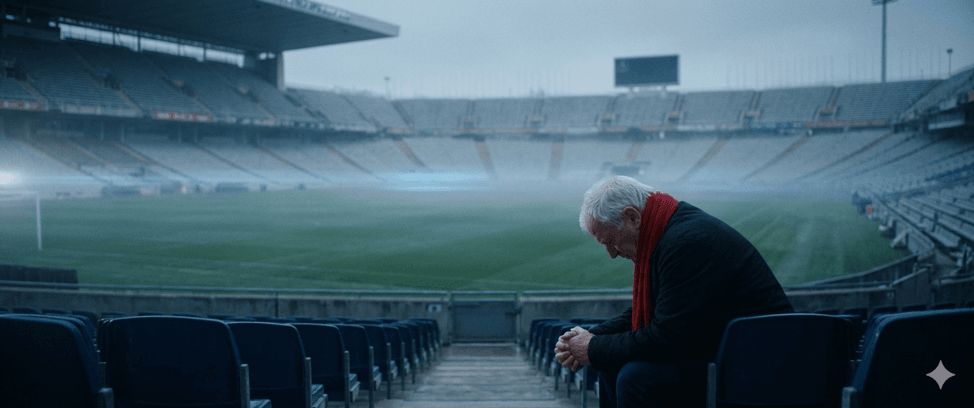
Sir Alex Ferguson retired in May 2013. What followed was not merely a difficult transition. It was something closer to a systemic unravelling. Seven managers in thirteen years. Hundreds of millions spent on players who arrived with genuine credentials and left having produced a fraction of their best work. Systems imposed and discarded. Identities adopted and abandoned. A club that had once been the defining standard for winning football in England gradually became, in the eyes of its own supporters, almost unrecognisable.
The conventional post-mortem points to individual failure. Moyes was out of his depth. Van Gaal was rigid. Mourinho was corrosive. Ten Hag was undermined. Amorim arrived too late, carrying too much of his own philosophy and not enough of the club’s. There is truth in each of these accounts. But they miss something that sits underneath the individual narratives.
Talented people do not consistently underperform across different managers, different systems, and different eras purely because of individual leadership failure. When the pattern repeats across that length of time, the problem is structural. It is cultural. It has, in Kohlrieser’s terms, become systemic.
Break free from fear-driven performance →
The Anatomy of a Hostage System
Kohlrieser identifies the psychological hostage state through specific, observable dynamics. The hostage is not physically imprisoned. They are trapped by a climate in which self-protection becomes the primary instinct, and in which the cost of attempting something and failing exceeds, in emotional terms, the reward of attempting something and succeeding.
In that climate, creativity recedes. Risk disappears. Decision-making becomes cautious and reactive. Players who were genuinely expressive elsewhere arrive at Old Trafford and play within themselves, as though the space for freedom has been quietly removed. The question that governs every action is no longer what is possible but what is safe.
This dynamic was visible across the post-Ferguson era, though it wore different faces. Under Van Gaal, the hostage state formed through control. His system was so structured, so insistent on positional obedience and slow recycling of possession, that players reported growing resentment in the dressing room. Senior squad members confronted him about training methods that prioritised the manager’s philosophy over the players’ natural instincts. One contemporary account described the atmosphere as players “scared of making judgement calls on the pitch.” That phrase is not a football observation. It is a precise description of Kohlrieser’s hostage state.
Under Mourinho, the mechanism was different but the outcome was the same. Where Van Gaal controlled through system, Mourinho controlled through relationship. Paul Pogba, his most significant signing, would later say that Mourinho made players feel they “didn’t exist.” Wayne Rooney observed that two large egos in the same environment was one too many, and that a player who feels scrutinised in every decision cannot produce their best. The hostage is not always held by a wall or a locked door. Sometimes they are held by the knowledge that their manager is watching, waiting for the mistake that will confirm what he already suspects.
Amorim’s tenure produced a different but equally illuminating case. He arrived with a tactical system he believed in absolutely, a 3-4-3 formation that had served him well at Sporting CP, and he declined to adapt it to the squad he inherited. Players built for a back four were required to function as wing-backs. Fullbacks were asked to receive passes with their backs to goal. The squad arrived at a historic low, finishing fifteenth in the Premier League. Amorim’s public declaration that not even the Pope could convince him to change his system is, in Kohlrieser’s terms, a near-perfect description of a leader who has become the captor rather than the liberator.
This is not weakness of character in any of these men. It is a psychological response to conditions, and it can occur in highly capable individuals when the environment is sufficiently disorienting. Kohlrieser is precise on this point: the hostage state forms at the intersection of loss and a closed system. Where there is no constructive path through difficulty, captivity forms.
What a Secure Base Actually Does
Kohlrieser’s antidote to the hostage system is not warmth, nor is it comfort. He is careful on this point. A secure base is not a manager who removes pressure or lowers standards. It is a leader whose presence creates the psychological conditions in which genuine effort becomes possible. Protection, trust, challenge, and belonging: not offered as sentiment, but enacted through consistent, credible behaviour over time.
The distinction matters. A secure base does not make people comfortable. It makes growth possible. It creates an environment in which a player can attempt something ambitious, fail publicly, and return to the training ground the next morning without fear of what that failure will cost them. It is, in this sense, the precondition for every form of excellence that requires risk.
A secure base does not make people comfortable. It makes growth possible.
Manchester United, across those thirteen years, produced a succession of leaders who were many things. Several were tactically sophisticated. Several were strong personalities. What they rarely produced, in sustained form, was this: a consistent, credible source of safety from which talented people could perform without fear.
The Carrick Interval
Michael Carrick took charge of Manchester United in January 2026, with the club seventh in the Premier League table, seventeen points behind the leaders, and eliminated from both domestic cups. The optics were bleak. The expectations, reasonably, were modest.
What followed was not modest. In his first game, a Manchester derby, he won. Then he won again. And again. Across sixteen Premier League matches under his management, United collected eleven wins, three draws, and two defeats. They finished third. They returned to the Champions League for the first time in three seasons. He was handed a permanent contract before the campaign had ended.
Football analysts have looked for the tactical explanation. The systems he deployed. The changes he made to shape and formation. These analyses are not unimportant. But Carrick’s own actions in those first days point somewhere different.
On arrival, before imposing a single tactical instruction, he held one-on-one conversations with every player in the squad. His question was direct and deliberately humble: what do you consider your best position, and why? He listened. He integrated their responses with his own assessments. He then put players back into roles that felt natural to them, including returning fullbacks to a conventional back four after months of being required to function as wing-backs in a system built for a different squad entirely.
That gesture, quiet and procedural as it appears, is Kohlrieser’s secure base enacted in a single act. It communicated something specific to a group of players who had been told, in various ways by various managers, that they were not yet the right version of themselves. It communicated: you are already capable, and my role is to release that capability, not to replace it.
Bruno Fernandes, the club captain, described Carrick’s approach in terms that would not be out of place in a leadership text: he gives you the fundamentals and the rules that are non-negotiable, but then he tells you where the spaces will be and trusts you to decide. That is not a tactical observation. That is a description of agency restored.
What the Data Does Not Capture
Eleven wins from sixteen games is a number. What the number does not capture is the quality of freedom visible in those performances. The willingness to attempt and fail and attempt again. The movement of players who looked, for the first time in years, as though they trusted the environment around them.
Kohlrieser argues that performance does not improve primarily because talent arrives. Talent was present at Manchester United throughout those thirteen years. Talent, by itself, is not sufficient. Performance improves when the conditions allow talent to be expressed without the distorting weight of fear. When the fundamental question a player carries onto the pitch shifts from what happens if this goes wrong to what is possible if this goes right.
That shift is not tactical. It cannot be purchased in the transfer market. It cannot be installed through a new formation. It is relational. It is cultural. And it begins, always, with a leader who is willing to become, in Kohlrieser’s precise language, a secure base rather than a source of pressure.
What This Means for Leaders Everywhere
Manchester United’s story is, on the surface, a football story. It is also a study in something that every leader in every organisation will eventually face: what happens when talented people stop performing, and what it actually takes to restore their capacity.
The temptation, when confronted with sustained underperformance, is to intensify the pressure. To bring in someone harder. To demand more accountability. To make the consequences of failure clearer and more immediate. Kohlrieser’s work suggests that this response, however intuitive, frequently deepens the hostage state rather than dissolving it. It confirms what the environment has already communicated: that failure is costly, that safety is conditional, that performance requires perfect outcomes rather than genuine effort.
The harder, and ultimately more effective, response is the one Kohlrieser describes as the negotiator’s first task: establish connection before demanding anything. Create the conditions in which the person in front of you can believe that there is a way forward, and that you intend to help them find it.
Carrick’s achievement at Manchester United is not yet complete. One season, however impressive, does not constitute a transformation. What it does constitute is a demonstration, visible and measurable, of a principle that Kohlrieser has argued for decades in contexts far removed from professional football.
Talented people rarely flourish under fear. The challenge for every leader is not simply to design better strategies. It is to create environments in which people feel sufficiently free to produce the best that is already within them.
In Kohlrieser’s terms, the task is not to control the hostage. It is to negotiate their release.
The question worth sitting with, wherever you lead: does the environment you have created make it safer to attempt something and fail, or safer not to attempt at all? But perhaps there is a prior question, one that sits upstream of environment and strategy and structure. It concerns the state the leader arrives in. What they already believe before they have seen anything. What they are certain of before they have listened. That question belongs to the next part of this story.



Personal
Tags: Be A Leader, Growth Mindset

Arul Aruleswaran is a transformation architect, researcher, and author whose work explores leadership, human development, organisational transformation, and emerging technologies. Drawing on more than two decades of experience across supply chains, government services, and business transformation, he combines practitioner insight with interdisciplinary research to examine how individuals and organisations navigate complexity, uncertainty, and change. His current work focuses on discernment, stewardship, and Human-AI interaction through Emergence Mirror Labs (EML), where he is developing frameworks for leadership, organisational development, and responsible AI. Arul writes regularly on leadership, transformation, decision-making, and the human dimensions of technological change.