The Silent Renovation: Why Your Next Meal is a Vote Against Your Survival
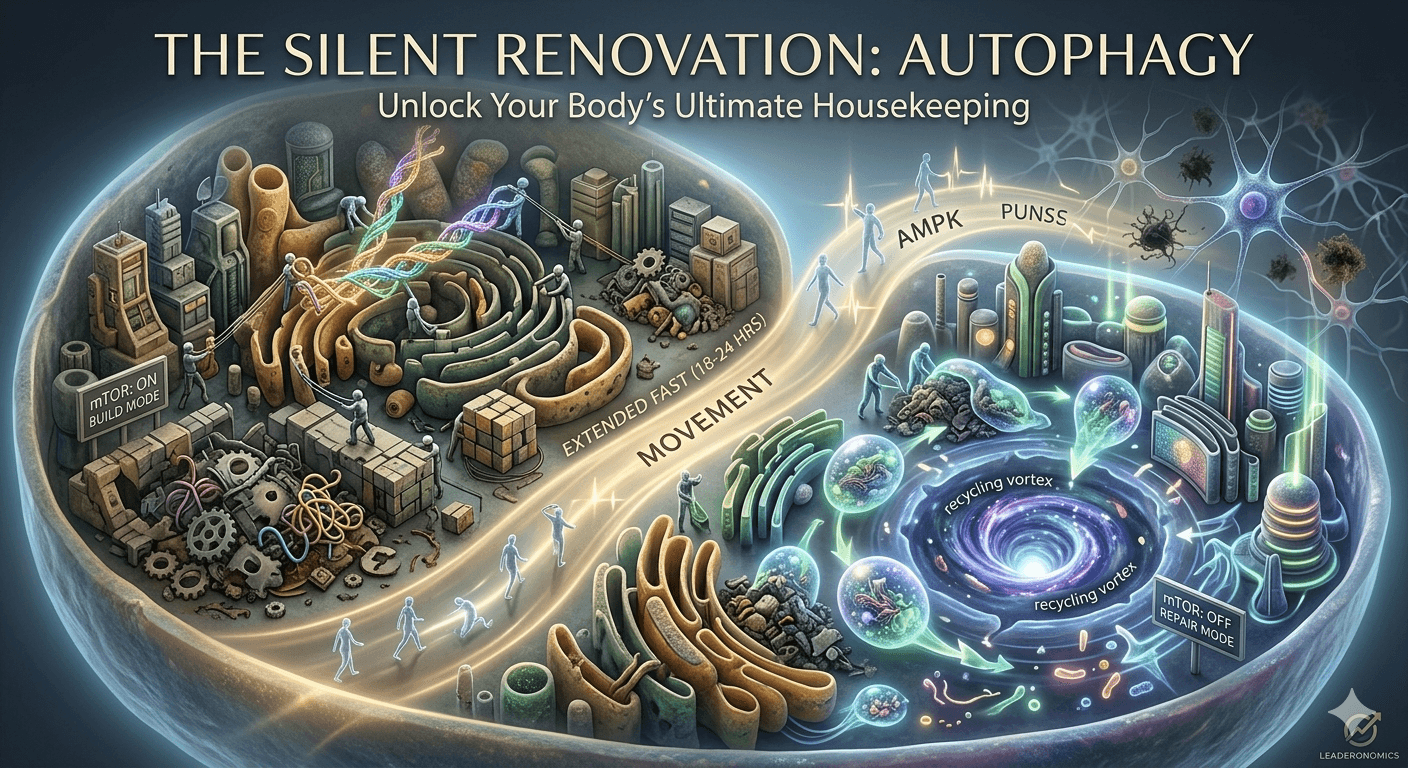
I really like this video above on autophagy. I often tell people that leadership isn't just about managing others—it’s about the stewardship of the most complex organisation you will ever lead: your own body. In my years interviewing top-tier executives and scientists, I’ve found that the most successful transformations happen in the "silence" between the noise. It’s the same in our biology. There is a profound process called Autophagy (from the Greek auto meaning "self" and phagein meaning "to eat") that acts as your body’s internal sanitation crew. But here is the catch: most of us are accidentally firing our janitors every single day.
The Science of Cellular Housekeeping
In 2016, the Nobel Prize was awarded to Yoshinori Ohsumi for cracking the code on autophagy. At its core, this is a survival mechanism. When your cells sense a scarcity of resources (i.e., you stop eating), they don't collapse; they optimise. They identify damaged proteins and broken "machinery" (organelles), bag them up in structures called autophagosomes, and dissolve them in acid chambers called lysosomes. Your body literally eats its own waste to create new energy. It is the ultimate form of "lean manufacturing" for the soul.
The "Build" vs. "Clean" Paradox
As a leader, you know you can't renovate a factory while the assembly line is running at full capacity. Your body has a biological switch called mTOR (Mechanistic Target of Rapamycin).
When mTOR is ON: You are in "Build Mode." This is triggered by insulin spikes and amino acids (protein).
When mTOR is OFF: You enter "Repair Mode" (Autophagy).
The unsettling truth? Every time you take a "casual" bite of a snack or a late-night protein shake, you flip the switch back to "Build." You are essentially telling your body, "Stop cleaning, we’re back in production."
The Real Timeline (It’s Longer Than You Think)
Many "fasting influencers" claim that skipping breakfast for 16 hours is enough. The data tells a different story:
0–12 Hours: Your body is still processing your last meal. Autophagy is idle.
12–18 Hours: Insulin drops, and the transition begins.
18–24 Hours: This is where meaningful, measurable increases in autophagy markers actually appear.
However, your personal timeline is dictated by Metabolic Flexibility. If your body is "spoiled" by a constant stream of sugar and carbs, it takes much longer to flip the switch. Ironically, those who need cellular cleaning the most—those with high metabolic burdens—are often the ones whose bodies resist it the longest.
The Leader’s Advantage: The AMPK Trigger
There is a "shortcut" to deeper cellular repair. It involves a fuel gauge called AMPK. When your cellular energy drops low, AMPK activates, suppresses mTOR, and stimulates autophagy. The secret weapon? Movement. A 16-hour fast combined with a brisk morning walk can trigger more cellular cleaning than a 20-hour fast spent sitting at a desk. By draining your "energy battery" through exercise, you force the body to start the renovation process much earlier.
The High Cost of Constant Growth
In our modern culture, we glorify constant productivity and constant consumption. But as a man of faith, I am reminded that even the Creator modeled the necessity of rest. Autophagy is particularly critical for the brain. It clears the protein aggregates (like amyloid-beta plaques) linked to Alzheimer’s and Parkinson’s. When we eat constantly and sleep poorly, we are making an incredibly expensive biological trade: we are trading long-term neurological health for short-term convenience.
My Final Reflection
Every meal is a vote. You are either voting for Growth or for Repair. You cannot have both at the same time. I want to leave you with the words of Nobel laureate Yoshinori Ohsumi. When asked what struck him most after decades of research, he didn't talk about how powerful autophagy was. He spoke about how fragile it was—how easily a single bite of food could shut down the entire system. In a world designed to keep you consuming, the greatest act of leadership might just be the discipline to step back, create space, and let your body fix itself.



Personal
Tags: Wellness
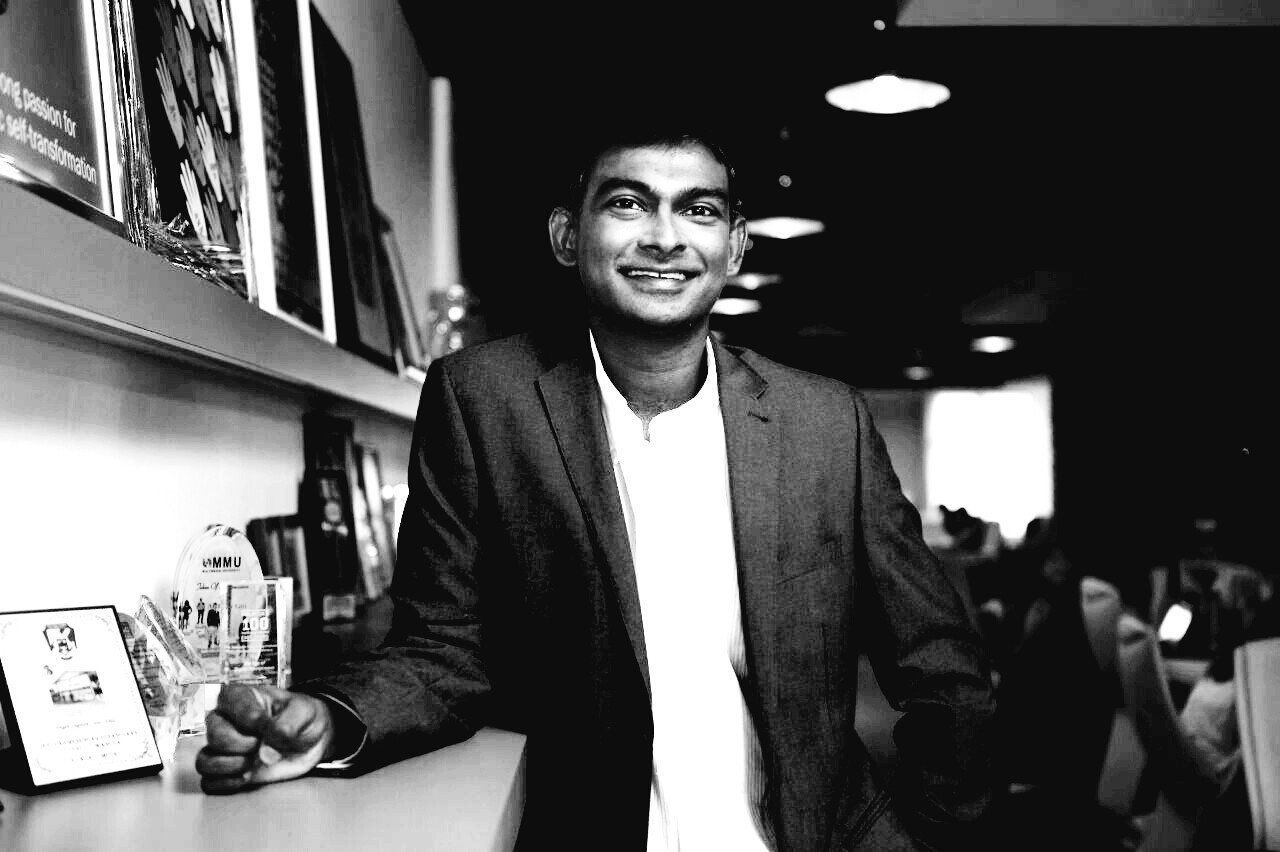
Roshan is the Founder and “Kuli” of the Leaderonomics Group of companies. He believes that everyone can be a leader and "make a dent in the universe," in their own special ways. He is featured on TV, radio and numerous publications sharing the Science of Building Leaders and on leadership development. Follow him at www.roshanthiran.com