Why Raw Talent is Never Enough: The Power of Systems
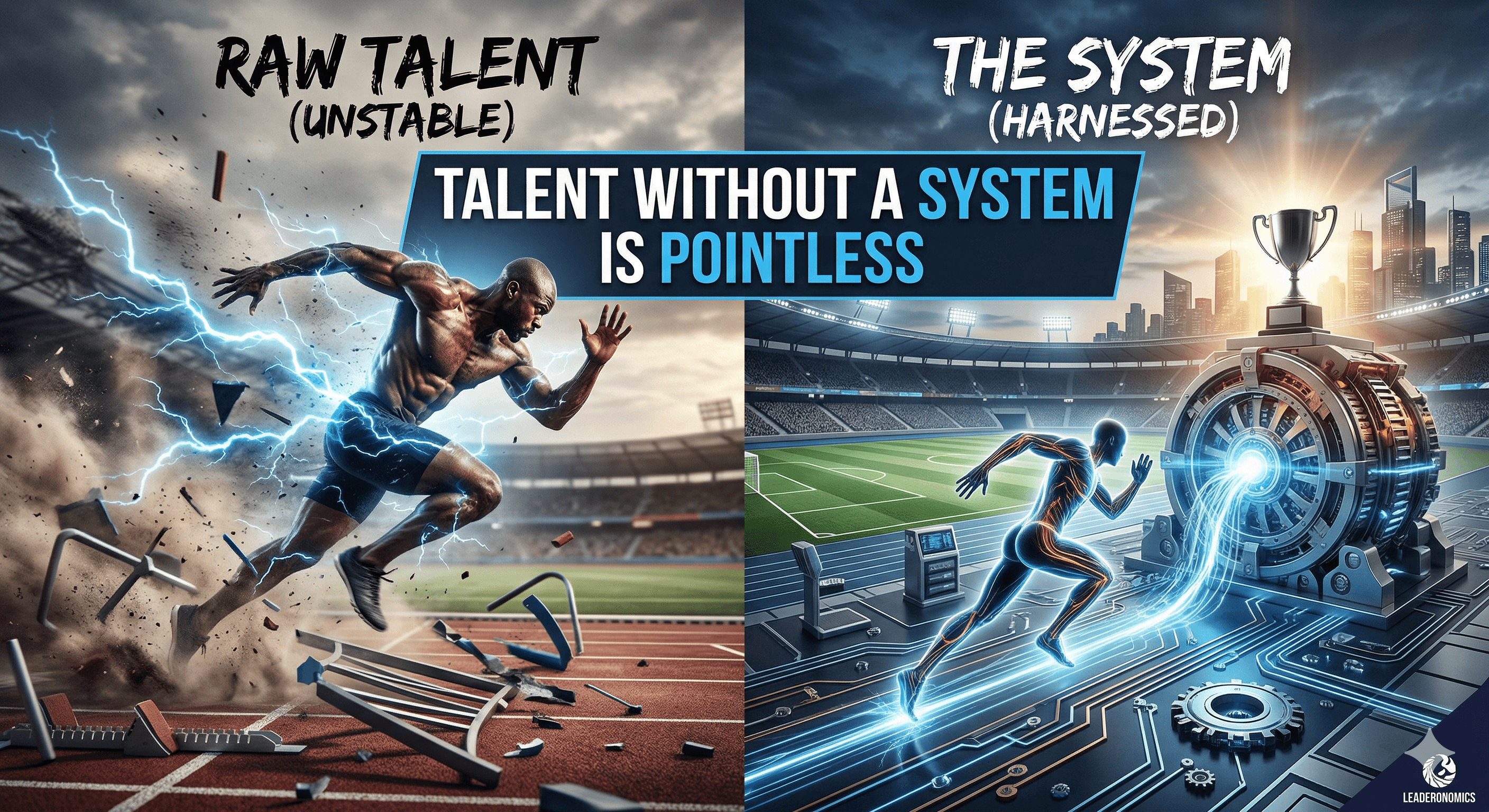
The video of the story of the barber above challenges the long-held societal myth that raw talent is the ultimate determinant of success. It highlights that while natural ability or a high skill level provides an excellent starting point, it is entirely insufficient on its own. Without a structured system—comprising daily habits, operational processes, and a clear framework for execution—talent is merely unharnessed potential.
This is a powerful story from The Vesper Lab that perfectly illustrates a core leadership and business principle: Talent without a system is just a very skilled way of staying broke.
The video features an encounter between a billionaire and James, a highly talented barber who has spent 15 years honing his craft. Despite his immense skill and popularity—with clients driving across town for a $25 cut—James is caught in the "technician's trap." He works 300 hours a month just to make a modest income. The billionaire identifies the fundamental flaw: James doesn't have a business; he has a job where he is the only employee. If James doesn't show up, he doesn't get paid, meaning his income is strictly capped by his time and physical presence [01:04].
The solution the billionaire proposes is a membership system. Instead of charging $25 per cut, he suggests a $99 monthly membership for unlimited cuts and priority booking [01:33]. This shifts the business model from a transactional "pay-per-service" to a predictable, recurring revenue stream. Even with just 60 members, James would secure nearly $6,000 in guaranteed income at the start of every month [02:05]. This shift doesn't just provide financial security; it creates a platform for growth.
By implementing this system, James was able to move from being a solo operator to a business owner. Within a year, he had hired additional staff and expanded his shop [02:39]. The overarching lesson is that true wealth and scalability aren't found in being the most talented person in the room, but in building a system that allows talent to flourish independently of the founder's constant manual labor [02:45].
The core message emphasizes that relying solely on talent makes an individual or an organization vulnerable to inconsistency, burnout, and emotional fluctuations. The key message of the video is this:
Talent without a system is ultimately pointless.
In the realm of leadership and organisational development, confusing talent with sustainable success is a trap many fall into. Here is why raw ability needs the anchor of a strong system, and how leaders can harness both.
The Fragility of Unharnessed Talent
Talent is a multiplier, but it is not a motor. When an individual relies purely on their natural abilities, their performance is tethered to their mood, their energy levels, and their immediate environment. On a good day, they might deliver brilliant, groundbreaking work. But on a bad day—when inspiration doesn’t strike—their output plummets.
Relying on talent alone breeds inconsistency. It leads to the "hero culture" in the workplace, where a team depends entirely on one star player pulling off a miracle at the eleventh hour. This is an exhausting, unscalable way to operate, inevitably leading to burnout for the "hero" and frustration for the rest of the team.
What a System Provides: Consistency and Resilience
A system is a predetermined process. It is the habits, the workflows, the checklists, and the organizational frameworks that dictate how work gets done.
When you embed talent into a robust system, something magical happens. The system establishes a high baseline of performance. It removes the friction of decision-fatigue and reliance on motivation. For a writer, a system is a dedicated writing hour and an outlining process. For a sales executive, it is a disciplined CRM routine and follow-up cadence.
James Clear, author of Atomic Habits, famously noted, "You do not rise to the level of your goals. You fall to the level of your systems." Systems ensure that even when your top talent is operating at 50% capacity, the structural integrity of their work remains solid.
From Individual Brilliance to Organizational Success
For leaders, the "talent vs. system" debate is critical when building teams. Hiring the brightest minds is only step one. Step two—the harder step—is building the architecture in which those minds can thrive collaboratively.
If you have a team of brilliant individuals but no communication protocols, no shared project management frameworks, and no feedback loops, you don't have a team. You have a collection of soloists playing different songs simultaneously. A good system aligns diverse talents toward a singular objective, creating a symphony. It also ensures institutional memory; when a talented individual leaves the company, a strong system guarantees that their processes and efficiencies remain behind.
The Ultimate Competitive Advantage
In the modern economy, everyone has access to talent. Freelance platforms, remote work, and global connectivity mean you can hire brilliant people from anywhere in the world. Talent is no longer the ultimate differentiator—systems are.
True leadership is about recognizing potential and building the tracks for that potential to run on. Stop waiting for inspiration or relying on the sheer brilliance of your people. Instead, build the habits, design the workflows, and establish the systems that turn their raw talent into inevitable success.

Business
Tags: Business Management

Roshan is the Founder and “Kuli” of the Leaderonomics Group of companies. He believes that everyone can be a leader and "make a dent in the universe," in their own special ways. He is featured on TV, radio and numerous publications sharing the Science of Building Leaders and on leadership development. Follow him at www.roshanthiran.com