Your Podcast Habit Might Be Procrastination in Disguise

Antoine Borowiak from Unsplash
One of the most convincing forms of procrastination you'll see in someone who wants to build something is picking up another book. Or downloading a podcast. Or buying a course. And look, there are worse habits. But if you've ever binged founder content, collected half-finished courses in your inbox and still wondered why you're not further along, you'll know what I mean.
We have more access to knowledge than any generation of entrepreneurs in history. Podcasts, newsletters, courses, masterminds and mentors are available at the tap of a screen. Yet, many of us are still stuck in preparation. The gap clearly isn't information. Despite being capable, many ambitious people use learning as a substitute for doing.
The most convincing procrastination you'll ever see
Sophie had an idea for a product-based startup. She was clever, driven and capable, and her idea had real potential. The problem was that she was a physio by trade and had no idea how to build an e-commerce business. She did what many smart people do when they want to try something new; she started learning. Fifteen online courses, to be exact. Her browser was stacked with pages on Shopify mastery, AI content creation, product photography and copywriting. She'd spent thousands of dollars and countless hours on YouTube, but she'd implemented almost nothing. When Sophie came to me for coaching, I had a hunch she was treating me like course number sixteen.
She isn't unusual. In fact, the smarter and more capable you are, the easier it is to fall into this trap. Motivation scientist Professor Ayelet Fishbach, one of the world's leading researchers on human motivation, has shown that people gravitate toward goals where they already feel competent, and avoid situations where they might feel like a beginner.
Of course they do. If you're used to succeeding, being new at something can feel threatening. Achievement gets tied up with safety, approval and self-worth, so your brain gets very good at steering you toward what feels impressive, and away from what might expose you. Learning is perfect for that. It looks productive, it feels responsible, and nobody has to watch you be bad at something. But gathering information through learning is not the same as gathering data through doing. One protects your identity, the other grows it.
Why smart people stay stuck
What makes this tricky is that this version of procrastination feels like progress. If you avoid your business by watching Netflix, you know you're avoiding it. If you avoid it by listening to a podcast on customer acquisition, reading a leadership book or buying a course on scaling, it feels like you’re making moves. That's why this trap lasts so long. You can tell yourself you're working on the business while staying safely outside the part that actually matters. Testing in public.
Turn learning into action with the Sticky Learning Framework →
Why your brain keeps you in learning mode
Sophie wasn't self-sabotaging, she was self-protecting. Psychologists Fuschia Sirois and Tim Pychyl, two of the world's leading procrastination researchers, describe avoidance as an emotion regulation strategy. We don't avoid tasks because we're lazy. We avoid them because, for a moment, avoidance makes us feel better. The courses, podcasts and planning sessions offer short-term relief both from uncertainty, and from a threat to your identity.
For Sophie, she was used to succeeding, and launching something new asked something different of her. There were no credentials to hide behind, no clear path, and no guarantee she'd be good at it. If she launched and it flopped, she'd have to face the idea that maybe she wasn't as capable as she thought. If she launched and it worked, life would change. Either way, she would have to become someone new, so her brain kept her safe by keeping her stuck. As long as she stayed in learning mode, both her dream and her sense of self stayed protected.
The shift that actually moves you
When Sophie told me she couldn't launch because she didn't know how to run Facebook ads, I asked what would happen if she didn't.
"How would anyone find it?"
"What if you just told ten people you know?"
Pause.
"That's not how you're supposed to launch a business."
"Says who?"
"Every course I've bought."
So I asked a different question.
What if she stopped trying to launch a business and started trying to find out whether anyone actually wanted the thing? Sophie had product sitting in boxes at home, so she took it to work and offered it to her physiotherapy clients. Two weeks later she messaged to say she'd sold out. One client posted about it online, and two strangers came into reception asking where they could buy one.
"How do you feel?" I asked.
"Terrified," she laughed. "But also like I can actually do this."
That’s where we needed to get to. Sophie stopped waiting to feel ready and found out what was true. She moved first, and things became clearer. Confidence often works like that. There will always be another podcast, another framework, or another six-step plan for launch success. But the next breakthrough is rarely hidden in content. You’ll usually find it in the move you keep putting off. What are you still preparing for? Start there. Run the experiment.


Personal
Tags: Motivation, Growth, Growth Mindset
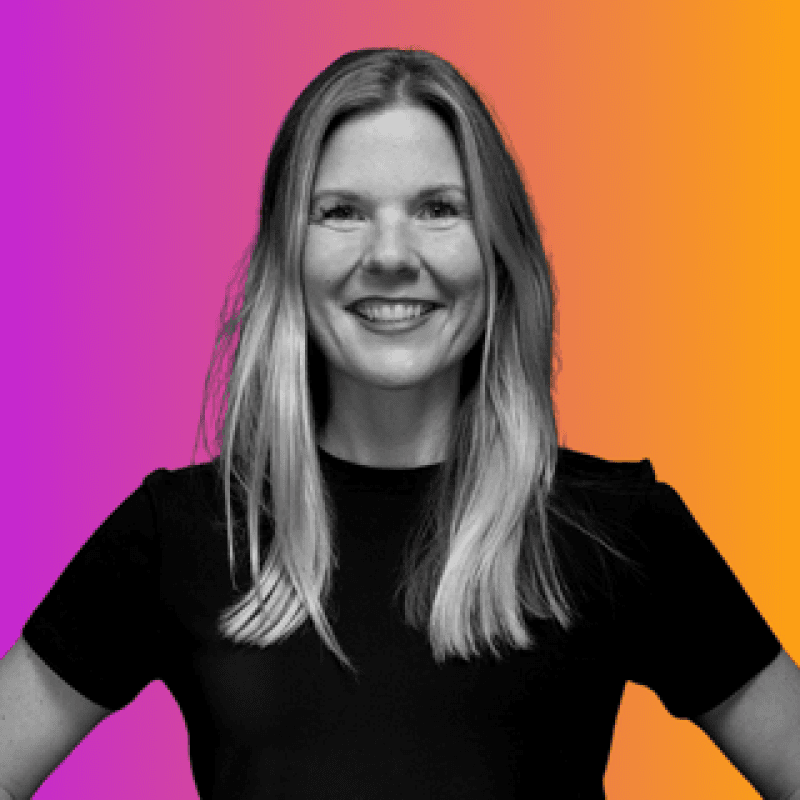
Tamsin Simounds applies the science of human growth to how we work, lead and build careers. She is a leadership coach, keynote speaker, Founder of leak-proof activewear startup JumpProof, and author of The Experiment Mindset: Unlocking the Science of Personal Growth (Wiley). Learn more at tamsinsimounds.com.