Learning Patience the Hard Way
Magnific
I like to be a busy person. I’m the kind who used to answer, “How are you?” with something like, “Busy, and loving it!” as if that were an accomplishment instead of a diagnosis.
I was always doing something, always moving to the next task, always assuming my body would show up and do whatever I asked of it, no questions asked, like a reliable but underappreciated employee.
Then the doctor told me I needed shoulder replacement surgery, and that loyal, hard-working employee filed for a leave of absence.
For the longest time after surgery, I couldn’t type without looking like I was defusing a bomb, hunt-and-pecking at a keyboard. I couldn’t write with my right hand. I tried writing with my left hand, and it looked like the work of a five-year-old who had done it in the backseat of a moving Jeep … while being chased by a T-Rex.
Putting on a shirt became a full production, complete with grunting sound effects and my wife rushing in to see if I was having a stroke. Even buckling a belt, something I’d done thousands of times without a single conscious thought, suddenly required the kind of concentration I used to reserve for parallel parking in Manhattan.
The recovery process began to feel like a prescription. Not the kind you pick up at the pharmacy in a nice little paper bag with a receipt, but more the kind life writes for you when it decides you need to grow, whether you asked for it or not.
My prescription read:
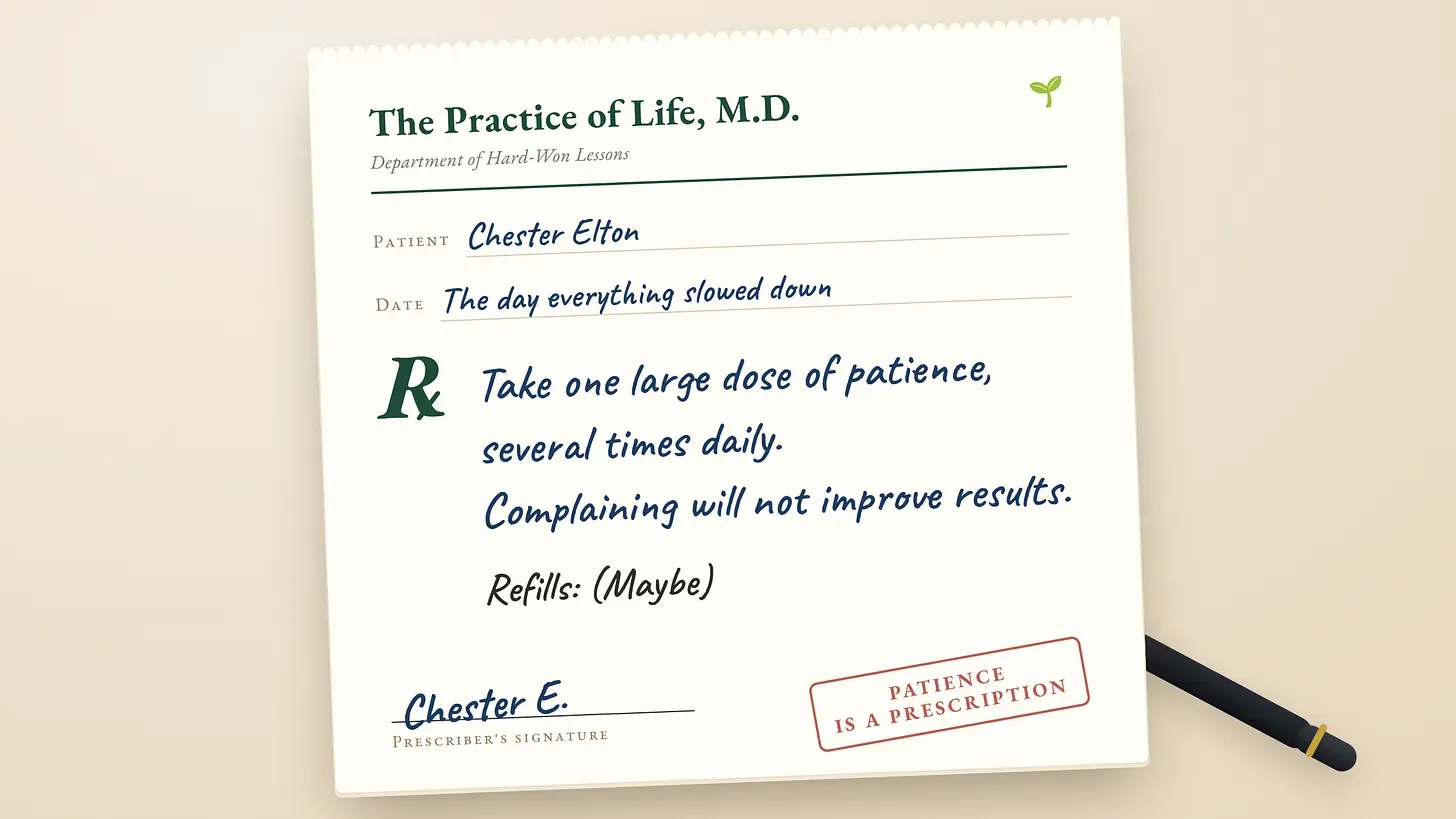
We’ve been told that patience is a virtue. When I heard that in the past, I nodded along like you do with all things you have no intention of actually practicing, like flossing daily or reading the terms and conditions on your insurance policy. Virtues were things other people needed to work on. Patience, to me, sounded like a nice hobby for those with lots of time on their hands. That was, until I had no choice. After surgery my body simply would not move at the speed my mind wanted it to, no matter how firmly I asked it to.
Then I began to understand what real patience was all about.
Here’s what I didn’t expect: the amount of energy that healing takes. Not effort in the way we usually think of it. I wasn’t lifting weights, running, or pushing through workouts. I was mostly sitting on the couch, icing my shoulder, doing what appeared to the naked eye to be absolutely nothing. But my body was working overtime beneath the surface, rebuilding, repairing, knitting things back together. It turns out that takes real energy.
I’d finish a short walk down the hallway and need a nap. Not a hike, mind you, I’m talking a stroll down the hall and I felt like I’d just run a marathon. Nobody warns you about that part of healing. We don’t think of healing as labor, but it is. Quiet, invisible, thoroughly exhausting labor that somehow still leaves you feeling like you did nothing all day.
Read more: Create A Life You Value On Purpose
Somewhere in the middle of all that slowness, something shifted in my thinking about my body. I stopped taking small things for granted. Simply being able to write a few lines in my journal again felt like an achievement worthy of a small parade. Getting a shirt over my head without wincing felt like sticking a gold-medal landing at the Olympics. Things I had done a million times in my life, without a second of gratitude, I suddenly noticed, really noticed, every single time.
It was as if I was handed a brand-new appreciation for my right arm. My dominant hand, as it turns out, is a really important arm. No offense to my left; it’s doing its best.
And then, there came part of healing I really wasn’t prepared for: an outpouring of friendship and love. Flowers showed up at the door. Friends dropped off brownies and food baskets, get-well balloons, and even origami carrots, one of my favorites! Notes of encouragement arrived asking, “How are you doing?” and “How’s the rehab?” They came from people I hadn’t heard from in a while and from people I talk with often. When life forces you to slow down, you suddenly have time to notice things you might otherwise hurry past, and I found myself noticing just how many good people I have in my corner.
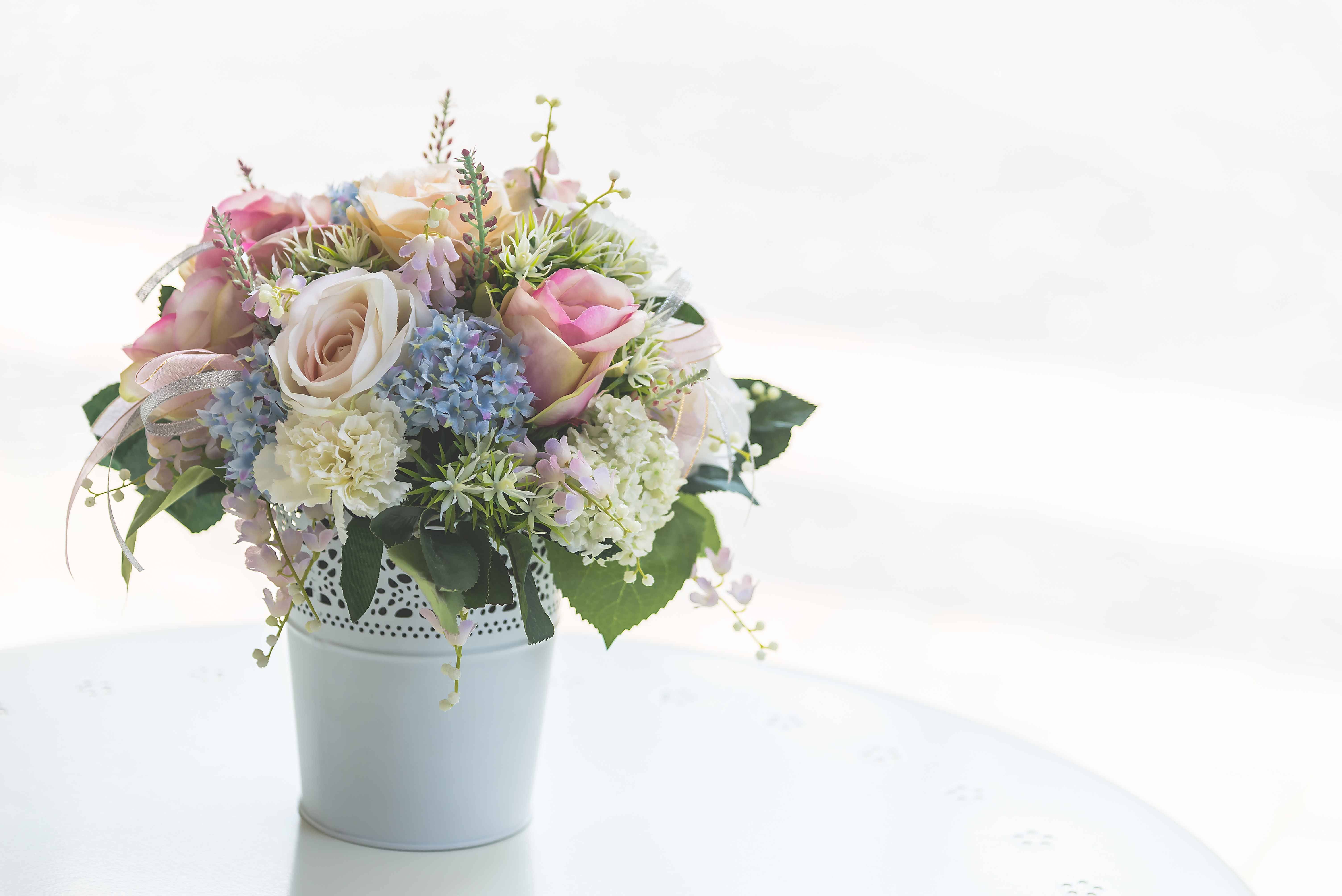
Lifeforstock from Magnific
That may be the real gift hidden inside this whole patience prescription. When you can’t do things for yourself, you are reminded how much other people are willing to do for you. I have always considered myself a grateful guy, but there is something humbling about being on the receiving end of so much kindness. It made me realize that I am one of the luckiest people on the planet.
The experience also gave me a new and humbling kind of respect for people who live with the use of only one arm through war, illness, accident, or circumstances of birth, not for the twelve weeks my surgeon promised me, but permanently. These folks wake up every day and figure out daily life: buttoning a shirt, tying a shoe, carrying a bag of groceries, living their life. I had only a temporary glimpse of a fraction of what they navigate as a matter of course, and it left me in awe of what the human spirit is capable of adapting to.
Looking back now, I wouldn’t have chosen this prescription. Given the choice, I’d have picked almost any other virtue to work on. Generosity, maybe, or punctuality, something I could practice with both hands. But I’m not sure I would have learned such a valuable lesson any other way.
Patience, it turns out, is not simply a personality trait some people are lucky enough to be born with. I certainly wasn’t. But I found it is something that can be built, even against your will, while you’re frustrated and one-handed and fumbling with a belt buckle at seven in the morning. And what it can leave behind is a kind of gratitude that’s hard to manufacture any other way.
I’m grateful for the small things I never thought to appreciate before. I’m grateful for a body that is doing the slow, invisible work of healing. Most of all, I’m grateful for the people who showed up to help.
So here’s what I’m asking you to consider this week: Has life ever prescribed you a dose of patience you didn’t want but ended up needing? What did slowing down force you to notice that you might otherwise have missed? I’d love to hear about your own “patience prescription” moment. I have a feeling I’m not the only one who’s been handed this particular medicine.
This article was firstly published on Chester Elton's LinkedIn.
You made it through the week! Take a breather with us — you deserve it.
Wellness Wednesday
From mastering breathing techniques to unlocking the secrets of longevity, join Wim Hof Method Instructor Piyachai Teo as he dives into simple yet powerful ways to boost your health and happiness.


Personal
Tags: Self-Awareness