You Cannot Stop Time But You Can Stop the Rush
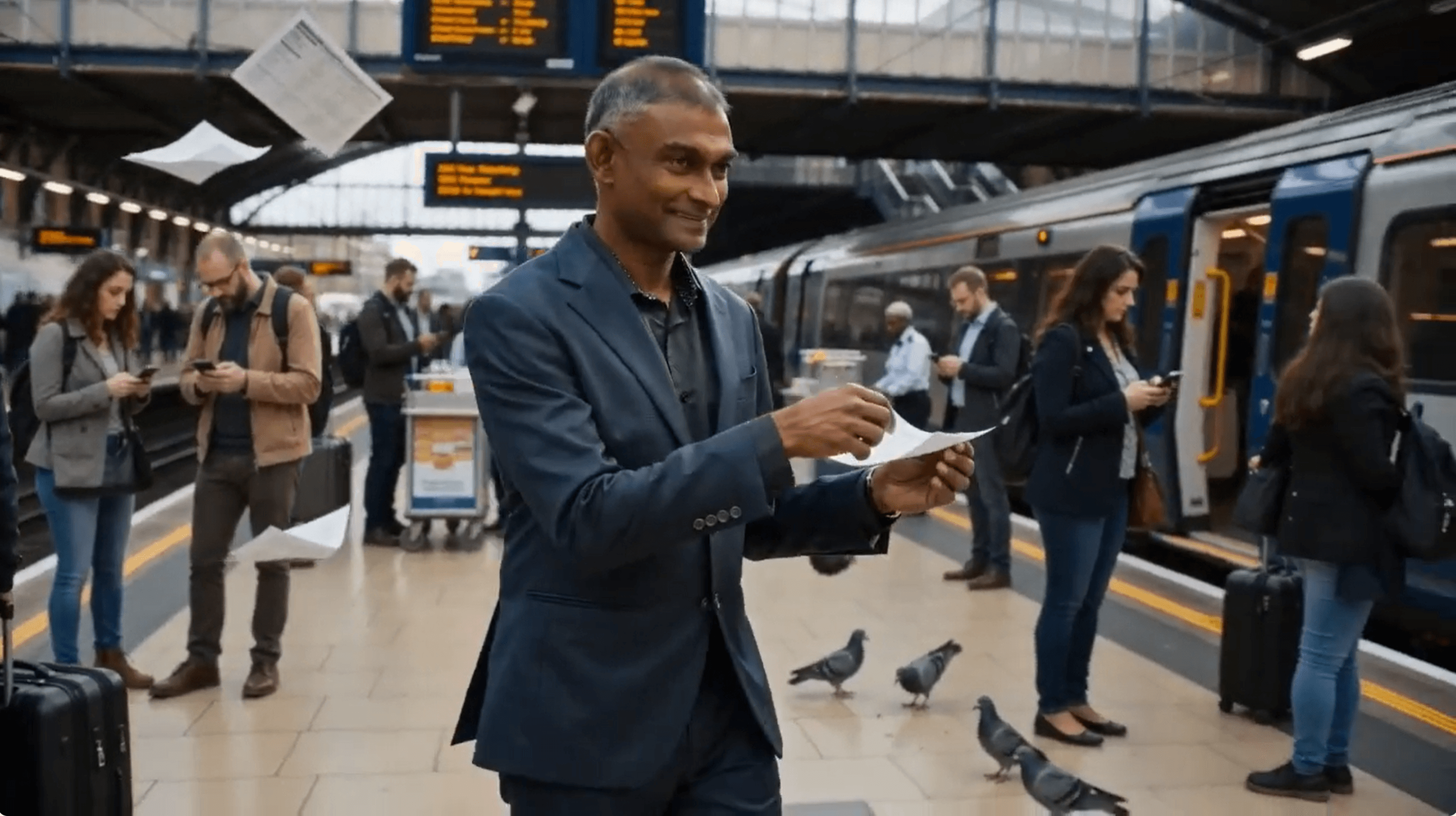
I recently made a short video (above) where I appeared to stop time. A train station. People rushing. A train moving. Papers flying. Faces frozen mid-panic. The world caught in that strange little moment between “I am late” and “I have completely lost control of my life.”
And there I was, walking through it all as if time had politely agreed to take a tea break. Of course, let me immediately confess something before someone nominates me for a Marvel movie. I did not actually stop time. It was just a clever video effect. But after watching the video again, I found myself thinking about something much deeper.
Most of us do not need time to stop. We need ourselves to stop. Because the real problem in our lives is not always that time is moving too fast. The real problem is that we are.
We rush from meeting to meeting. We reply to messages while walking. We eat while scrolling. We listen while preparing our answer. We attend one conversation while mentally rehearsing the next one. We carry yesterday’s frustration into today’s meeting and today’s anxiety into tomorrow’s sleep. We are always moving. But movement is not the same as meaning. And speed is not the same as progress. Sometimes, all we have done is become very efficient at travelling in the wrong direction.
The Train Station of Modern Life
A train station is a wonderful picture of the modern human condition. Everyone is going somewhere. Everyone looks like they have a reason. Everyone is carrying something. There is noise. There are announcements. There are people arriving. People leaving. People missing trains. People pretending they are not lost. People walking with intense confidence in completely the wrong direction.
It looks a lot like work. It looks a lot like leadership. It looks a lot like life. The modern workplace has become a permanent station platform. Something is always arriving. Something is always leaving. Something is always delayed. Something is always urgent. And somewhere in the background, a voice keeps announcing another change we did not ask for.
A new deadline. A new transformation. A new system. A new structure. A new target. A new crisis. A new acronym dressed up as strategy.
And because everything feels urgent, many leaders have forgotten how to pause. We think pausing is weakness. We think stillness is inefficiency. We think reflection is a luxury for people who have finished their work. But nobody ever finishes all their work.
There is always another train. Another email. Another budget cycle. Another town-hall. Another performance review. Another problem wearing lipstick and calling itself an opportunity. So if we wait for life to become quiet before we become still, we may be waiting for a very long time.
The Myth of “I Don’t Have Time”
One of the most common things we say is, “I don’t have time.” But I am beginning to think that is not always true. Sometimes, we do have time. What we do not have is attention.
We have time to scroll, but not time to reflect.
We have time to react, but not time to understand.
We have time to attend meetings, but not time to think deeply about whether those meetings are helping anyone.
We have time to answer everyone else’s urgency, but not time to ask whether our own life is aligned with what truly matters.
Time is not merely measured in hours and minutes. Time is measured in presence. You can spend one hour with your child and be absent. You can spend ten minutes with a colleague and truly listen. You can sit in a three-hour strategy meeting and contribute nothing but oxygen consumption. You can take a five-minute pause and see something that changes the entire direction of your leadership. The issue is not just the quantity of time. It is the quality of our presence inside the time we have been given.
That is why stillness is not about doing nothing. Stillness is about becoming fully available to what is true.
Stillness Reveals What Speed Conceals
When we are moving too fast, we miss things.
We miss the colleague who has stopped contributing in meetings.
We miss the team member whose “I’m okay” is carrying too much weight.
We miss the customer frustration hiding behind polite feedback.
We miss the small cracks in culture before they become expensive fractures.
We miss the quiet resentment in our families.
We miss the warning signs in our own bodies.
We miss the slow erosion of joy.
And perhaps most dangerously, we miss what we are becoming. That is the scary thing about busyness. It does not just fill your calendar. It can deform your soul. Slowly, almost invisibly, you become less patient. Less curious. Less playful. Less kind. Less courageous. Less human.
You become a machine that can clear tasks but cannot carry meaning.
You become very impressive and very exhausted.
You become productive, but not fruitful.
And there is a difference. Productivity asks, “How much did I get done?” Fruitfulness asks, “What did my life produce in people, in purpose, in love, in courage, in truth, in contribution?”
You can be productive and still be empty. You can be busy and still be avoiding the one thing that actually matters.
The Leadership Discipline of the Pause
Great leadership is not merely about making fast decisions. It is about making wise decisions. And wisdom often needs a pause.
A pause before reacting to an email.
A pause before correcting someone publicly.
A pause before agreeing to another commitment.
A pause before launching another initiative when the organisation is already choking on change fatigue.
A pause before assuming the loudest person in the room is right.
A pause before mistaking activity for alignment.
Many bad decisions are not made because leaders lack intelligence. They are made because leaders lack space.
Space to think.
Space to listen.
Space to examine motive.
Space to separate ego from truth.
Space to ask, “What is really going on here?”
In my own leadership journey, I have found that some of my worst moments did not come from ignorance. They came from hurry.
I spoke too fast.
I judged too quickly.
I moved before listening.
I pushed when I should have paused.
I solved symptoms because I had no space to understand systems.
Hurry makes us shallow. Stillness makes us honest. And in leadership, honesty is oxygen. Without it, culture suffocates politely.
We Are Not Machines. We Are Rhythmic Beings.
One of the great lies of modern work is that human beings can operate like software.
Always on.
Always available.
Always updating.
Always optimising.
Always producing.
But humans are not machines. We are rhythmic beings. We need work and rest. Output and recovery. Speaking and silence. Action and reflection. Giving and receiving. Exertion and renewal.
Even the strongest leaders cannot keep pouring from an empty inner reservoir. Eventually, something will leak. Usually, it leaks as anger, cynicism, numbness, control, sarcasm or withdrawal. Many leaders do not burn out because they are weak. They burn out because they have built a life with no rhythm of recovery. They treat rest as a reward after everything is completed.
But everything is never completed. Rest is not the prize at the end of productivity. Rest is part of the architecture of sustainable contribution. This is where many organisations get it wrong too.
They celebrate overwork, then run wellbeing programmes.
They reward urgency, then complain about burnout.
They fill calendars, then wonder why creativity disappears.
They demand innovation, but give people no room to think.
They say people are their greatest asset, then design work systems that quietly grind people down like sugar cane at “pasar malam.”
Sweet juice comes out for a while. Then only fibre remains.
The Pause Is Where We Recover Choice
When we do not pause, we live by reflex.
We react to messages.
We react to pressure.
We react to fear.
We react to other people’s expectations.
We react to old wounds.
We react to our need to prove ourselves.
We react to the imaginary scoreboard in our heads.
But the pause creates a small sacred space between stimulus and response. In that space, we recover choice.
We can choose not to send the angry reply.
We can choose to listen before defending.
We can choose to say no to something good so we can say yes to something better.
We can choose to stop performing success and start pursuing significance.
We can choose to notice what our busyness has been helping us avoid.
And that may be the most uncomfortable part of stillness. When you finally stop, you may have to face what the noise has been hiding.
The relationship that needs repair.
The decision that needs courage.
The apology that is overdue.
The dream that has been buried under practical excuses.
The tiredness you have been calling commitment.
The fear you have been calling responsibility.
The emptiness you have been decorating with achievements.
Stillness can be uncomfortable because it removes the hiding places. But it is also where healing often begins.
A Final Thought: What Has Your Busyness Prevented You From Noticing?
So as you watch this little video of me “stopping time,” please do not merely think, “Nice effect.” Ask a deeper question.
What would I see if time stopped around me?
Would I notice how tired I really am?
Would I notice the people I have been rushing past?
Would I notice that I have been winning the wrong race?
Would I notice that my team does not need another speech, but a leader who listens?
Would I notice that my family does not need my leftovers, but my presence?
Would I notice that my calendar is full, but my soul is undernourished?
Would I notice that I have confused being needed with being purposeful?
Would I notice that the life I am building is impressive, but not necessarily meaningful?
We cannot stop time. But we can stop surrendering our attention to everything that shouts. We can stop worshipping urgency. We can stop treating busyness as a badge of honour.
We can stop confusing exhaustion with impact. We can stop running long enough to ask whether the train we are chasing is even taking us where we want to go.
This weekend, do something radical. Pause. Not dramatically. Not performatively. Not as another productivity hack. Just pause.
Sit quietly for ten minutes. Take a walk without headphones. Have one meal without your phone. Ask someone you love a question and actually listen to the answer. Look at your calendar and ask, “What does this say about what I truly value?” Look at your life and ask, “Am I becoming the kind of person I hoped I would become?”
Because sometimes the most powerful thing you can do is not to speed up. It is to stop long enough to see clearly. Time will not stop for us. But perhaps, for a few minutes this weekend, we can stop rushing through it. And maybe in that pause, we will discover that the life we were chasing was quietly waiting for us to notice it.
Be blessed everyone!
Roshan

Personal
Tags: Be A Leader
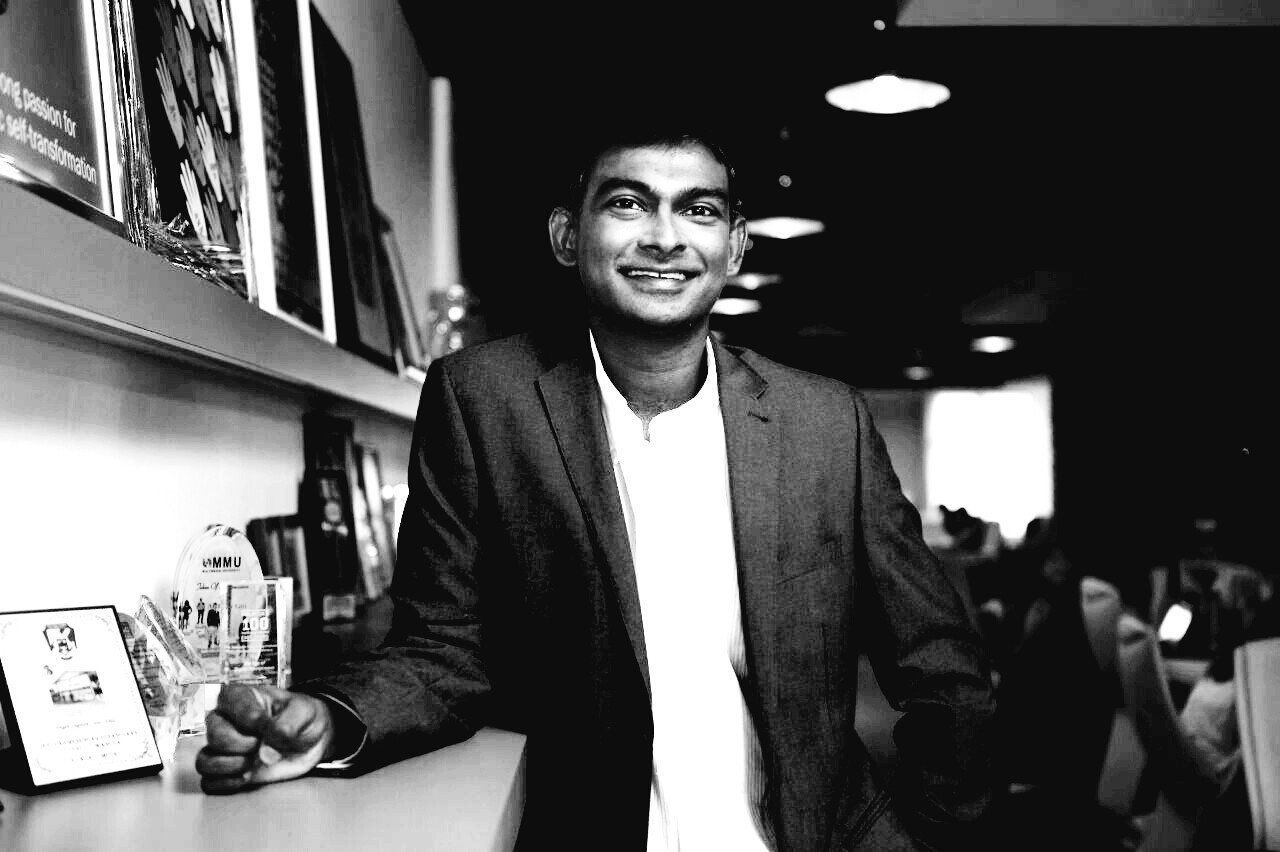
Roshan is the Founder and “Kuli” of the Leaderonomics Group of companies. He believes that everyone can be a leader and "make a dent in the universe," in their own special ways. He is featured on TV, radio and numerous publications sharing the Science of Building Leaders and on leadership development. Follow him at www.roshanthiran.com