Behavioral Change Dynamics: Stop Fixing Willpower, Fix Your System

Emma Simpson from Unsplash
A week ago, I was reading about this whole concept of Behavioral Change Dynamics. Specifically, how it applies in health and fitness, i.e the study of why people start, sustain, relapse from, and eventually internalize healthier behaviors. This really got me excited and thinking… and of course got me writing about it!
What really got me excited was this crucial word “dynamics”. Human behavior is not a light switch which automatically switches on a behaviour: “I know exercise is good, therefore I exercise.” It behaves more like a system, influenced by motivation, identity, environment, habits, social norms, emotions, feedback, friction, rewards, confidence, and life circumstances. That is why someone can know perfectly well that they should exercise, sleep earlier, eat differently, or lose weight, and still not do it consistently (case in point – me!).
A better or more useful way to think about it is: Health outcomes are lagging indicators. Behaviors are leading indicators. Behavioral Change Dynamics studies what makes those behaviors move and stick.
Related:
7 Habits of the Most Successful Leaders We Train
The basic health-and-fitness problem
Imagine someone says:
“I need to lose 10 kg.”
That sounds like a goal, but from a behavioral-change perspective, losing 10 kg isn't actually a behavior. It is an outcome.
The behaviors might be:
- walking 8,000 steps a day,
- strength training three times a week,
- reducing liquid calories,
- eating protein and vegetables at lunch,
- going to bed before midnight,
- tracking food,
- preparing meals on Sunday,
- weighing themselves several times a week.
And beneath those behaviors sit another layer of forces:
- Can I do it?
- Do I want to do it?
- Does my environment make it easy?
- Does it fit who I believe I am?
- Do I receive feedback quickly enough?
- What happens when I fail?
That entire moving system is behavioral change dynamics.
One useful model
A very established framework is COM-B, developed by Susan Michie and colleagues:
Behavior = Capability × Opportunity × Motivation
You can think of it this way:
Driver | Fitness example |
| Capability | I know what exercise to do and physically can do it |
| Opportunity | I have access, time, equipment and social support |
| Motivation | I sufficiently value doing it and have automatic/habitual motivation |
| Behavior | I actually train consistently |
This distinction matters enormously. Here are some examples of how the work:
- If I don't exercise because I don't know how to train, giving me motivational speeches or inspiring messages won't solve why I don’t exercise.
- If I know exactly what to do but my schedule makes exercise nearly impossible, another training plan or more motivation won't make me exercise more either.
- If I have time, knowledge and a gym but exercise has never become automatic in my life, then habit formation becomes the intervention.
In leadership language, we often blame the person when the problem actually sits in the system. The same thing applies to behaviour in organisations, and the issue is the organisational system or “ritual” as I like to call it (I write quite a bit on that in my LinkedIn post)
The deeper dynamic: motivation starts change, systems sustain it

Lifeforstock from Magnfiic
This is where health behavior becomes fascinating. People often begin fitness programs because of an emotional event:
- “Doctor says my cholesterol is high.”
- “I saw myself in that photograph."
- “My trousers don't fit.”
- “I'm turning 50.”
- “I want to be able to play football with my children.”
That creates an initial motivational spike. But motivation fluctuates.
Monday Roshan says: “From today onwards, I am a MACHINE.”
Thursday Roshan discovers nasi lemak. The machine apparently has a sambal setting.
This is precisely why sustainable behavior change cannot depend primarily on willpower. A better progression looks something like:
Motivation → Action → Repetition → Reward → Habit → Identity → Lifestyle
But it isn't perfectly linear. People relapse, restart, modify goals and encounter disruptions. Successful behavioral change therefore involves building recovery mechanisms, not expecting flawless compliance. And that distinction is hugely important in health.
1. Motivation gets you through the door
The person develops a sufficiently compelling reason to act. But there are different forms of motivation.
“I exercise because my wife nags me” is very different from:
“I exercise because I want to remain physically capable at 70.”
And eventually: “I train because I'm someone who takes care of my body.”
Self-Determination Theory helps explain this. Sustainable motivation tends to strengthen when people experience autonomy, competence and relatedness: I choose this, I feel increasingly capable of doing it, and I feel connected to people who support it.
2. Reduce friction
This is perhaps one of the most underappreciated aspects of health behavior. Suppose someone intends to exercise at 6:30 a.m.
Scenario A:
Wake up → find gym clothes → find shoes → pack bag → decide workout → drive 20 minutes → find parking → exercise.
Scenario B:
Clothes beside bed → shoes waiting → gym downstairs → workout already programmed.
Same human being. Completely different probability of behavior. Behavioral science increasingly emphasizes choice architecture and environmental design because small amounts of friction accumulate.
The best behavioral-change interventions therefore don't merely ask: “How do I increase motivation?”
They ask: “How do I make the desired behavior easier and the undesired behavior harder?”
Put fruit where you see it. Don't buy the biscuits. Put running shoes by the door. Book training into the calendar. Exercise with someone. Prepare tomorrow's food tonight. Environment quietly beats intention remarkably often.
3. Create a cue-behavior-reward loop
Habit formation introduces another layer.
Instead of: “I'll exercise sometime tomorrow.”
Create a specific trigger: “After I finish my morning coffee, I put on my shoes and walk for 20 minutes.”
Now we have: Cue → Behavior → Reward
Repeated enough, the cue begins to trigger the behavior with decreasing conscious negotiation. Research by Phillippa Lally and colleagues famously found considerable variation in the time required for behaviors to approach automaticity. The popular “21 days to form a habit” rule is therefore much too simplistic. Some behaviors become habitual relatively quickly; others can take many months.
The practical implication is more useful than the headline number: Consistency matters more than an arbitrary 21-day finish line.
4. Make progress visible
Health presents a nasty behavioral problem. The cost is immediate but the reward is delayed:
- Exercise hurts today and the cardiovascular benefits appear later.
- Cake tastes wonderful now. The consequences appear later.
Our brains aren't particularly impressed by PowerPoint slides explaining our health in 2046. So good behavioral design creates short feedback loops.
Instead of measuring only: “Have I lost 10 kg?”
Measure the following:
- Did I exercise today?
- How many sessions this week?
- How many steps?
- Did I hit my sleep target?
- Did I complete the behavior I committed to?
This creates something powerful: evidence of progress.
The person no longer waits months to feel successful.
5. Eventually, identity becomes the engine
This is perhaps the deepest layer. There is a big psychological difference between:
“I'm trying to exercise.” and,
“I'm someone who trains.”
The first describes an activity. The second describes an identity. Identity can become a reinforcing loop:
I train → I see evidence that I'm disciplined → I think of myself as someone who trains → that identity increases the probability that I train again.
That is when behavioral change begins migrating from compliance toward identity.
And interestingly, this is almost exactly what happens in organisational culture.
Why I think Behavioral Change Dynamics is bigger than fitness
As I read about this concept, I immediately saw how it connects beautifully with the work me and the Budaya team have been doing these past years around culture, leadership and transformation. Organisations frequently make the same mistake individuals make with fitness. They confuse knowing with doing.
Leadership programme: “Here are the five behaviors of an accountable leader.”
Everyone nods. Workshop ends. Three months later… Nothing changed.
That isn't necessarily a learning problem. It is often a behavior-change architecture problem. The parallels are striking:
Health transformation | Organisational transformation |
| “I want to lose weight” | “We want a high-performance culture” |
| Exercise consistently | Give feedback consistently |
| Track steps | Track leadership behaviors |
| Personal trainer | Coach/manager |
| Workout routine | Organisational ritual |
| Gym environment | Organisational systems |
| Fitness community | Team/social norms |
| Progress dashboard | Culture dashboard |
| Relapse | Reversion to old culture |
| “I'm an athlete” | “This is how we operate here” |
And that leads to a formulation I think is particularly useful:
Information changes what people know.
Motivation changes what people intend.
Practice changes what people can do.
Systems change what people repeatedly do.
Identity changes what people naturally do.
That last transition is where transformation becomes durable.
A Behavioral Change Flywheel
If I were designing a practical health/fitness Behavioral Change Dynamics framework, I would probably make it something like:
1. WHY
Create emotional and personal meaning.
↓
2. TINY ACTION
Translate aspiration into observable behavior.
↓
3. FRICTION
Make good behavior easier and poor behavior harder.
↓
4. TRIGGER
Attach behavior to a reliable cue or routine.
↓
5. REPEAT
Build frequency before chasing perfection.
↓
6. FEEDBACK
Make progress visible.
↓
7. SOCIAL REINFORCEMENT
Introduce accountability, coaching and community.
↓
8. REWARD
Allow the brain to associate behavior with something positive.
↓
9. IDENTITY
“I am becoming this kind of person.”
↓
10. RECOVERY
When disruption occurs, return quickly rather than interpreting a lapse as failure. And then the flywheel spins again. The last piece is particularly important. The opposite of successful behavior change isn't relapse. It is a failure to restart.
Missing one workout is an event. “I'm hopeless at exercise” is an identity conclusion. Those are profoundly different things.
Related:
The High-Performance Habits That Could Be Holding You Back
There is also a readiness dimension
Another influential health-behavior framework, the Transtheoretical Model, describes people as moving through stages such as:
Precontemplation → Contemplation → Preparation → Action → Maintenance
This helps explain why the same intervention doesn't work equally well for everyone.
Someone thinking: “I don't really need to exercise.”
needs a very different intervention from someone saying:
“I want to start. Tell me what to do tomorrow morning.”
And both need something different from: “I've been exercising for nine months, but I'm struggling to keep it going.”
This is why sophisticated health interventions increasingly try to become adaptive rather than one-size-fits-all.
Where this gets especially interesting today: AI
As you know, I have really been fascinated with AI and its repercussions. As I continue to dive deep into the AI space, I find there is a fascinating opportunity emerging around AI + behavioral science + health data.
Historically, fitness apps mainly told us: “You walked 6,423 steps.”
The next generation apps will potentially ask: “What intervention is most likely to get Roshan to walk another 2,000 steps today?”
Those are fundamentally different questions. Imagine combining wearable data, sleep, activity, calendar patterns, historical behavior and individual preferences. The system could learn:
- Roshan slept badly → don't prescribe maximal training.
- Three days without activity → intervene before disengagement becomes a pattern.
- Wednesday afternoons consistently work → schedule exercise there.
- Social accountability increases adherence → prompt training with a friend.
- Weight isn't moving but training consistency is improving → reinforce the behavioral win rather than demoralizing the user with the lagging metric.
Now we have moved from health tracking into behavioral orchestration. That is potentially a very powerful space because the great bottleneck in health isn't always knowledge.
Most people already know some version of: move more + eat reasonably + sleep enough + don't smoke + manage stress.
The difficult question is: How do we help a human being actually do those things repeatedly for years?
That is the heart of what I saw from Behavioral Change Dynamics. And there is an even bigger conceptual leap here that I suspect may be relevant: health behavior, employee behavior, leadership behavior and culture change are surprisingly similar systems problems. In all four, the challenge is moving people from awareness → intention → action → repetition → reinforcement → identity.
If you want to fix your health, fitness, or personal habits, stop trying to fix your willpower. Fix your system instead. Here are five practical steps you can start applying today to build sustainable health habits:
- Define the micro-behavior, not the outcome. Don't focus on "losing 10 kg." Focus on the tiny daily action: walking 10 minutes after lunch or laying out your gym clothes before bed.
- Remove friction aggressively. Design your environment so the right choice is the easiest choice. Keep healthy food visible and remove temptations from your pantry.
- Attach new habits to existing cues. Pair a new habit with an established routine: "After I pour my morning coffee, I will drink a glass of water."
- Track leading indicators for quick feedback. Give yourself immediate credit for completing the behavior (e.g., checking off a daily workout) rather than waiting months to see a change on the scale.
- Focus on fast recovery over perfection. Missing a workout is just an event, not an identity failure. The goal isn't never slipping up—it's restarting immediately without judgment.
Remember, real transformation happens when your actions move from compliance to identity. Build the system, stick to the tiny wins, and let the results take care of themselves.


Personal
Tags: Motivation, Character
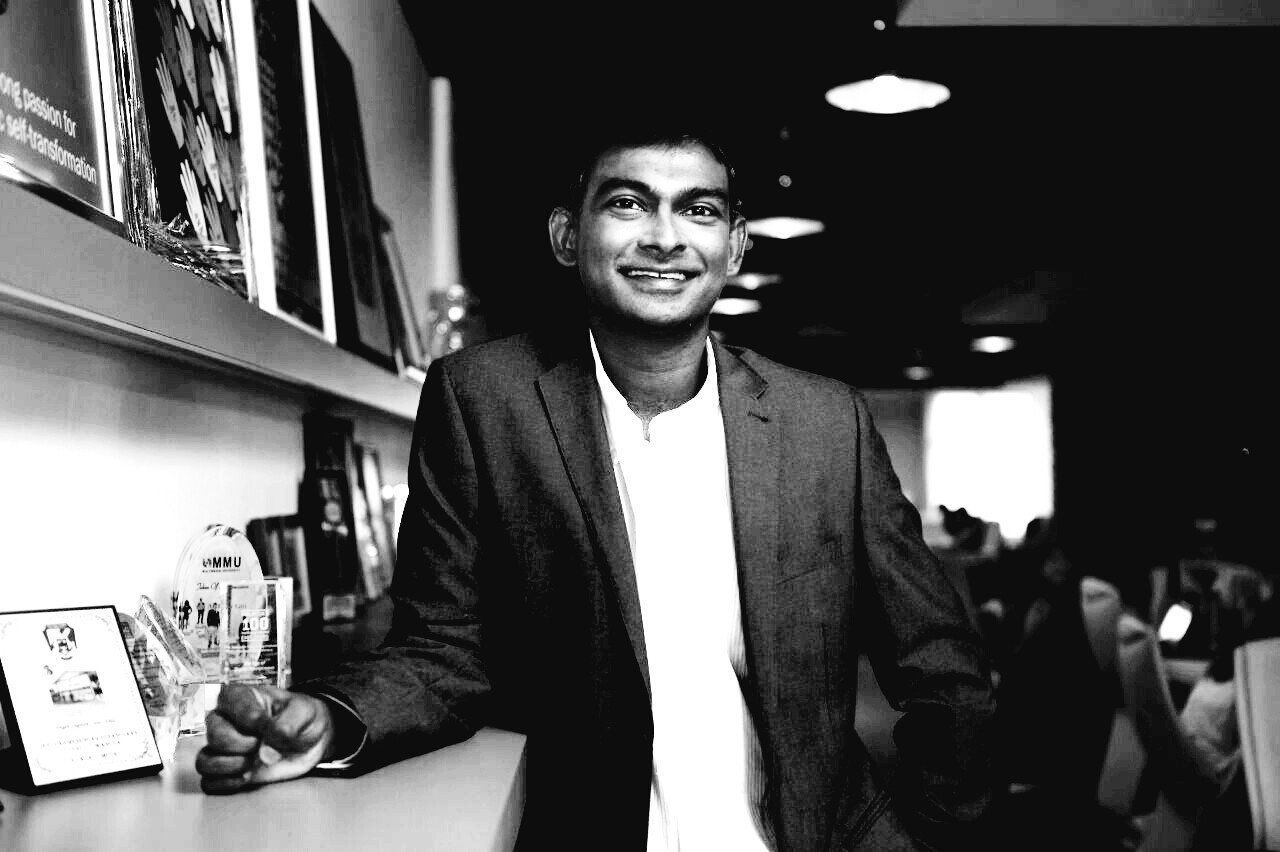
Roshan is the Founder and “Kuli” of the Leaderonomics Group of companies. He believes that everyone can be a leader and "make a dent in the universe," in their own special ways. He is featured on TV, radio and numerous publications sharing the Science of Building Leaders and on leadership development. Follow him at www.roshanthiran.com