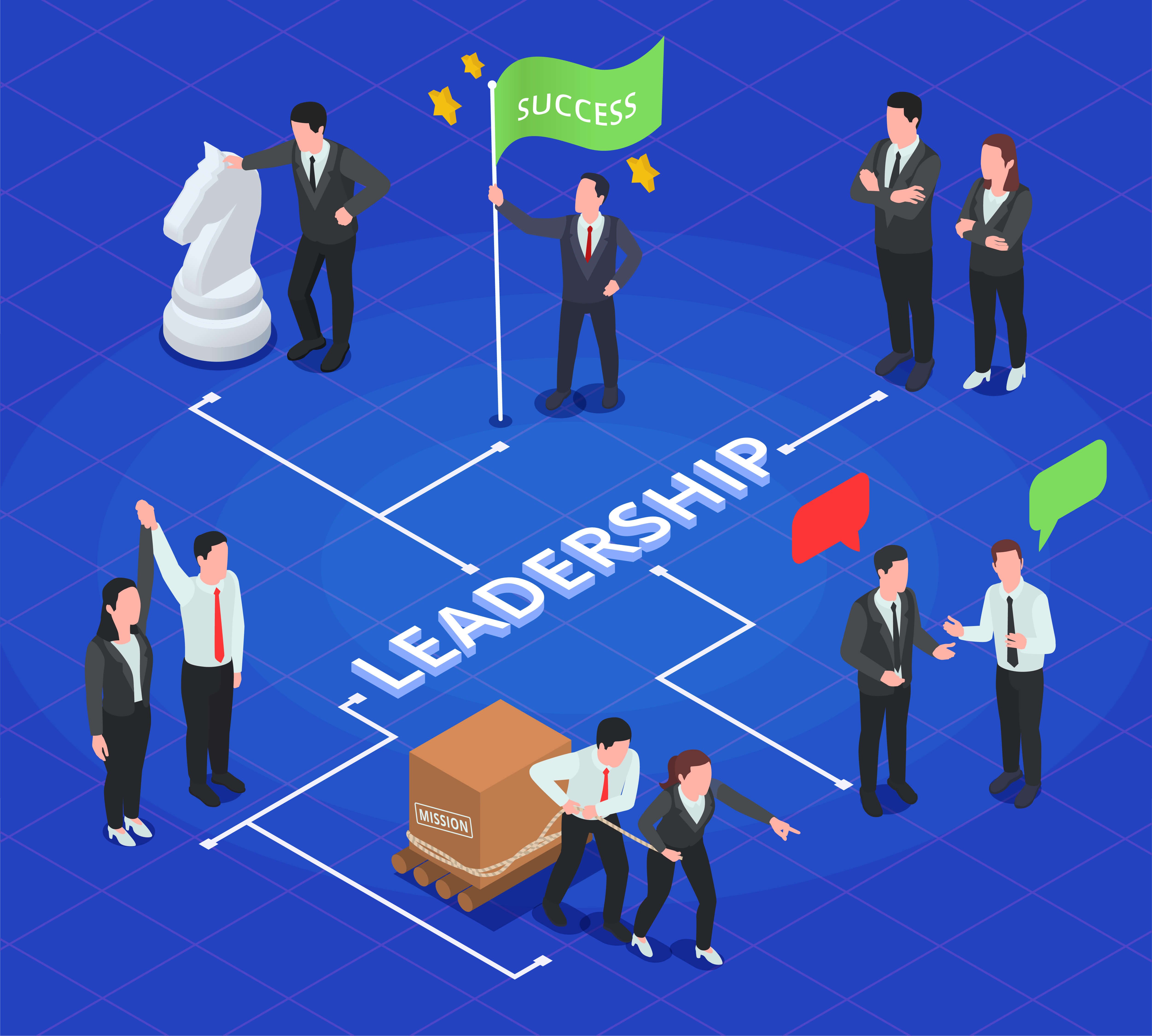
When Your AI Advisers Disagree: What 22 Competing Models Reveal About the Future of Leadership Decisions
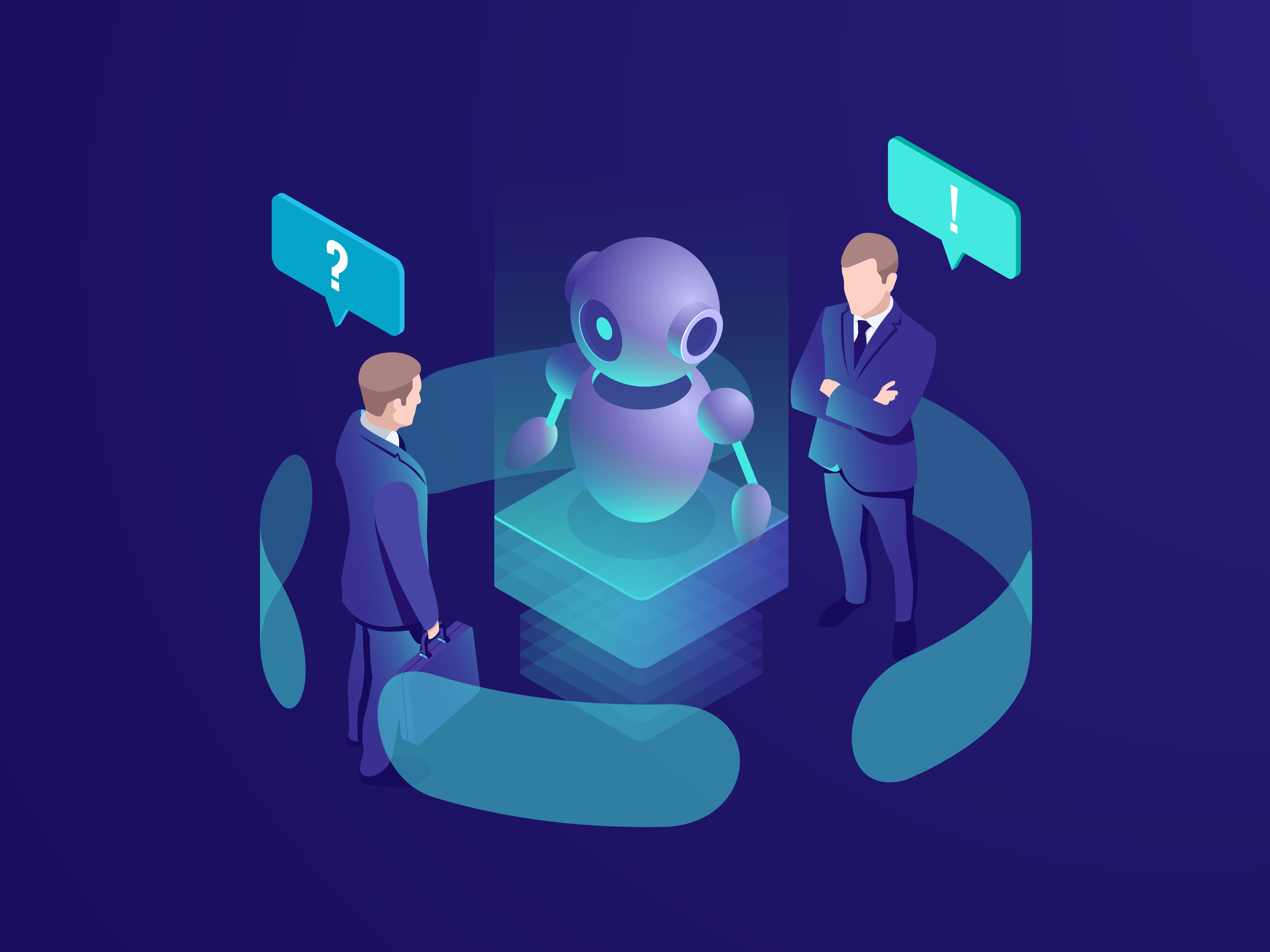
Photo by fullvector @ Magnific
Every leader has been in this position: two trusted advisers give you contradictory counsel on the same decision. One tells you the acquisition is a risk. The other tells you it is the opportunity you have been waiting for. One says the market is moving toward consolidation. The other says it is fragmenting.
What you do next defines your judgment as a leader. Do you default to the adviser with the stronger title? The louder voice? Or do you use the disagreement itself as a source of information, asking what each adviser is seeing that the other is not?
This has always been a leadership problem. In 2026, it is also an AI problem. And the way the best leaders are learning to handle AI disagreement may be the most instructive leadership development of this decade.
Leaderonomics has identified AI as a core leadership capability shaping how organisations will operate beyond 2026. This article argues that the specific capability that matters most is not knowing how to use AI. It is knowing what to do when AI tells you something different from what another AI told you five minutes ago.
The Adviser Problem Has Always Been a Leadership Problem
The research on collective intelligence is consistent on one point: diverse perspectives, when they genuinely diverge rather than politely defer, produce better decisions than any single expert. The reason is not that the group averages out to the correct answer. It is that disagreement surfaces assumptions, reveals blind spots, and forces the decision-maker to engage with the complexity that consensus tends to smooth over.
Most leadership failures are not failures of information. They are failures of perspective. The leader had advisers, but those advisers were saying the same things in different ways. Nobody said the uncomfortable thing. Nobody named the risk that did not fit the preferred narrative.
Great leaders have historically understood this. They cultivated advisers who would disagree with them and with each other. They treated unanimity with suspicion. They asked the dissenting voice to go first.
This instinct, properly applied to AI, becomes a significant leadership advantage.
What Happens When AI Advisers Disagree
Most people who use AI tools today use one model. They ask a question, receive an answer, and proceed. The answer sounds authoritative. It is well-structured, grammatically clean, and delivered with no hesitation. There is no visible signal that the answer might be wrong, incomplete, or shaped by limitations specific to that model.
But run the same input through a different model, and you frequently get a meaningfully different output. This is not a flaw. It is data.
Industry analysis synthesised from Intento's State of Translation Automation 2025 and internal benchmarking at MachineTranslation.com, an AI translator, shows that individual top-tier AI models hallucinate or produce substantively incorrect outputs between 10% and 18% of the time on complex tasks. A 2025 Deloitte analysis found that 47% of enterprise AI users made at least one major business decision based on hallucinated content. The content was not flagged as uncertain. It was presented as fact.
Read more: The AI Anxiety Gap Is Five Different Voyages
What this means for leaders is direct: a single AI output is a single adviser's opinion. It may be correct. It may be the output of a model's specific blind spot. You cannot know which without a second source.
The more important finding, however, is not the error rate. It is what the divergence between models reveals when you look at multiple outputs. When 22 AI models process the same text and the majority land on the same answer, that alignment is meaningful evidence. When they split, the split tells you something: there is genuine ambiguity in this content, or genuine complexity that a single confident output was hiding from you.
Disagreement, in other words, is a signal. The leader who can read that signal makes better decisions than the one who never sees it.
What Disagreement Reveals That Agreement Cannot
The instinct in most organisations is to resolve disagreements as quickly as possible. Two teams have different projections, so leadership asks them to reconcile. Two advisers differ on strategy, so a consensus position is drafted. Two AI models give different answers, so the first one is used and the second is ignored.
This instinct is understandable. Disagreement is uncomfortable. It slows things down. But it is often in the moment of disagreement that the most important information is present.
When AI models diverge on a legal clause, they are usually diverging on a genuine ambiguity in the source text. When they diverge on the translation of a technical term, they are often reflecting the fact that the term has multiple valid interpretations depending on the domain and context. When they diverge on the framing of a market summary, the divergence may reflect that the data genuinely supports more than one reading.
A leader who only sees the first output misses all of this. A leader who has designed their workflow to surface disagreement before acting on AI output has access to a much richer picture of what they are actually deciding.
The parallel in human leadership is direct. The executive who hears from one function before making a cross-functional decision is not better informed than the one who hears from three and notices where they differ. The information is in the difference.
Building a Decision Culture That Uses Disagreement
The practical challenge is structural. Most AI workflows are built for speed and clarity, not for surfacing uncertainty. The tool gives you an answer, you use the answer, you move on. There is no visible prompt to ask 'what would a different model say?'
Leaders who want to build the capacity to use AI disagreement as a decision input need to make three changes to how their organisations work.
Make the second source a norm, not an exception.
For consequential decisions, particularly those involving external communications, regulatory or legal content, or cross-border context, a second AI source should be required before the output is used. The question is not 'is this right?' but 'does another model agree?' The standard is not perfection. It is informed confidence.
Teach teams to read divergence, not just resolve it.
When two AI outputs differ materially, the first question should not be 'which one do we use?' It should be 'what is each model seeing that the other is not?' This reframes AI disagreement from a problem to be eliminated into a resource to be understood. Teams that develop this skill make better use of AI than teams that do not.
Reserve the hardest questions for the moments of widest disagreement.
When multiple inputs, whether from human advisers or AI models, converge quickly on the same answer, it is worth pausing to ask whether genuine consideration has taken place or whether the options have simply been filtered before they reach you. The decisions that matter most are often the ones where the right answer is genuinely unclear. Design your process to find those moments, not avoid them.
The Leader Who Seeks Disagreement
There is a version of AI adoption that makes leaders less capable: the version where AI removes friction, smooths uncertainty, and delivers single confident answers to every question. Leaders who operate in that environment are not developing judgment. They are developing dependency.
This may interest you: Become Dangerously Smart With AI: From Passive User to Active Master
There is another version, rarer and more demanding, where AI adoption makes leaders sharper. This version treats AI output not as a conclusion but as a starting point. It uses the gap between what one model says and what another says as a prompt to think harder, ask better questions, and stay accountable for the quality of the final decision.
This is, at its core, the same discipline that the best human leaders have always applied to expert counsel. The leader who walks into a room of advisers looking for the one answer that will resolve the question is not the most capable leader in the room. The leader who walks in looking for the most productive disagreement, and knows how to turn that disagreement into a decision is.
As AI tools become standard across every industry and every level of every organisation, the leaders who develop this instinct early will have a durable advantage. Not because they understand AI better than everyone else, but because they understand decisions better than everyone else.
That has always been what leadership required.


Leadership
Tags: Abundance Mindset, Alignment & Clarity, Artificial Intelligence, Building Functional Competencies, Business Meetings, Digital, Data, Executing Leadership, Consultant Corner, Character, Communication, Competence

Shiela Esquejo writes on AI adoption, leadership decision-making, and the organisational practices that separate high-performing teams from those that struggle to keep up with change.