The AI Anxiety Gap Is Five Different Voyages

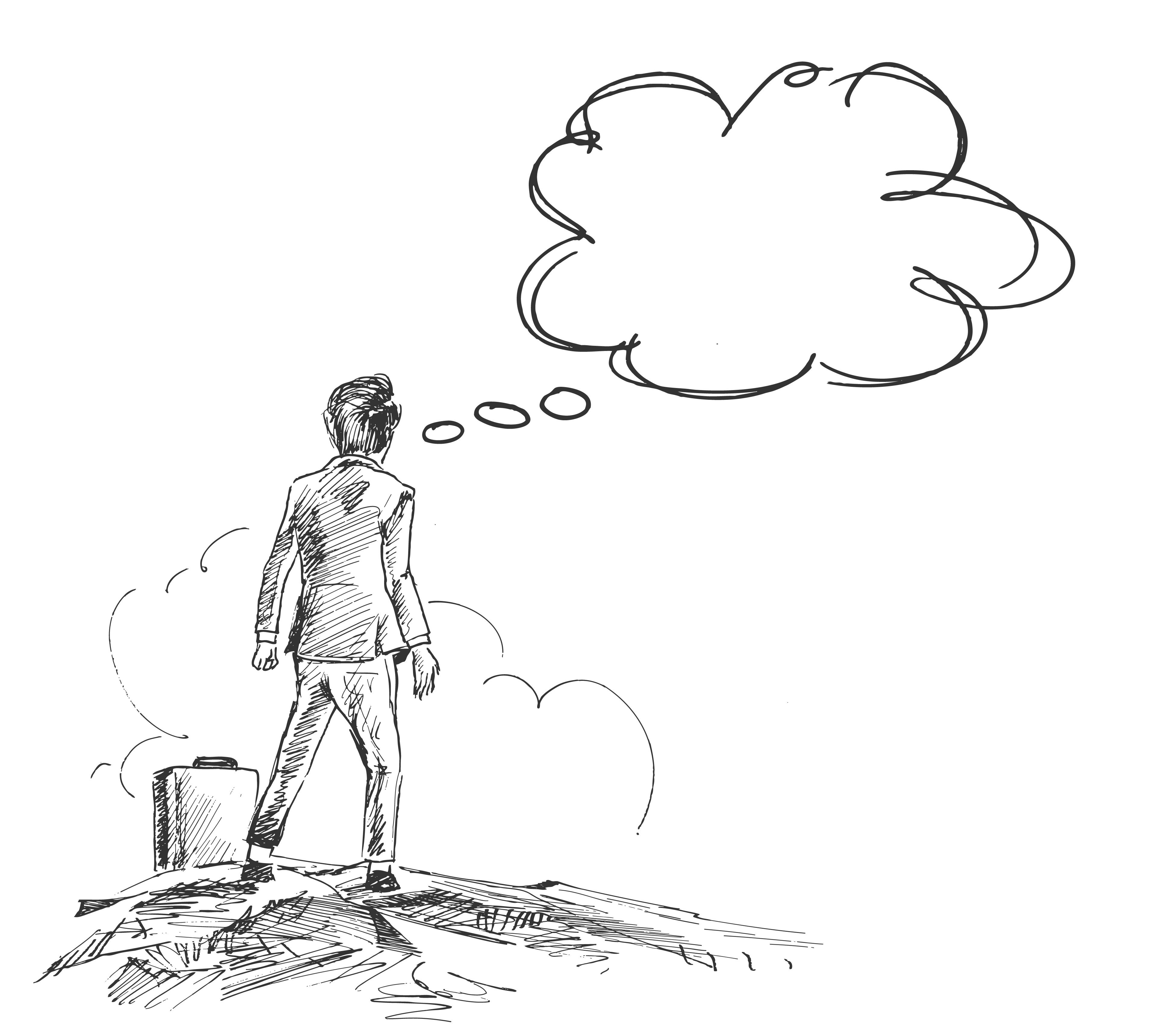
Every organisation right now is like a ship sailing through fog.
Leadership keeps announcing the speed and the destination. “We are going faster. We are more efficient. AI is the future.”
On deck, the crew is sailing blind. No clear governance. No visible guardrails. No lighthouse in sight. And nobody is asking how the crew is actually doing.
The efficiency story sounds great from the bridge. On deck, it sounds very different.
One Ship, Five Different Voyages
One ship is not one experience. It is many. Inside most organisations, there are at least five very different people navigating the same AI fog, each with a different worry, each needing a different kind of signal from leadership.
The First Mates
These are your middle managers. Stuck mid-ship. Told to mandate AI use while reassuring their teams that nobody is getting replaced. Two-faced by necessity. Quietly exhausted by it. EY’s Agentic AI Workplace Survey found 61% of desk workers feel overwhelmed by the constant influx of new AI information, and middle managers carry that weight twice, once for themselves and once for every direct report asking what it all means.
The Deckhands
Here are your frontline and operational staff. They are doing quiet math in their heads. “The moment I show I can do this with AI, I am giving them one more reason to let me go.” So they hold back on purpose. Not out of incompetence, but out of self-preservation. Pew Research found 52% of US workers are more worried than hopeful about the future use of AI in the workplace. And despite all the productivity promises, Upwork’s 2024 study found 77% of employees using AI say their workload has actually increased, not decreased.
The Lookouts
Your AI champions and early adopters. They see further than everyone else. Sounds like a gift. Until you realize they carry the weight of what is coming before anyone else is ready to hear it. That is anticipatory anxiety, and it is lonely. Upwork‘s same 2024 study found 71% of full-time employees using AI report burnout, while 65% were struggling with their employer’s demands on their productivity. Your best sailors are often the closest to the edge, and they are the getting their enthusiasm sucked dry.
The Engineers Below Deck
Your specialists and compliance folks. They are asking questions nobody is answering. “Can I put this into Perplexity? Is Gemini allowed for client data? Who owns this call?” The silence they get back is louder than any policy document. A global KPMG and University of Melbourne survey of 32,352 workers across 47 countries found only 34% of employees say their organisation has a policy guiding generative AI use, and 66% admit to using AI tools without knowing if it is allowed. When the rules are not named, shadow AI is not a discipline problem, it is a governance vacuum.
The Captain
The leadership team. Often secretly anxious too. Confused by dropping token costs. Unsure which models to back. Unable to show any of it because shareholders want an AI strategy yesterday. The numbers show the disconnect plainly. Microsoft’s 2025 Work Trend Index found 86% of Malaysian leaders are confident they can use AI to expand workforce capacity, while 83% of workers say they lack the time or energy to actually learn it.
Same ship. Same fog. Five very different voyages. No clear direction. No shared movement.
Equip yourself for complexity with the Paradoxical Leadership framework →
Why Generic AI Initiatives Keep Stalling
Most leaders try to fix all five with one motivational message. One generic training. One awareness talk. One tool rollout.
It does not work. Each role is sailing with a different worry. Each one needs a different signal.
This is why so many AI initiatives stall quietly. Not because the strategy is wrong, but because the people executing it are navigating completely different storms, and nobody has named it. MIT NANDA’s 2025 State of AI in Business report found 95% of organisations see no ROI from AI, while only 5 percent achieve significant value. NBER’s 2026 firm-level data backs this up: 69% of firms actively use AI, yet 9 in 10 report no measurable impact on productivity. The gap between access and adoption is enormous, and it is rarely a technology problem.
When the lookout is given the deckhand’s talk, they feel unseen. When the deckhand is given the captain’s talk, they feel threatened. When the engineer is given the first mate’s talk, they are left with unanswered operational questions. The cost is not only lost productivity. It is lost trust.
Four Moves to Close the Anxiety Gap
Four moves, one for each anxiety named above. Treat them as an operating frame for the quarter.
Move #1 – Install the lighthouse
Publish AI governance in plain language with three clear zones: encouraged, restricted, prohibited. The lighthouse does not stop the ship. It keeps the ship away from the rocks. Your engineers below deck stop asking the same questions into the fog.
Move #2 – Turn on the radio
Create real two-way channels. Regular check-ins that ask what people are experiencing, not only what they are producing. The captain’s uncertainty becomes leadable. Deckhands stop doing their quiet math alone.
Move #3 – Issue the right navigation tools
Replace generic AI 101 training with role-based learning paths. Show the accountant AI for reconciliation. Show the marketer AI for briefs. Relevance is what turns motivated compliance into genuine adoption.
Move #4 – Run drills
Short cycles. Protected practice time. Structured routines reduce anxiety even when the answers are still incomplete. Confidence comes from doing the thing and surviving, not from a slide deck.
Implications for Leaders and L&D
- Segment your AI communication by role, not just by seniority. A middle manager’s worry is different from a deckhand’s worry, even when they sit in the same training room. EY found organisations with clear AI communication see 92% reporting positive productivity impact, compared with 62% without.
- Make the captain’s uncertainty visible. When leaders quietly hide their own AI anxiety, everyone else learns to hide theirs too, which quietly kills the conditions for honest adoption.
- Treat compliance and governance questions as a first-class conversation, not a footnote. The engineers below deck effectively set the ceiling for what everyone else feels safe trying.
Ending Thought
The AI Anxiety Gap is not one gap. It is five. Each role on your ship is navigating a different storm, and the cost of missing that is not dramatic failure. It is the quiet kind. Initiatives that never quite land. Adoption numbers that never quite match the investment. People who smile in training rooms and go back to doing things the old way.
If you are leading AI inside your organisation and something feels stuck, the problem may not be your tools, your training budget, or your people. It may be that five different voyages are happening underneath one strategy, and only one of them is being spoken to.
This article was originally published on Maverick Foo's LinkedIn.



Leadership
Tags: Artificial Intelligence

Maverick Foo is the founder of Radiant Institute, where he specializes in Workplace AI and AI Leadership Enablement. Driven by a career-long fascination with applied psychology and human decision-making, Maverick transitioned from a two-decade tenure in marketing and positioning to the forefront of the AI revolution. Rather than viewing AI as a mere technical tool, he treats it as cognitive leverage, focusing on the psychological frameworks that drive adoption and human-AI collaboration.
A three-time TEDx speaker and the youngest recipient of Vistage Malaysia’s Speaker of the Year award, Maverick bridges the gap between high-level strategy and practical application, helping organisations integrate AI assistants as thinking partners to transform professional performance and long-term habits.