The Story You Tell Yourself About Getting Old Is the Thing That's Actually Ageing You
Magnific
Charles Eugster didn't start working out until he was 85.
Let that land for a moment. Eighty-five. An age when most people have long since accepted that the body is a slowly collapsing structure to be managed, medicated, and moved carefully through the remainder of its days. Eugster, a retired dentist from London, looked in the mirror one morning and decided he didn't like what he saw. Not in the vain, gym-selfie way a 25-year-old might say it. In the way a man looks at his own reflection and realises he has been telling himself a story about decline — and the story has become a self-fulfilling prophecy.
So, he hired a personal trainer. At 85. He started with bodybuilding. Then he took up sprinting. By 95, he held world records in his age group for the 200-metre dash and had won multiple gold medals at the World Masters Athletics Championships. He gave a TEDx talk at 93 called "Why Bodybuilding at 93 Is a Great Idea," and in it, he said something that should be tattooed on the forearm of every human being over 40: "The very act of ageing can be reversed." He wasn't speaking metaphorically. He was speaking from the inside of a body that had proved it.
Eugster died in 2017 at the age of 97, having spent his final twelve years in the best physical condition of his entire adult life. Not because of extraordinary genetics. Not because of some rare metabolic gift. Because at 85, he decided to stop believing the story that said he was too old.
That story — the one about decline being inevitable, about the body being a depreciating asset after 50, about fitness belonging to the young — is the most dangerous piece of fiction most of us will ever believe. And the older you get, the more urgently you need to rewrite it.
The Fiction of Genetic Destiny
When we see someone who ages visibly well — the 70-year-old who moves like a 50-year-old, the grandmother who hikes mountains, the retired executive still doing push-ups before dawn — the instinct is to shrug and say: "Good genes." It's a comforting conclusion because it requires nothing of us. If fitness in old age is genetic, then those of us without the right DNA are off the hook.
The science says otherwise, and it says it loudly. Research published in Immunity and Ageing found that roughly 25 percent of the variation in human longevity is attributable to genetic factors. That means 75 percent of how you age is shaped by what you choose to do: how you move, what you eat, how you manage stress, what stories you repeat to yourself about what's possible. The Mayo Clinic's own geriatric researchers have pushed that genetic contribution even lower — closer to 20 percent. Four-fifths of the ageing game is behavioural. Four-fifths is narrative.
And here's the part that stings: the body is remarkably obedient to the story you tell it. Tell yourself you're in decline, and your body will organise itself around that belief. Skip the walk because "my knees aren't what they used to be." Avoid the stairs because "I'm not as young as I was." Sit more, move less, stiffen up, and then point to the stiffness as evidence that you were right all along. The prophecy fulfils itself so elegantly that most people never notice they're the author of it.
Sarcopenia — the clinical term for age-related muscle loss — affects between 5 and 13 percent of people aged 60 to 70, and up to 50 percent of those over 80. You lose 3 to 8 percent of muscle mass per decade after 30, and that rate accelerates sharply after 60, climbing as high as 15 percent per decade. Those numbers sound like a biological inevitability until you read the next line of the research: resistance training can reverse sarcopenia at virtually any age. An 85-year-old who begins strength training can develop the muscular capacity of a typical 65-year-old. The body doesn't care how old the calendar says you are. It cares whether you're asking something of it.
Why Discipline Is a Terrible Long-Term Strategy
There's a version of fitness that burns itself out. You've seen it. The January gym crowd that evaporates by March. The friend who loses 17 kilograms before a wedding and gains 21 after it. The brutal six-week programme that collapses the moment a work crisis or a family emergency arrives. Discipline-driven fitness has a shelf life, and it's shorter than most people think.
A systematic review published in the International Journal of Behavioral Nutrition and Physical Activity analysed dozens of studies on exercise adherence through the lens of self-determination theory and found a pattern so consistent it should reshape how we think about fitness entirely: intrinsic motivation — movement that comes from genuine enjoyment, personal meaning, and a sense that exercise reflects who you are — is a substantially stronger predictor of long-term adherence than extrinsic motivation. The person exercising because they love how a morning swim clears their mind will still be swimming at 70. The person exercising because they hate how they look in photos will have stopped and restarted that cycle four times by then.
The mathematics of consistency are brutal and beautiful. A person who walks three kilometres every morning for 35 years will arrive at 70 in a categorically different body than someone who did aggressive boot camps in their 30s, burned out, stopped, restarted, burned out again, and is now sedentary. Not because one person has more willpower. Because they were playing entirely different games from the beginning.
The research found something else worth pausing on: when people exercise through what psychologists call "introjected" motivation — guilt, shame, fear of judgment — the exercise itself often comes at a cost to psychological health. You can maintain a body and erode a person simultaneously. The people who stay fit into their late decades aren't doing that. They've found something that doesn't feel like punishment.
Discipline, for most people, is not a renewable resource. It depletes. It wavers. It doesn't survive grief, illness, career upheaval, or the accumulated exhaustion of a complicated life. What survives those things is meaning. What survives is identity.
The Quiet Identity Shift That Changes Everything
Nora Langdon started powerlifting in her 60s. Not because a doctor told her to. Not because she was trying to prove something. She just walked into a gym one day and something clicked. By 82, she had set more than 20 world and national age-group records. She was stronger than most women in their 20s.
Roy Englert took up running at 60. Thirty-seven years later, at 97, he ran a 42-minute 5K and set the world record for the 95-to-99 age group. DeEtte Sauer learned to swim in her late 50s. At 83, she was a champion many times over.
These aren't superhumans. These are ordinary people who, at some point, stopped saying "I'm someone who exercises" and started saying "I'm someone who moves." The difference sounds trivial. It isn't. "I exercise" is something you do. "I am someone who moves" is something you are. And what you are is far harder to abandon than what you do.
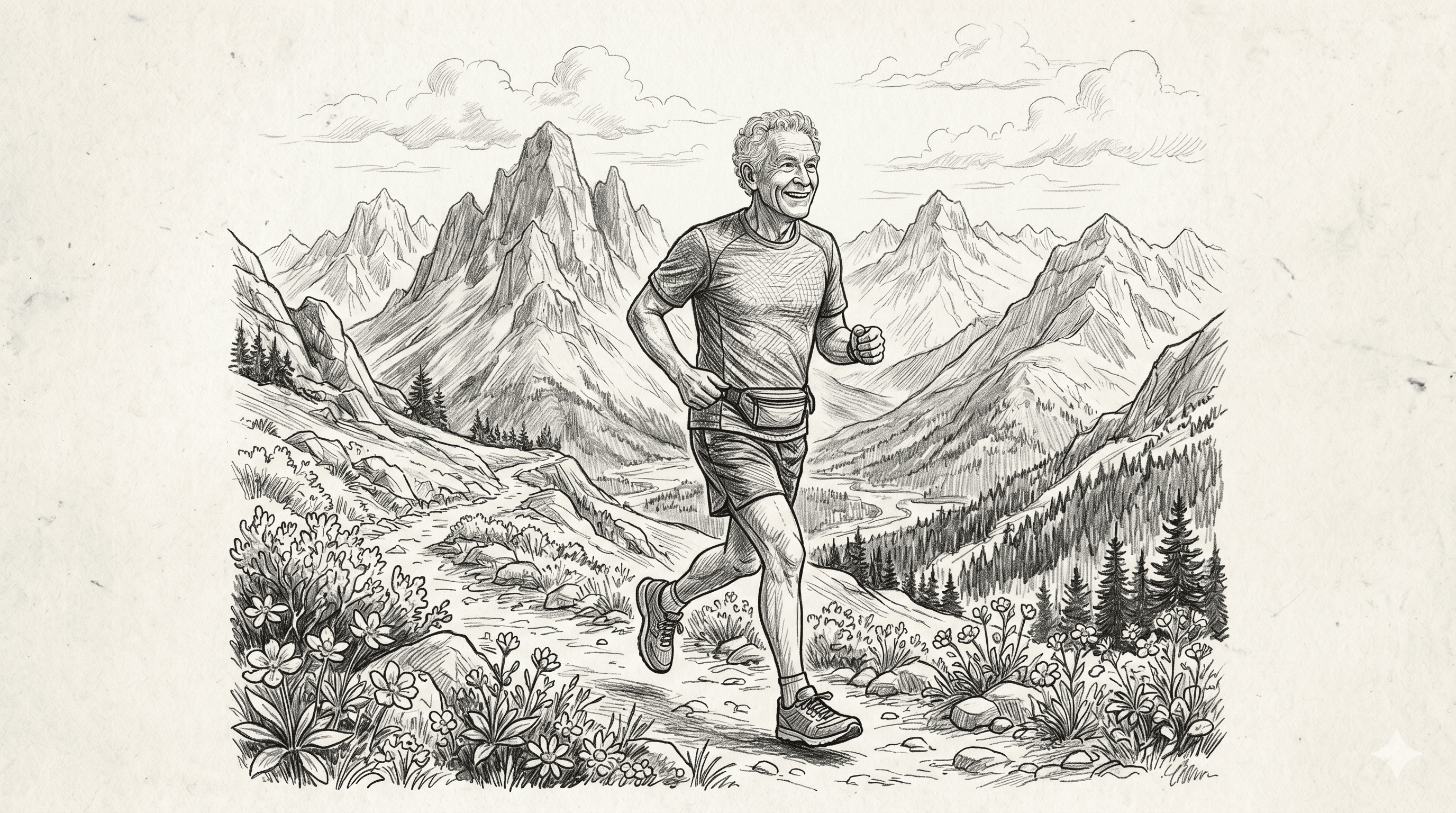
Research on exercise identity in older adults, published in Psychology of Sport and Exercise, found that older adults who internalised a physically active identity were significantly more likely to sustain exercise behaviour over time. It wasn't about routine. It wasn't about gym memberships or step counters. It was about whether movement had become part of how they understood themselves. The researchers described it as a shift from "body-as-project" to "movement-as-identity" — and that shift, more than any training programme, was the single strongest predictor of who would still be moving in ten years.
A 2025 qualitative study published in the European Review of Aging and Physical Activity went further, studying how community-dwelling older adults sustain physical activity through what the researchers called "life's shifting seasons." They found that sustained activity is maintained through an interplay of external scaffolding — routines, cues, supportive structures — and internal orientations rooted in identity, emotion, and meaning. In other words, the gym membership helps, but the real infrastructure is psychological. It's the story you tell yourself about why you move.
And here's the neuroscience underneath it: when you repeatedly tell yourself a new story — "I am someone who moves" instead of "I am too old for this" — you are literally rewiring your brain. Research on narrative therapy and neuroplasticity, presented at Seattle Pacific University's 2025 research conference, showed that the act of re-authoring personal narratives stimulates the growth of new neural pathways. The story doesn't just change your behaviour. It changes your brain's architecture. Repeated experience leads to myelination of the most active neural pathways, making them more efficient and automatic. Eventually, the new story becomes the default. The old story about decline becomes harder to access, not because you've suppressed it, but because you've built something stronger over it.
Flipping the Script on Your Self-Doubt →
My Own Rewrite
I should tell you my own story here, because it would be dishonest not to.
For years — through my time at GE, through the early chaos of building Leaderonomics, through the relentless travel and 14 to 16-hour days and the accumulated stress of leading through uncertainty — I told myself the same story most leaders tell themselves: "I'll get to fitness later. Right now, there are more important things." It wasn't laziness. It was priority architecture. And the architecture was wrong.
What changed wasn't a health scare, though I've had friends who needed one of those to wake up. What changed was a quieter, more stubborn realisation. I watched people I admired — brilliant, accomplished leaders — reach their 60s and 70s and slowly start opting out of their own lives. Not dramatically. Not all at once. They stopped travelling because it was "too tiring." They stopped playing with their grandchildren on the floor because getting back up was too hard. They stopped accepting invitations because they weren't sure their bodies could handle the outing. The world didn't shrink because they chose to make it smaller. The world shrank because their bodies made the choice for them. This happened to my father too and I saw how he declined the moment he decided to stop moving.
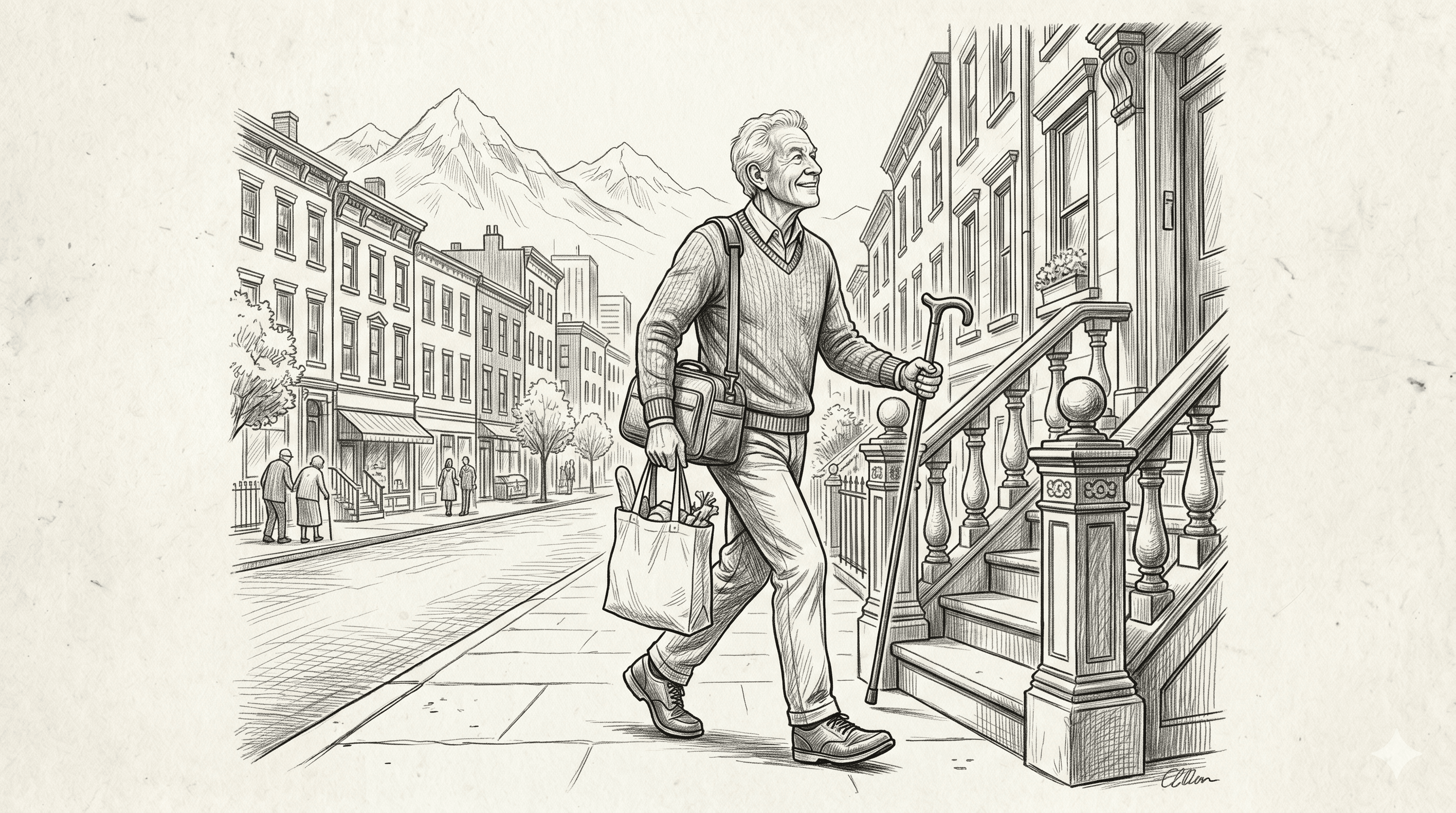
And I made a decision — not a resolution, not a goal, a decision — that I would never be dependent on someone else to move through my own life. That when I'm 70 or 80, I would carry my own bags, climb my own stairs, walk my own streets, and never have to ask permission from my body to do the things I want to do. That decision changed everything, because it changed the story. I wasn't exercising to look better. I wasn't exercising because a doctor told me to. I was exercising because I was building a body that would let me stay inside a life I didn't want to start opting out of.
The paradox is that I actually got fitter as I got older. Not in spite of ageing — because of the clarity that ageing provided. When you're 25, fitness is about aesthetics and energy. When you're past 50, fitness becomes about sovereignty. About autonomy. About the deeply human refusal to become a burden on the people you love. That shift in purpose turned out to be the most powerful performance enhancer I've ever found.
The Real Stakes Nobody Talks About
Here's what the fitness industry won't tell you, because it doesn't sell gym memberships: the real benefit of exercise after 50 isn't how you look. It's whether you can still live independently.
Almost 40 percent of community-dwelling older adults currently experience some form of functional limitation or disability. Falls account for one of the most common and serious contributors to disability in older populations — roughly 10 percent of falls result in serious injuries including hip fractures and traumatic brain injury. A hip fracture after 65 isn't an inconvenience. It's often the beginning of the end. Research shows that 20 to 30 percent of older adults who fracture a hip die within a year.
But here's the counterweight: regular physical movement dramatically reduces the risk of falls, maintains functional independence, and preserves the ability to perform what clinicians call "activities of daily living" — dressing yourself, bathing, cooking, walking to the shops, getting out of a chair without assistance. A systematic review and meta-analysis published in BMC Geriatrics confirmed that physical activity is one of the strongest predictors of physical independence in old age. Not wealth. Not medical intervention. Movement.
Research on physical activity in women over 60, published in the National Library of Medicine, found that regular, even mild, physical exercise promoted greater autonomy and functional ability in daily life, supported independence, and reinforced social connection. Not a six-pack-at-65 story. Not a transformation selfie. Just the quiet, profound ability to keep doing the things that make a life feel worth living: walking without assistance, staying socially connected, carrying your own groceries, playing on the floor with your grandchildren and getting back up again.
Functional independence is intrinsically motivating in a way that a dress size never will be. You don't need willpower to want to carry your own bags at 75. You just need to have looked honestly at the alternative.
The Hardest Part Is Rewriting the Story
Most people over 50 carry a collection of stories about their bodies that have calcified into gospel. "My back has always been bad." "I've never been athletic." "My family just isn't built for fitness." "It's too late to start now." These stories feel like facts. They aren't. They're narratives — constructed, repeated, and reinforced until they become invisible. You stop questioning them the same way you stop noticing the wallpaper in your own house.
But narratives can be rewritten. That's not motivational-poster optimism. That's neuroscience. The self, as research in narrative psychology consistently shows, is a construct maintained by an internalised story that remains capable of revision at any age. The 68-year-old who starts telling herself "I am someone who walks every morning" is not lying to herself. She is authoring a new chapter. And every time she laces up her shoes and steps outside, the neural pathway for that new story gets a little thicker, a little faster, a little more automatic.
A 2024 qualitative review on motivation and psychological needs in older adults, published in Age and Ageing, analysed 21 studies involving 412 participants aged 65 to 97 and found that three psychological needs drive sustained physical activity in older adults: autonomy (the sense that movement is a choice, not a prescription), competence (the feeling that you're capable and improving), and relatedness (the social connection that comes from moving with others). Notice what's missing from that list: appearance. Weight loss. Looking good at the beach. The things that fuel exercise in your 20s are almost entirely irrelevant to what sustains it in your 60s.
This is the rewrite that matters: from "exercise is something I should do" to "movement is part of who I am." From "I'm getting old" to "I'm building a body that will let me keep living the way I want to live." From "it's too late" to "the best time to start was twenty years ago; the second best time is this morning."
Start your free e-learning today →
The Deeper Truth About Bodies and Stories
I've spent most of my professional life thinking about leadership — about how people build organisations, transform cultures, and develop others. And I've come to believe that the way we treat our bodies is a leadership issue, maybe the most personal one there is.
Because the body is the first organisation you lead. It's the one you can never resign from, never restructure around, never outsource. And the stories you tell yourself about it — "I'm too old," "I've never been fit," "it's genetic" — are the exact same kind of stories that kill organisations: limiting beliefs disguised as facts, repeated so often they become culture.
In organisational life, I've watched this pattern destroy potential a thousand times. A team tells itself "we're not innovative" for long enough and innovation dies — not because the people lack creativity, but because the narrative made creativity feel impossible. A company tells itself "we can't compete with the big players" and stops trying, then points to the lack of results as proof of the original claim. The narrative creates the reality. Always.
Your body works the same way. The story of decline creates the conditions for decline. The story of possibility creates the conditions for possibility. Not unlimited possibility — we're not pretending that a 70-year-old will run like a 25-year-old. But the distance between what most 70-year-olds can do and what most 70-year-olds believe they can do is enormous. And that distance is made entirely of narrative.
Previously sedentary men who began exercising after age 45 enjoyed a 24 percent lower death rate than those who remained inactive. Not 5 percent. Not 10 percent. Twenty-four percent. Starting late doesn't just help. It dramatically reshapes the trajectory. The story that says "it's too late" isn't just wrong. It's lethal.
The Walk That Isn't About the Walk
Somewhere right now, a 68-year-old is walking three kilometres in the early morning. She's not grinding. She's not punishing herself. She's not counting calories or checking her heart rate or posting about it. She's just walking because the walk is when she thinks, and the thinking is where she finds herself, and the finding keeps her in a life she doesn't want to start opting out of.
She made a decision somewhere in her 40s or 50s that her body was for living in, not just for looking at. She organised her relationship to movement around that decision. And everything that came after got easier — not because she became more disciplined, but because she stopped fighting the thing she was actually doing.
Charles Eugster saw the same truth at 85 and spent his final twelve years proving it. Nora Langdon found it in a gym in her 60s and became stronger than women a third her age. Roy Englert discovered it on a running track at 60 and was still discovering it at 97.
The pattern is the same every time. Not more discipline. Not better genetics. Not a stricter routine. A different story.
The body you'll live in at 70 is being built by the story you're telling yourself right now. If that story says "too late," your body will believe it. If that story says "I am someone who moves, who stays, who refuses to opt out" — well, your body will believe that too.
The genetics, it turns out, are mostly beside the point. The question was never what kind of body you were born with. The question was always what kind of story you chose to live inside.
So — what story are you telling yourself today?



Personal
Tags: Growth, Growth Mindset

Roshan is the Founder and “Kuli” of the Leaderonomics Group of companies. He believes that everyone can be a leader and "make a dent in the universe," in their own special ways. He is featured on TV, radio and numerous publications sharing the Science of Building Leaders and on leadership development. Follow him at www.roshanthiran.com