Creative Benefits That Win The Attention Of Young Professionals

Photo by rawpixel.com @ magnific
Competition for early and mid-career talent has shifted far beyond salary comparisons. Young professionals evaluate employers through a broader lens that includes workplace flexibility, career development, financial wellness, organisational culture, and leadership transparency. For business leaders, benefit strategies have become an important competitive advantage because they directly influence recruitment, engagement, and long-term retention.
Career Development Should Be a Core Benefit
Many young professionals prioritise long-term career growth over short-term perks. They want employers that invest in their future rather than simply filling current positions. Structured learning opportunities create meaningful value. Tuition reimbursement, certification funding, industry conferences, online learning platforms, and leadership development programs all contribute to stronger employee engagement. These initiatives also strengthen the organisation’s internal talent pipeline, reducing reliance on external hiring.
Mentorship programs add another layer of value. Pairing newer employees with experienced leaders creates opportunities for knowledge sharing, career guidance, and stronger professional relationships. Employees who clearly see advancement opportunities are often more motivated to remain with the organisation. Career path discussions should occur regularly rather than only during annual reviews. Frequent conversations about future goals help employees understand how their development aligns with business objectives.
Flexibility Has Become a Business Strategy
Flexible work arrangements continue to influence employment decisions across industries. While remote work is not practical for every role, flexibility can take many forms.
Hybrid schedules, compressed workweeks, adjustable start times, and results-based performance expectations allow employees to better manage professional and personal responsibilities. These options also demonstrate organisational trust, which contributes to stronger workplace relationships.
Business leaders should establish clear expectations for communication, collaboration, and accountability. Flexibility succeeds when employees understand performance standards while maintaining greater control over how they complete their work.
Financial Wellness Extends Beyond Salary
Competitive compensation remains important, but financial well-being includes far more than annual income. Many younger employees face student loan obligations, rising housing costs, and limited financial planning experience.
Organisations can support employees through retirement education, emergency savings programs, financial counselling, student loan assistance, and budgeting workshops. These resources help reduce financial stress that may otherwise affect workplace performance.
Read more: Understanding Financial Wellness in Corporate Benefits
Transparent compensation practices also improve trust. Clearly communicating salary structures, promotion criteria, and performance expectations helps employees feel confident that opportunities for advancement are based on measurable standards.
Mental Health Support Strengthens Retention
Employee well-being has become a leadership priority because mental health directly affects productivity, collaboration, and long-term engagement. Access to confidential counselling services, mental health resources, wellness programs, and employee assistance programs provides meaningful support. Encouraging employees to take vacation time and maintain healthy work boundaries reinforces these initiatives.
Managers also play an important role. Leadership training should include recognising signs of burnout, conducting supportive conversations, and creating workloads that remain sustainable over time. Organisations that openly discuss well-being help reduce stigma while encouraging employees to seek assistance when needed.
Recognition Creates Lasting Engagement
Recognition remains one of the most cost-effective ways to improve employee satisfaction. Young professionals often appreciate timely acknowledgement that highlights meaningful contributions rather than waiting for annual performance reviews.
Recognition programs should celebrate collaboration, innovation, customer service, leadership potential, and continuous improvement. Public appreciation during team meetings or internal communication channels can reinforce organisational values while encouraging positive behaviours. Effective recognition focuses on specific accomplishments instead of generic praise, making feedback more credible and motivating.
Build Community Inside the Workplace
Workplace relationships contribute significantly to employee satisfaction. Creating opportunities for employees to connect across departments encourages collaboration and knowledge sharing.
Volunteer initiatives, employee resource groups, cross-functional projects, innovation workshops, and social events help strengthen workplace culture. These activities support relationship-building while encouraging employees to develop broader professional networks within the organisation.
For business leaders, strong internal connections often improve communication, accelerate problem-solving, and increase organisational resilience during periods of change.
Support Individual Choice
One-size-fits-all benefit packages rarely meet the needs of a diverse workforce. Employees at different life stages often prioritise different types of support.
Flexible benefit allowances allow employees to choose options that best fit their circumstances. Some may value childcare assistance, while others prioritise professional education, wellness reimbursements, commuter benefits, or additional paid time off. Offering choices demonstrates respect for individual preferences while improving the perceived value of total compensation.

Supplementary reading: How to Break Free From Herd Mentality
Use Technology to Improve Access
Benefits have limited value if employees struggle to find information or complete enrollment. Modern HR platforms allow employees to review available programs, compare options, update personal information, and access educational resources year-round. Mobile accessibility further improves participation by allowing employees to manage benefits whenever it is convenient. Regular communication also remains essential. Employees should receive reminders, educational materials, and updates that explain available resources using clear, practical language.
Measure What Employees Actually Value
Benefit strategies should evolve based on employee feedback rather than assumptions. Engagement surveys, exit interviews, stay interviews, and utilisation data provide valuable insight into which programs deliver meaningful results.
Participation rates help identify underused benefits that may require better communication or replacement with more relevant offerings. Leadership teams should also monitor recruitment outcomes, retention trends, and employee satisfaction alongside benefit investments.
Industry comparisons can provide additional perspective. Organisations often evaluate compensation and benefits against competitors, and many sectors gather market intelligence through professional associations, consultants, or insurance industry recruiters to better understand changing workforce expectations.
Leadership Commitment Makes the Difference
Benefits alone do not create a positive workplace. Employees assess whether leadership actively supports the organisation's programs. Flexible schedules lose credibility if managers discourage employees from using them. Wellness initiatives become less effective when excessive workloads prevent participation. Career development programs have limited value without leaders willing to mentor and promote internal talent. Consistency between organisational policies and leadership behaviour strengthens trust while reinforcing company culture.
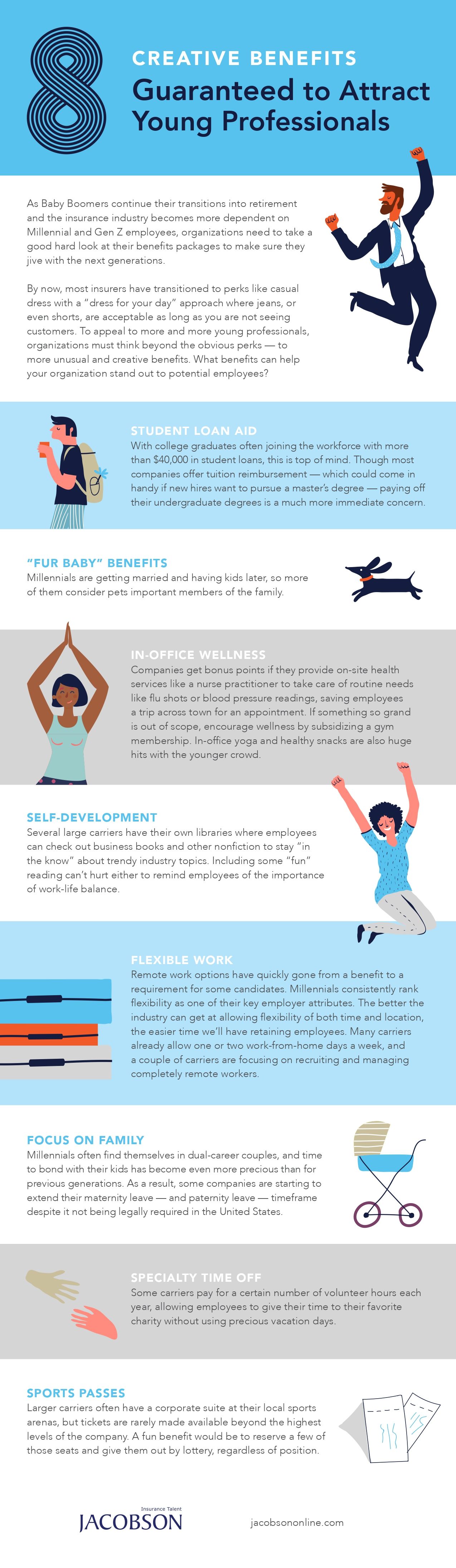
Young professionals are looking for employers that invest in their long-term success rather than offering temporary incentives. Creative benefits deliver the greatest value when they reflect genuine organisational priorities and remain aligned with the evolving needs of today’s workforce. Look over the infographic below to learn more.


Business
Tags: Abundance Mindset, Creativity, Be A Leader, Building Functional Competencies, Consultant Corner, Competence, Emerging Leadership, Executing Leadership, Leadership & Development (L & D)

Nikki St. Martin is VP of Marketing for The Jacobson Group, the premier insurance talent acquisition firm in the country. St. Martin is responsible for the ongoing marketing and branding efforts of The Jacobson Group.