Crystal Clear Confusion

Watch the video I made above (before reading my article below)
I used to walk out of leadership meetings feeling like Winston Churchill. In my head, I had just delivered a masterclass in strategic clarity. Everyone in the room nodded. People took notes. A few even smiled. I walked back to my desk thinking, "Job done. Our direction is crystal clear."
Two weeks later, I’d check in on the project—and discover that Sales had marched left, Operations had sprinted right, and someone in Finance was metaphorically trying to build a staircase through a solid plaster ceiling. Early in my journey building Leaderonomics—and even recently across our ventures and regional teams—my knee-jerk reaction was frustration. I’d ask myself: "Were they not listening? Did I not speak plain English?"
No. The problem wasn’t their ears. The problem was the signpost I planted in the hallway. I’ve made this mistake more times than I care to admit. Because I had spent weeks wrestling with a strategy in my head, every trade-off, nuance, and unspoken priority felt obvious to me. So when I announced the headline, I assumed my team heard the whole symphony.
They didn’t. They just heard a guy tapping on a table. There is hard science behind why smart, well-intentioned leaders fall into this trap every single day:
1. The Curse of Knowledge (Camerer, Loewenstein & Weber, 1989): Economists Colin Camerer, George Loewenstein, and Martin Weber coined this term after discovering a stubborn flaw in human cognition: once you know something, it becomes nearly impossible to imagine what it feels like not to know it. Even when participants in their experiments were warned about the bias and paid cash incentives to adjust for what others didn't know, they still failed. Our brains cannot un-know our own context.
2. The 50% vs. 2.5% Gap (Elizabeth Newton, Stanford University, 1990): In a famous Stanford experiment, "tappers" were asked to tap out the rhythm of well-known songs (like Happy Birthday) on a table while "listeners" tried to guess the song. The tappers predicted listeners would guess correctly 50% of the time. The actual success rate? 2.5%—just 3 out of 120 songs. Why? Because while tapping, the tapper hears the full orchestra playing inside their head. The listener only hears disconnected knocks on wood.
3. The Strategy Execution Gap (Sull, Homkes & Sull, Harvard Business Review): When Donald Sull and his colleagues surveyed thousands of managers across hundreds of companies, nearly 90% of middle managers agreed that top leaders communicated strategy frequently enough. Volume wasn't the problem. Yet only 55% of those same middle managers could name even one of their company’s top five priorities.
4. The Illusion of Transparency (Gilovich, Savitsky & Medvec, 1998): Psychologists found that because our internal intentions feel so loud to us—like a movie playing in surround sound—we wildly overestimate how clearly others can read our priorities, trade-offs, and intent.
Announcement is not alignment. Frequency is not clarity. And nodding in a meeting is usually just politeness disguised as agreement. When our teams run in three incompatible directions, it is almost never because they are foolish or disengaged. It is because each person is faithfully following a plausible arrow that we accidentally gave them. We told Sales to "maximize growth at all costs," told Ops to "cut variable spend by 15%," and told Finance to "zero-base every new initiative"—and then wondered why they collided in the corridor. So how do we fix the signpost before blaming the travellers?
In our work on organizational culture at Budaya which you can also read via the Rituals of Work site, we practice a tiny, humbling habit called the Priority Echo:
- Step 1: Ask casually, not as a test. Pull a team member aside and ask: "If someone asked you what our number-one priority is right now—and what we’ve agreed to stop doing to achieve it—what would you say?"
- Step 2: Listen without correcting. Bite your tongue. Don't jump in to defend your PowerPoint deck.
- Step 3: Treat the mismatch as feedback on your message, not a test the employee failed. If their answer doesn't match yours, your team isn't broken—your signpost has too many arrows on it.
- Step 4: Remove the conflicting arrows. State the single priority plainly, clarify what will wait, and echo again next month. True leadership humility isn't just admitting when our strategy is wrong. It’s having the courage to admit when our "crystal clear" instructions are actually causing the confusion.
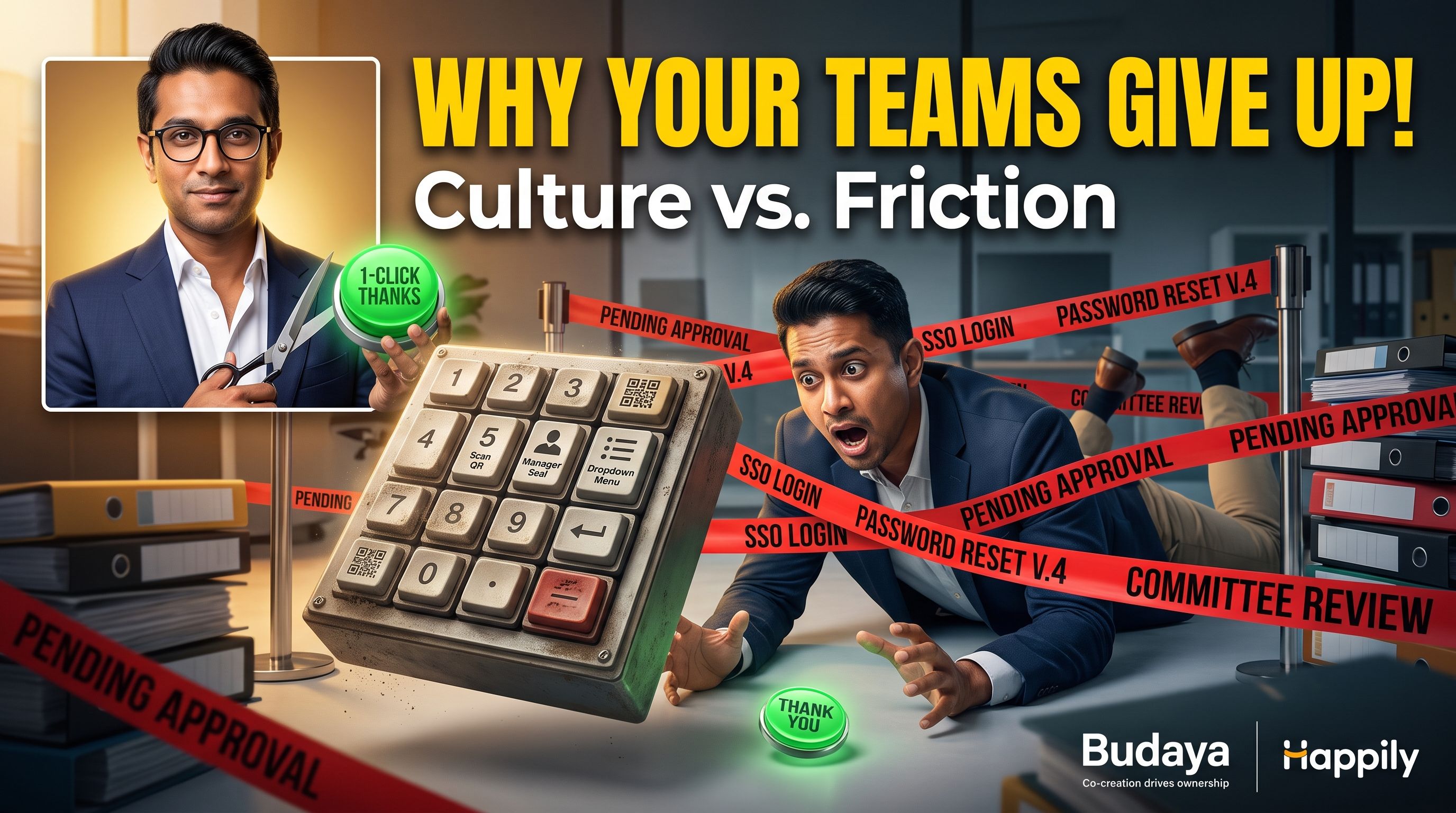
Watch the 30-second sketch above (yes, that’s me proudly planting a ridiculous signpost in the office corridor). Then try the Priority Echo with just one person on your team this week. What priority actually landed with them?
#Leadership #OrganizationalCulture #StrategyExecution #Communication #RitualsOfWork #Leaderonomics #SelfAwareness
Frequently Asked Questions on Leadership Clarity & Strategic Alignment
What is the "Curse of Knowledge" in leadership? Coined by economists Colin Camerer, George Loewenstein, and Martin Weber (1989), the Curse of Knowledge is a cognitive bias where a leader who possesses deep background context assumes others share that same context. In organizations, this causes executives to announce broad headlines assuming their teams understand the underlying trade-offs, leading to misaligned execution.
Why does frequent communication fail to create strategic alignment? Research published in the Harvard Business Review by Donald Sull, Rebecca Homkes, and Charles Sull found that while nearly 90% of middle managers agree executives communicate strategy frequently enough, only 55% can name even one of their company's top five priorities. Clarity fails not from a lack of volume, but from unaddressed trade-offs and conflicting departmental KPIs.
What is the Priority Echo ritual? Developed as an organizational culture practice at Rituals of Work, the Priority Echo is a four-step alignment check:
Casually ask a team member to state the team's number-one priority and what tasks are being paused to achieve it.
Listen without interrupting or defending the original message.
Treat any mismatch as feedback on the leader's communication rather than a failure by the employee.
Remove conflicting instructions and re-check alignment the following month.

Business
Tags: Culture

Roshan is the Founder and “Kuli” of the Leaderonomics Group of companies. He believes that everyone can be a leader and "make a dent in the universe," in their own special ways. He is featured on TV, radio and numerous publications sharing the Science of Building Leaders and on leadership development. Follow him at www.roshanthiran.com