The Most Important Thing We Make Isn't Chicken Sandwiches
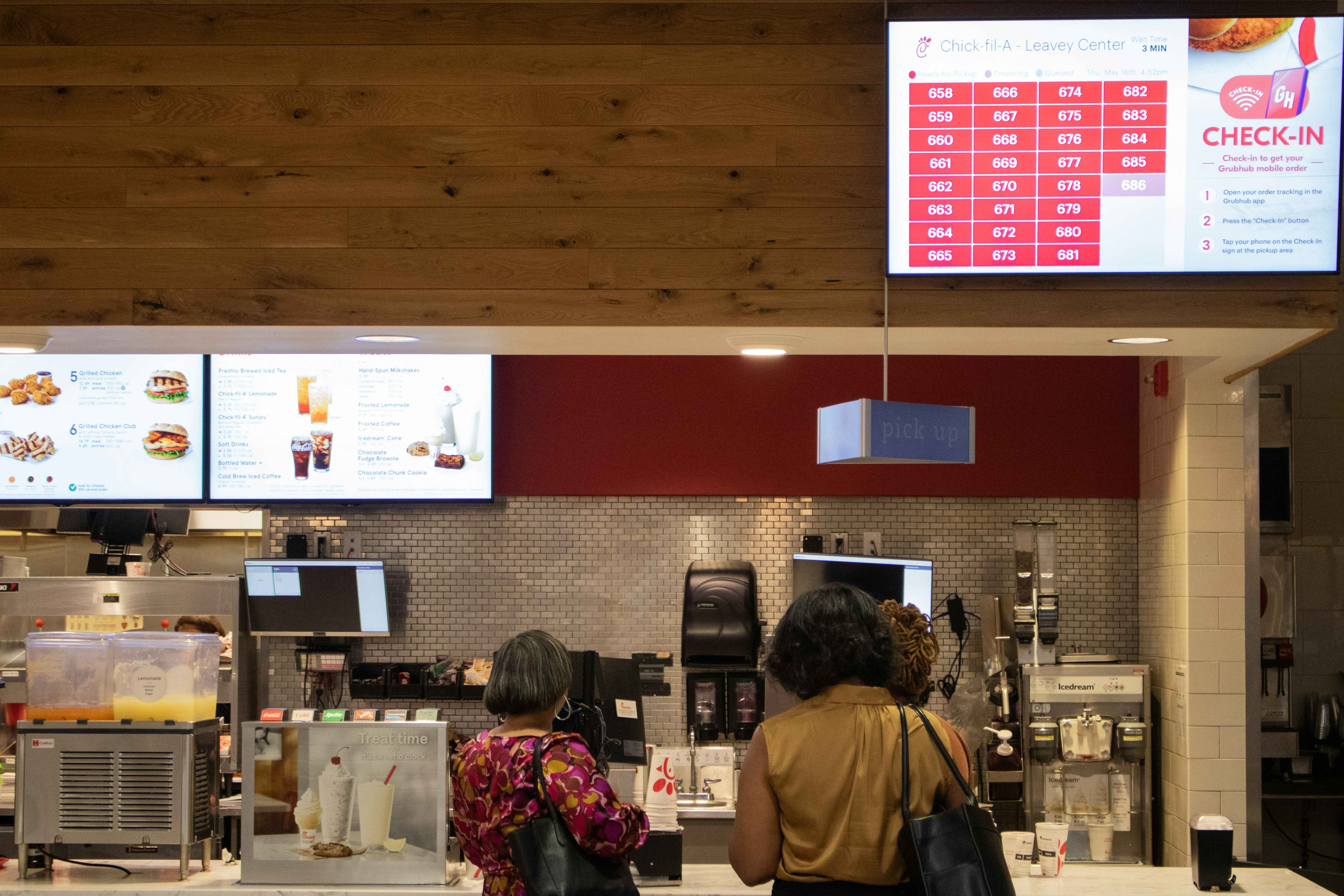
Zoshua Colah by Unsplash
For years, every time I boarded a plane out of Atlanta for another consulting assignment, the same thought crossed my mind. Why couldn't I simply swap jobs with someone flying into Atlanta? They could take my engagement wherever I was headed, I could take theirs, and we would both be home for dinner with our families. It was an absurd idea, of course. But it said something about where my priorities were quietly shifting.
I spent 25 years in global consulting with Accenture, IBM and Deloitte, helping some of the world's largest organisations transform their businesses. The work took me across Asia, Europe and the Americas, into boardrooms with senior executives and through complex, multi-year programs. It was a rewarding career, and I worked alongside exceptionally talented people. For a boy who grew up in Muar, Johor, sharing a two-bedroom house with six other family members, I had been blessed with opportunities far beyond anything I could have imagined.
Yet somewhere along the way, my definition of success began to change. When I was young, I wanted to see the world. Having seen much of it, I wanted something far simpler: to have dinner with my family every day, not just on weekends or between business trips. That desire set me on a path I did not expect, and taught me lessons about leadership that 25 years of advising leaders had not.
Related: The Bank That Gave Junior Employees Permission to Challenge the Boss
From advising organisations to building people
The opportunity came in the form of becoming a Chick-fil-A Owner-Operator in Southern California. For readers in Malaysia, where the brand is not present: Chick-fil-A is one of America's largest restaurant chains, and each restaurant is led by a local Owner-Operator who runs the business day to day, rather than from a distance.
The practical appeal was clear. I could build a business, apply what I had learned, and be home more. But there was a deeper attraction. I had spent my career helping large organisations become more successful. I wanted to find out whether I could build a business that helped people become more successful: one that created jobs, developed young leaders, opened doors for others and strengthened its community.
There was one obvious problem. I knew a great deal about business transformation, technology and strategy. I knew almost nothing about running a restaurant. So I traded my consulting briefcase for an apron and started learning all over again.
Proximity changes everything
In consulting, I worked on transformations involving thousands of employees, sophisticated technology and multimillion-dollar investments. I understood strategy, process, organisational design and execution. What I had not fully appreciated was how differently leadership feels when you are responsible for the same people every day.
A consultant can recommend a strategy and move on to the next engagement. An operator lives with the consequences. A poor decision is felt by the team the following morning. A failure to communicate creates confusion on the very next shift. And without trust, no amount of process improvement will deliver results. I also learned that when a young team member is struggling, the most valuable thing a leader can offer is often not an answer, but the discipline to listen.
Today our restaurant in Chino Hills employs around 100 people. More than 70% are Gen Z, and for many, this is their first job. Some arrive full of confidence; others are shy and uncertain. Some have never had anyone outside their family tell them they have leadership potential. This is where I have come to believe one of the greatest opportunities in business lies: helping people discover what they are capable of becoming.
Development is a long-term investment
Aleyda joined our restaurant nine years ago. At the time, she was a single mom raising two young boys while also supporting her parents in Nicaragua. Today she is one of our managers, and she is pursuing her second diploma in business management. I am proud of her, not simply because she became a manager, but because she has never stopped growing. Over the years I have watched her take on greater responsibility, strengthen her leadership and invest steadily in her own future.
My vision for our team is simple: to help every person discover and sharpen their God-given gifts to serve others. We do not just hire to fill roles; we hire to develop people. Aleyda's journey reflects a principle I now hold firmly. When someone joins an organisation, we cannot know where life will take them. Some will stay for many years. Others will go on to become teachers, engineers, entrepreneurs or leaders in other industries. I do not expect anyone to spend their entire career with us. What I do expect is that everyone leaves better prepared for whatever comes next: more confident, more responsible, better at communicating and working with others, and more capable of leading themselves and, eventually, others.
Developing people in this way does not happen overnight. It requires time, patience, encouragement, genuine opportunities and, at times, difficult conversations. It rarely goes exactly to plan. But the return is real. Our team's retention rate is around 75%, in an industry where the average is closer to 35%. And watching someone grow over nine years makes the value of that investment unmistakable.
I sometimes wonder whether the most important thing our restaurant produces is chicken sandwiches. Or people.
Leaders as door-openers
Growing up in Muar, I had no roadmap for the life I would eventually lead. My parents worked hard and made sacrifices. Teachers encouraged me. Leaders gave me opportunities before I had much experience to show for myself, and some saw potential in me long before I recognized it. Looking back, much of my journey was made possible by people who were willing to invest in someone else. I certainly did not get here alone.
That experience has shaped my view of what leaders owe the people they lead. Our responsibility goes beyond managing work and evaluating performance. It is to see what people could become, to give them opportunities to attempt things they have never done, to stretch them, to support them when they fail, and sometimes to believe in them until they learn to believe in themselves.
A teenager taking their first job rarely realizes they may be starting a journey that leads to managing people, running a business or leading an organisation. But leaders can help them take those first steps. And if we do it well, they will one day open doors for someone else. That is how I hope leadership multiplies.
Purpose that strengthens performance
One of the unexpected rewards of owning a business has been putting down roots. My consulting years were spent moving between clients, cities and countries. Today I am part of a community, and I have come to know its schools, nonprofit organisations, families and leaders. I have learned that a business can be far more than a place where transactions happen. It can create opportunity, bring people together and make its community a little better. At Chick-fil-A Chino Hills, we give back in many ways. We support local nonprofits, schools, youth development programs and families in need. We have even provided leadership training for our city government, to help its leaders serve the people of our community better.
I also want our team members to experience serving others for themselves. It is one thing to talk to young people about gratitude and compassion; it is another to let them live it. When our restaurant recently closed for several months for a major renovation, we had no customers to serve and no product to sell. Our team continued serving the community through volunteer work instead. I jokingly called it a renovation of the heart. While contractors rebuilt the restaurant, our people were learning that life is bigger than their own circumstances, and that everyone has something to contribute, whether money, time or simply showing up.
None of this means we have turned the restaurant into a charity that happens to sell chicken. We are very much a business, with customers to serve, payroll to meet, financial targets to achieve and high standards to maintain. Twenty-five years in consulting did not make me forget the importance of performance.
But I do not believe leaders must choose between doing well financially and doing good for others. In my experience, the two reinforce each other. People who are developed well perform better. Employees who feel valued take greater ownership. Customers notice when a team genuinely cares. And a business that invests in its community earns a level of trust that extends well beyond any single transaction.
Nor does purpose replace the pursuit of improvement. During the renovation, we launched Project REWIRE, an 18-week initiative to rethink how we operate. We are examining our processes, building new capabilities, exploring the use of AI, and challenging ourselves to find better ways to serve customers and develop our people. After more than a decade of running a restaurant, I am still trying to make things better. Some habits from consulting never leave you.
Redefining success
People occasionally ask whether I miss consulting. There are things I miss: the intellectual challenge, the international exposure, the talented colleagues and the scale of the work. I remain grateful for those 25 years, which prepared me for much of what I do today. But I do not regret changing direction.
I went looking for more time with my family. What I found was an opportunity to invest more of my life in others. I have watched young people like Aleyda grow into leaders, seen team members gain confidence and pursue opportunities well beyond our business, and watched them begin to understand why giving back matters. Along the way, I have learned that some of the most meaningful contributions we make may have very little to do with our job titles.
For leaders at every level, I believe this is the question worth sitting with. Early in our careers, success is defined by education, achievement and building a better future for our families. Those things still matter. But over time, the more enduring measure becomes the people we have developed, the opportunities we have created and the doors we have opened for others. The opportunities we were given were never meant for our benefit alone.
I never imagined that a boy from a crowded home in Muar would spend 25 years traveling the world, only to find himself running a restaurant in California. Life has an interesting sense of humor. I began this chapter wanting something simple: dinner with my family. I discovered something more: the chance to build people, serve a community and open a few doors for others.
I am still learning, still making mistakes and, I hope, still making a difference. Not a bad second career.


Leadership
Tags: Leadership & Development (L & D), Team Leadership, Abundance Mindset
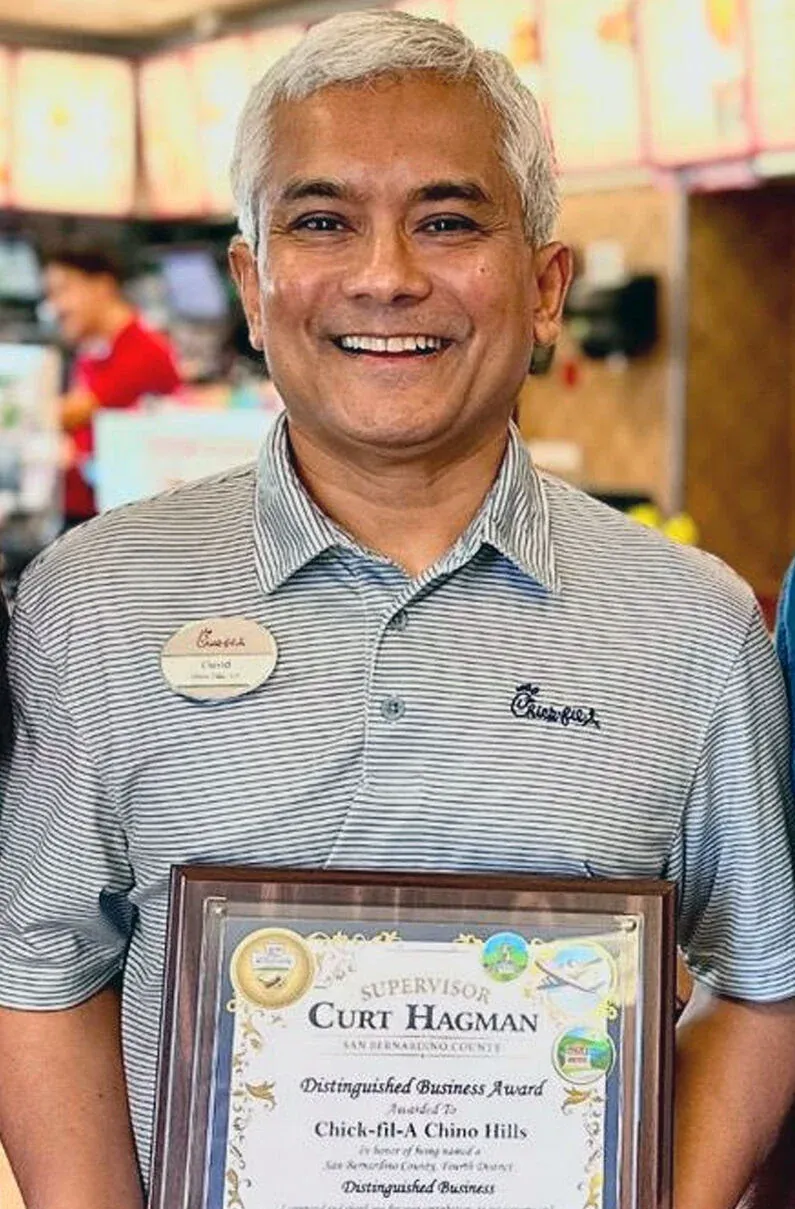
David Dinasan is a Chick-fil-A Owner-Operator in Chino Hills, California. Before becoming a business owner, he spent 25 years in global consulting with Accenture, IBM and Deloitte across Asia, Europe and the Americas. Originally from Muar, Johor, David is passionate about developing young leaders, building businesses with purpose and opening doors for others. He is actively involved in community development and leadership initiatives in the United States and Southeast Asia.