The Madinah Protocol: How Trust Scaled Without Authority
This article is Part 1 of the Madinah Protocol series.
In 622 AD, the Prophet Muhammad (PBUH) arrived in a new city with nothing.
No army. No treasury. No institutional authority. Just nearly 200 followers who had lost everything, their homes, their businesses, their social standing, and a host population who had never met them.
Within 30 days, The Prophet (PBUH) had engineered one of the most sophisticated acts of organisational trust in recorded history.
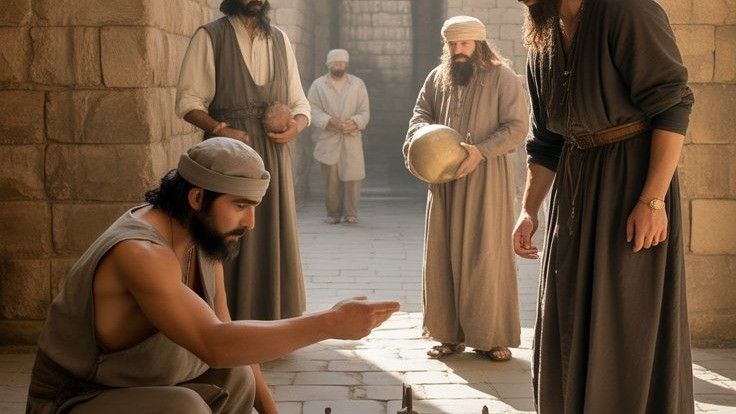
The Mawakhat of Madinah — the Brotherhood — paired every immigrant (Muhajirun) with a local host (Ansar) in a bond that went beyond hospitality. Hosts offered half of their wealth. Half of their land. Half of their livelihood. Voluntarily. Without coercion. Without a legal framework compelling them. Without enforcement of any kind.
Historians call it a social miracle. Organisational theorists should call it something else:
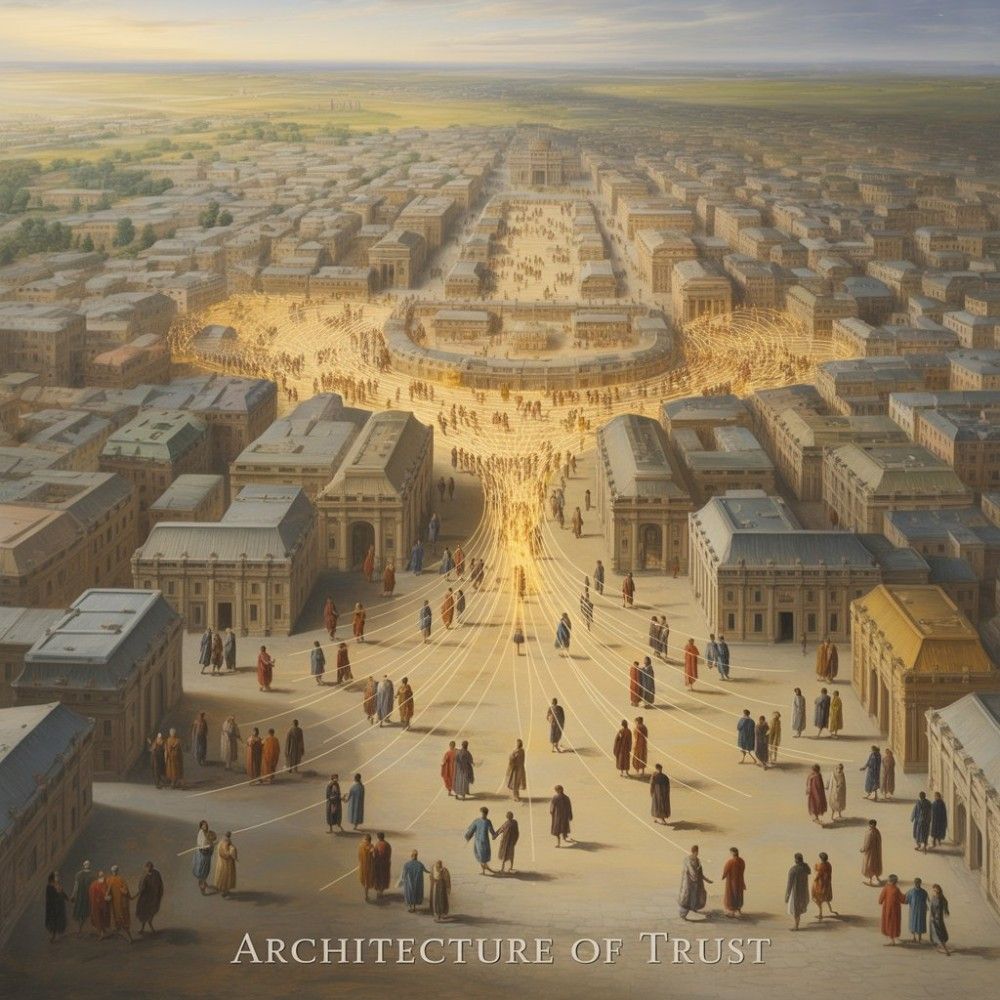
The most efficient trust architecture ever deployed at scale.
The question worth 1,400 years of examination is not what happened. It is how. What was the operating system that made complete outsiders open their homes and split their assets with people they had never met before?
The answer is not theology. It is not politics. It is leadership architecture, three interlocking principles that any executive can study, diagnose against, and deploy.
The Trust Deficit Is Costing You More Than You Think
Before we examine the architecture, consider the present-day wound it heals.
The 2024 Edelman Trust Barometer reported that only 23% of employees globally trust their CEO to tell the truth. Gallup's 2024 State of the Global Workplace found that 77% of employees are either not engaged or actively disengaged, costing the global economy an estimated $8.9 trillion annually.
The Harvard Business Review's research on high-trust organisations found they outperform low-trust counterparts by 286% in total return to shareholders over 12 years.
We have spent billions on culture consultants, engagement platforms, and values workshops. The trust gap has not closed.
Something is architecturally wrong. And the root cause analysis from Madinah, 622 AD, is uncomfortably precise.
The Three Laws of the Medina Protocol
What made the Mawakhat work was not a single act of generosity. It was the character of the leader who designed it — and three architectural principles that character embodied.
LAW I: CONGRUENCE
The leader is the living proof of the standard.
The most destructive force in modern organisations is not strategy failure or market disruption. It is the gap between what leaders say and what they do. Leaders declare integrity in town halls and negotiate dishonestly in private. They champion wellbeing and quietly approve 80-hour sprint cultures. They speak of trust while hoarding information.
Madinah saw something different.
When the first structures of the new community needed to be built, the Prophet (PBUH) not only supervised. He carried bricks. When resources were distributed, he took last. There was no gap between the standard set and the life lived. None.
Neuroscience gives us the precise mechanism. Mirror neurons, first documented by Giacomo Rizzolatti at the University of Parma, fire both when we act and when we observe someone else performing it. We are neurologically wired to replicate what we see at the top. Leadership behavior is not symbolic. It is literally contagious.
McKinsey & Company's 2023 research confirmed it: 89% of culture failures trace back to a disconnect between stated values and senior leadership behavior, not to employee resistance or structural complexity. The failure is almost always at the top. And it is almost always a congruence failure.
The diagnostic question: If your team filmed your behavior for 30 days without your knowledge, would it confirm or contradict your stated values?
LAW II: TRANSPARENCY
Decisions made in full view create followers. Decisions made in the dark create compliance.
Most leaders treat information as power to be managed, shared selectively, timed strategically, withheld when it protects authority. It is also the primary reason trust scores are at historic lows.
The Madinah Protocol ran on the opposite logic.
Reasoning was public. Constraints were shared. Tradeoffs were named. When a course of action was chosen, the community understood not just what was decided but why, which meant they could align with it, challenge it with relevant information, or adapt their behavior accordingly. People who understand the reasoning behind a decision execute it fundamentally differently from people who received only an instruction.
Google's Project Aristotle, five years of research into team effectiveness, identified psychological safety as the single highest predictor of performance. Psychological safety is a product of the information environment. Teams that know the context, understand the constraints, and trust the reasoning are teams that speak up, take risks, and solve problems before they become crises.
Amazon's "Disagree and Commit" principle operates on exactly this architecture: you must have enough information to meaningfully disagree before you can meaningfully commit. Without transparency, commitment is performance, not belief.
The Hidden Rules of China-Gulf Investment Dealmaking →
The diagnostic question: Do your people know the reasoning behind the three most significant decisions in your organisation in the last 90 days, or just the outcomes?
LAW III: ACCESSIBILITY
When the leader is reachable, the organisation thinks. When the leader is unreachable, the organisation waits.
The Prophet Muhammad (PBUH) consulted, not as theater, not as managed participation designed to give the feeling of input without the substance. Questions were asked, answers were genuinely heard, course was changed when better arguments were presented. This happened publicly, which meant the entire community watched that their voice matters.
The result is what organisational psychologists call psychological ownership, the state in which people feel outcomes are genuinely theirs. It is the most powerful driver of discretionary effort in the research literature.
The Battle of Uhud in 625 AD is the clearest proof. When senior advisors recommended defending from within Madinah, a position the Prophet Mohammad ( PBUH) personally held, younger companions advocated strongly for meeting the enemy in the open field. The Prophet, as commander, listened. The majority counsel prevailed, despite his own contrary judgment. He understood that a community whose counsel shapes decisions fights harder for those decisions than a community that merely executes them.
Ownership is not a management concept. It is a survival mechanism.
Deloitte 's 2023 Human Capital Trends report confirmed the modern equivalent: organisations with high consultation cultures reported 31% lower voluntary turnover and 40% higher innovation output than comparable organisations.
The second dimension of accessibility is simpler and equally neglected: universal kindness. There was no hierarchy of attention. Every person, regardless of rank, age, or social status, was treated as a full presence. In organisational terms, this dismantled the invisible signaling systems that most leaders create without realizing it: the differential response times, the warmth gap between senior and junior staff, the body language that quietly sorts people into those who matter and those who are merely useful.
Every leader creates these signals. People read them with extraordinary precision. They communicate one of two things: you matter here, or you are instrumental here.
The Mawakhaat Madinah worked because every person involved received the first message.
The diagnostic question: When did you last change a significant decision based on input from someone three levels below you?
The Architecture, Assembled
Rome's genius was structural. Roads, centurion command, aqueducts, infrastructure that functioned without any individual leader. Remove Marcus Aurelius, and the Legion still marched.
The Madinah Protocol was different in kind. The infrastructure was the leader. Character was the operating system. What was built was not a structure that ran without its architect; it was a model so precisely observable, so consistently enacted, that others became versions of it. The behavior replicated itself. Trust became self-generating.
That is the hardest thing to build in any organisation. And it is built the same way in 2026 as it was in 622 AD.
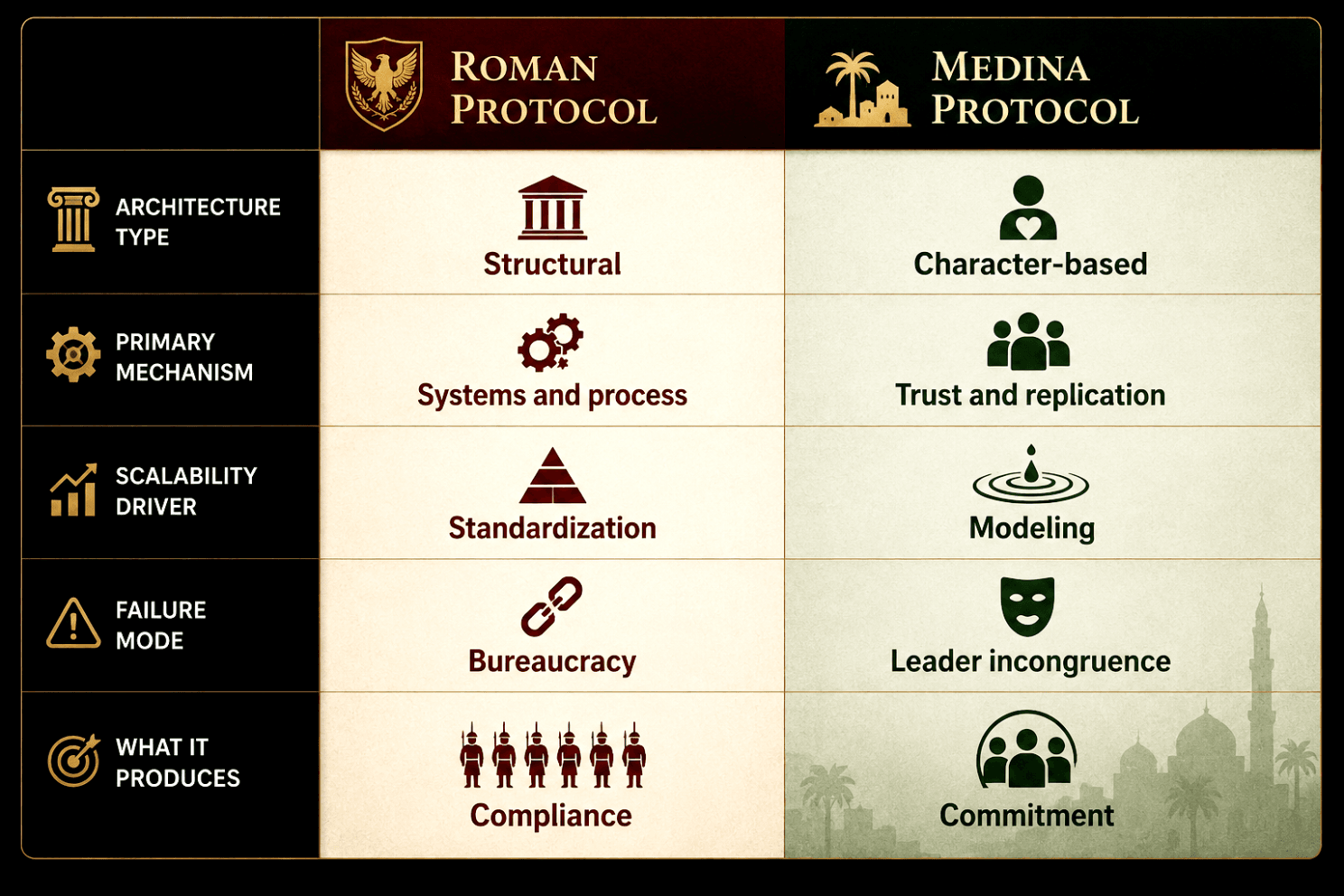
The Roman Protocol gives you an organization that works. The Medina Protocol gives you an organization that believes.
The best-run organizations in 2026 run both simultaneously.
Somewhere in this article, a leader will have recognized themselves in the failure modes, the gap between stated values and lived behavior, the decision made behind closed doors, the consultation that was theater, the colleague whose name you still don't know.
These are not character flaws. They are architectural defaults, the natural output of systems that reward decisive authority and penalize visible uncertainty.
The Mawakhaat happened because one leader made three architectural choices: congruence, transparency, and accessibility, and held to them under conditions of extreme pressure, scarce resources, and existential uncertainty.
The pressure you are under is real. The resources are finite. The uncertainty is genuine.
The architecture still works.
Continue reading Part 2.
This article was firstly published on Syed Muddassir's LinkedIn.



Leadership
Tags: Relationships
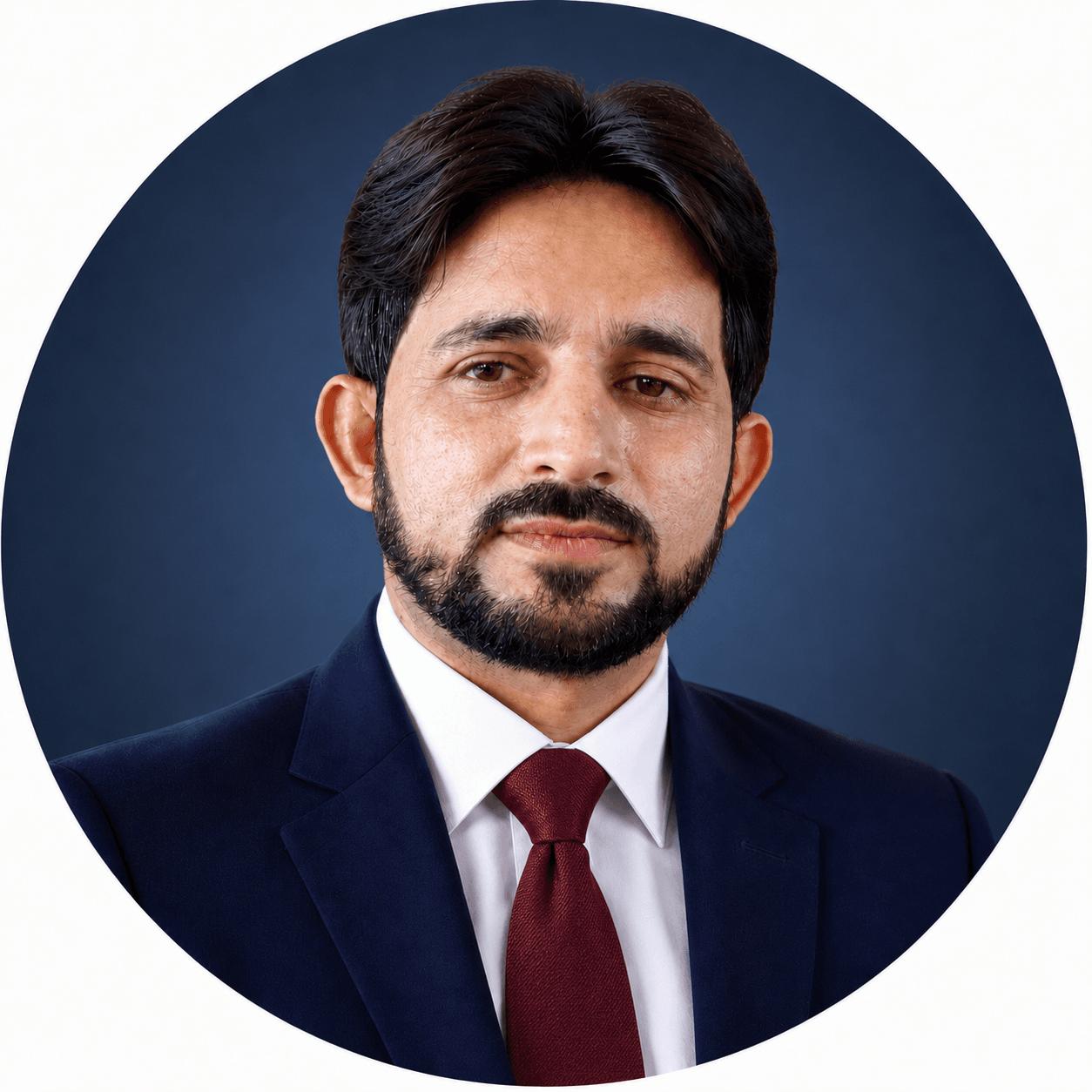
Syed Muddassir is an Enterprise Architect, organisational transformation leader, and author of The Architecture of Impact and The Curvions Architect. Drawing on more than two decades of experience in enterprise architecture, governance, organisational design, and business transformation, his work explores how institutions can be intentionally designed to build trust, strengthen decision-making, and sustain performance beyond individual leaders.