The Hidden Rules of China-Gulf Investment Dealmaking

Mathieu Stern from Unsplash
As US-China tensions reshape global capital flows, a consequential reorientation is underway in the Middle East. Gulf sovereign wealth funds, which control over US$4 trillion in assets, are deepening their engagement with China while those in the West are pulling back. The China-Gulf corridor has the potential to be one of the defining investment relationships of the next decade. But for now, the deals that should be happening are not, and the reasons have little to do with money.
In 2024, a battery logistics joint venture between a Chinese energy firm and a Gulf logistics operator collapsed, not for lack of capital or technology, but because neither side had explicitly discussed who would lead. The Chinese side expected operational authority as the rightful return on their IP contribution. The Gulf side viewed capital and government relationships as the legitimate basis of control. This mismatch was never surfaced during months of negotiations.
That failure is not isolated. It reflects the structural gap between ambition and execution across the China-Gulf Cooperation Council (China-GCC) corridor, a gap holding back billions in capital deployment on both sides. This article outlines the lessons Xin Wang gleaned as a China-GCC cross-border adviser in dealings with Gulf sovereign wealth fund teams, family office principals and startup founders.
How Gulf sovereign wealth funds got here
Gulf sovereign wealth funds' engagement with China has moved through three phases. The first, in the early 2000s, was cautious and financially motivated, with the Kuwait Investment Authority and peers accessing China through fund managers as one allocation among many. The second, in the mid-2010s, saw funds align with national transformation agendas. The UAE-China Joint Investment Cooperation Fund, a US$10 billion collaboration between Abu Dhabi’s Mubadala Investment Company, China Development Bank and China's State Administration of Foreign Exchange, marked the beginning of genuine bilateral strategy.
The China-GCC corridor works only as a two-way game: Chinese companies need to understand what the Gulf wants from them; Gulf investors need realistic frameworks for what China exposure delivers.
The third phase, from 2019 to the present, was partly triggered by disappointment. Underperformance of third-party vehicles, including the SoftBank Vision Fund, pushed Gulf funds towards direct investment. Abu Dhabi Investment Authority opened a Beijing office in 2021, Mubadala followed in 2023, and Saudi Arabia’s Public Investment Fund (PIF) opened in Hong Kong in 2022 and Beijing in 2024. The current posture is direct investment, M&A and structured partnerships with Chinese companies.
On the Saudi side, China investment is increasingly routed through indirect structures. Sanabil Investments, PIF's venture arm, accesses Chinese AI and fintech through Sequoia China (now known as HSG) and Hillhouse; Aramco's Prosperity7 Ventures took early-stage positions in Chinese AI and energy startups while avoiding high-profile deals that might attract geopolitical scrutiny. The architecture appears designed to maintain China exposure while managing the optics of US-China tensions.
Where deals break down
The most important lesson distilled from Wang’s advisory experience is that gaining access to a meeting is far from the same as reaching a decision-maker. In engagements between Saudi Arabia's NEOM Investment Fund and Chinese autonomous driving and smart energy companies, for example, initial conversations with mid-level staff can appear promising, only to go nowhere following internal shifts in the royal court.
High-profile Saudi initiatives are protected by layers of informal influence, and public-facing departments frequently lack authority. Without a sponsor at the royal advisory or giga-project board level, even technically strong proposals could spend months in limbo rather than being rejected outright.
The joint-venture failure described above is equally instructive. Chinese firms and Gulf partners often enter negotiations with different theories of legitimate authority. Chinese companies anchor authority in IP ownership and operational expertise. Gulf partners – particularly those with sovereign or royal adjacency – ground it in capital and political relationships. The two sides are bound to clash unless these differences are addressed explicitly and early on. They need to discuss not just governance mechanics but governance philosophy, alongside localisation commitments in terms of hiring talent, as well as technology transfer and brand adaptation.
The Hong Kong factor
A counterintuitive observation is that the most productive deal-relevant introductions came not directly from mainland China or Gulf channels, but from Hong Kong-based investment teams of Gulf funds. Case in point: A meeting with MSA Capital – a limited partner of Sanabil – generated follow-on introductions that accelerated vetting for three Chinese deep-tech ventures in AI, biopharma and smart energy.
Hong Kong provides a structurally neutral space that Gulf allocators appear more comfortable with, given the sensitivities around engaging directly with China. It offers legal familiarity, relative political neutrality and financial instruments such as Stock Connect, Bond Connect and dual-listed ETFs (exchange-traded funds) that make it a natural intermediary for Gulf-China capital flows.
What this means in practice
The China-GCC corridor works only as a two-way game: Chinese companies need to understand what the Gulf wants from them; Gulf investors need realistic frameworks for what China exposure delivers. Both sides currently overestimate how well they understand each other. Here are the rules of the game each side needs to note:
For Chinese companies: The Gulf offers more than capital. The UAE provides tax incentives, supply chain advantages and a permissive environment for technology transfer. Saudi Arabia offers scale and speed of economic transformation, with government demand for operational expertise that Chinese firms are well-positioned to meet. Localisation is non-negotiable – Gulf sovereign wealth funds have become sophisticated at identifying whether a foreign firm is a genuine contributor to national development or a capital extractor.
For Gulf investors: China hosts only about 10% of global market capitalisation despite being the world's second-largest economy. The most interesting opportunities sit where Chinese operational capability meets Gulf demand – advanced manufacturing aligned with Saudi industrialisation goals, deep tech in AI, robotics and energy technology. Chinese management culture prioritises speed, scale and control in ways that can strain relationships if not anticipated and managed proactively.
As Gulf-China investment flows grow, the practitioners who convert ambition into executed deals will be those who know which door to knock on in the Gulf, appreciate the importance of localisation, and route engagement through Hong Kong.



Collaborator Description:
This article is published courtesy of INSEAD Knowledge, the portal to the latest business insights and views of The Business School for the World. Copyright INSEAD 2026.
Edited by: Seok Hwai Lee
Business
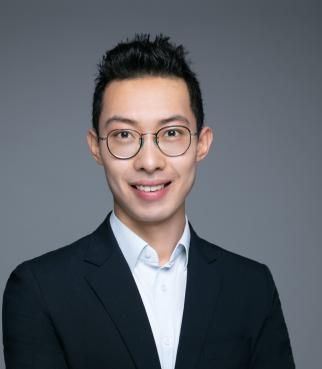
Xin Wang (MBA'25J) is an independent adviser specialising in cross-border capital strategy between Chinese and Gulf family offices, startups and Gulf sovereign wealth funds. His work across Abu Dhabi, Dubai and Riyadh, as well as an INSEAD Independent Study Project under Professor Chiara Spina's supervision, forms the basis of this article.

Chiara Spina is an Assistant Professor of Entrepreneurship at INSEAD. Her research focuses on understanding how entrepreneurial firms leverage systematic decision-making and experimentation to innovate and grow.