Leading from Within: Key Takeaways from the Malaysia Leadership Summit 2026 (Part 1)
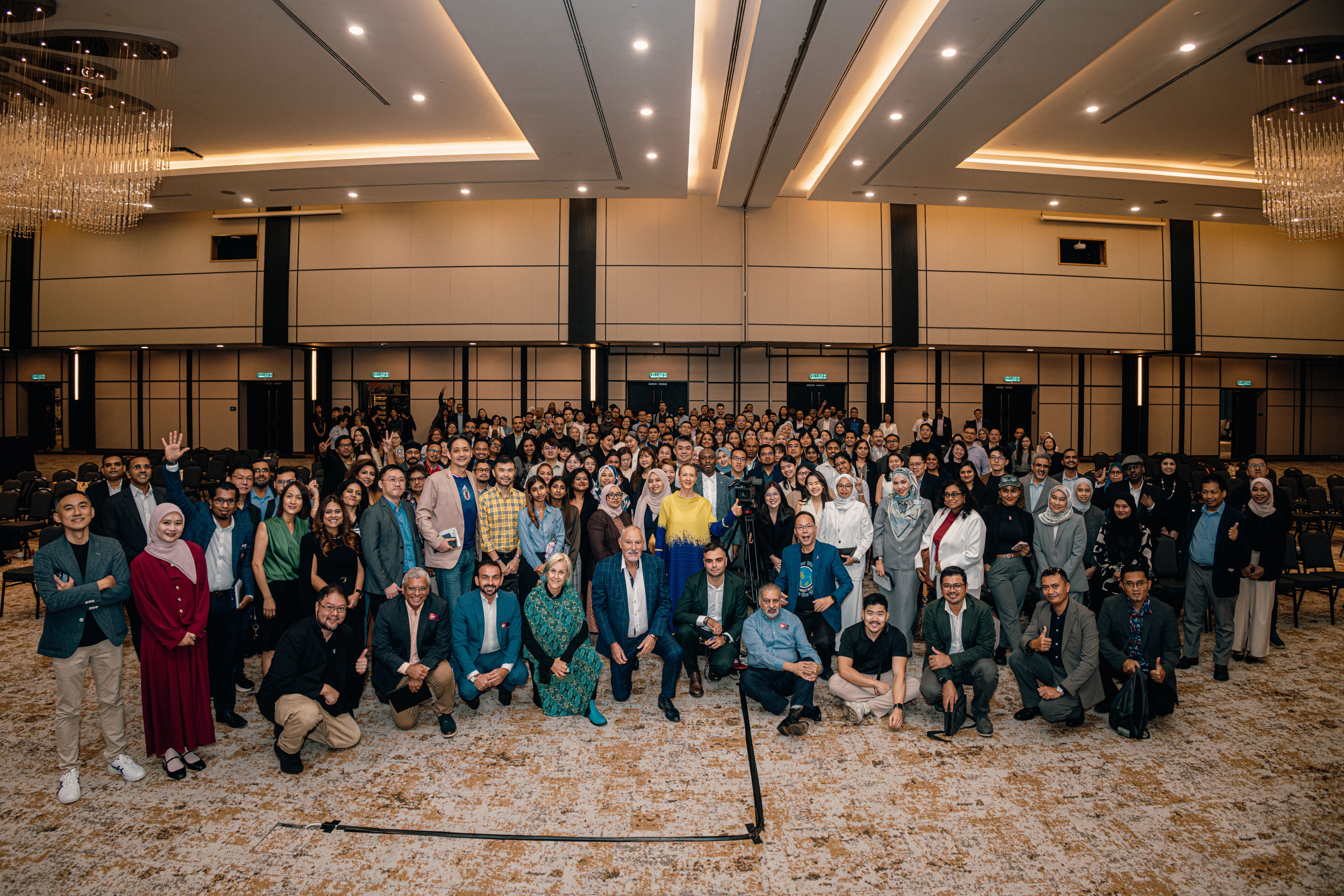
Malaysia Leadership Summit 2026
This article is available in Bahasa Melayu.
Every year, the Malaysia Leadership Summit brings together leaders from different industries to learn from one another. The 2026 edition continued that tradition with a full day of conversations that explored what leadership looks like beyond business performance.
Throughout the day, speakers unpacked the realities of leading in an AI-driven world, from easing fears around emerging technology to building cultures that can adapt and thrive through change. Woven through every session was a shared belief that the strongest organisations are built by leaders who first invest in themselves and the people around them.
Reflecting that same commitment to creating meaningful impact, all net proceeds from the summit will be donated to Together We Can Change the World to support refugee initiatives. Giving back has long been part of the Malaysia Leadership Summit's mission, extending the day's conversations beyond the conference hall and into the communities it seeks to serve.
From seasoned CEOs, technology specialists and organisational strategists, each speaker offered a distinct perspective on the challenges facing today's leaders. Here are some of the key takeaways from their sessions.
1. The Core, the Code, and the Cargo
Roshan Thiran | Founder and CEO of Leaderonomics
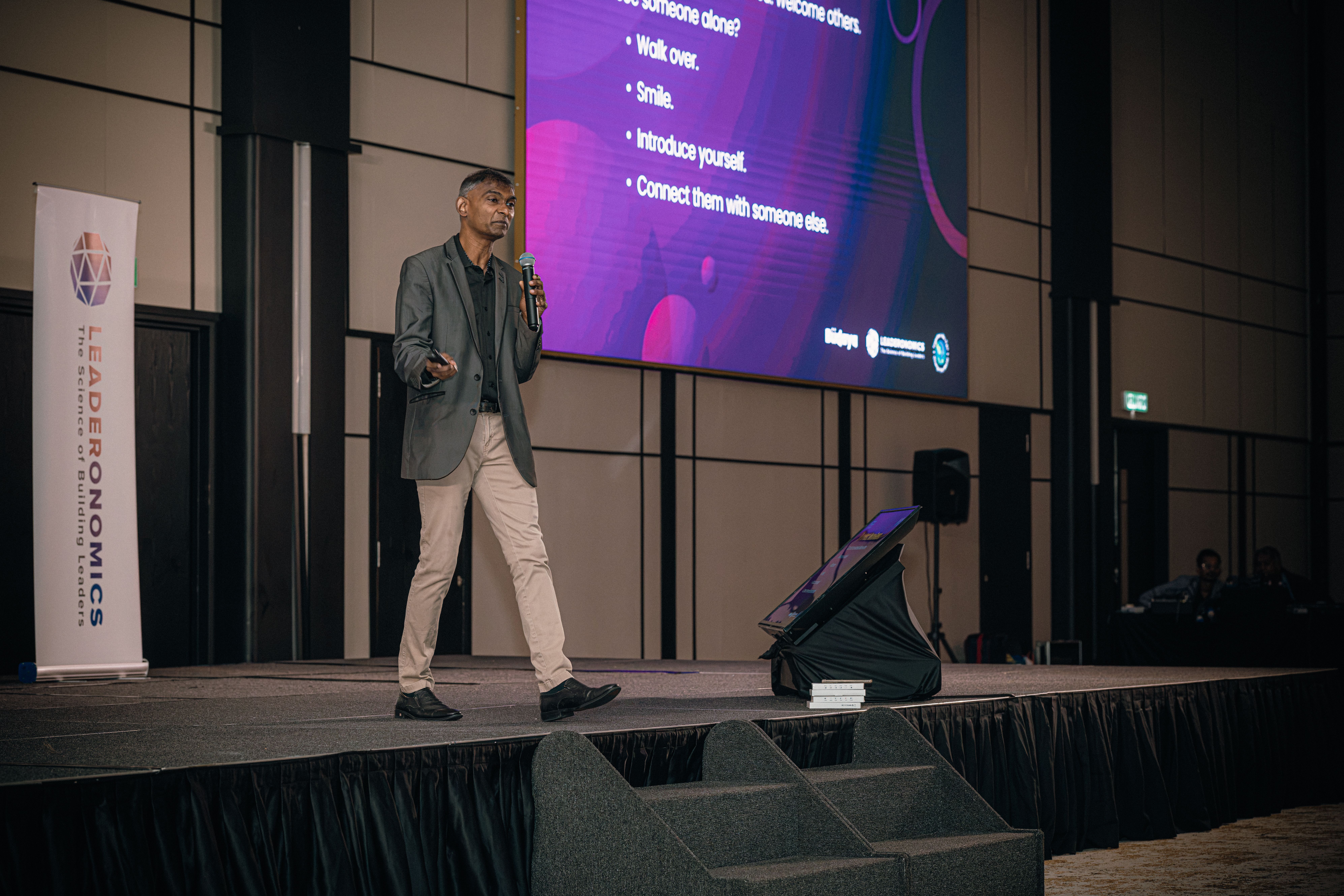
Roshan Thiran
Roshan Thiran opened the summit by reframing success as an iceberg, noting that while the outer world measures the visible 10%, true leadership is forged in the invisible 90%—who we are when no one is watching. He reminded the audience that true leadership stems from identity rather than strategy, observing that under intense pressure, leaders do not rise to their strategy; they fall back on their core identity.
He broke this down into a three-layer framework that explains how lasting transformation takes place:
- The Core: Our convictions, values and purpose.
- The Code: The habits, systems and behaviours that translate those values into daily action.
- The Cargo: The visible outcomes—our results, reputation and titles.
When the core is strong, everything else has something solid to grow from. Strategy, culture and performance become expressions of identity rather than substitutes for it.
Questions change the world, not answers.
2. Redefining DEI and the Power of the Slow Brain
Paul Larsen | Global Speaker, Executive Coach, Founder @ Find Your V.O.I.C.E. Coaching Academy
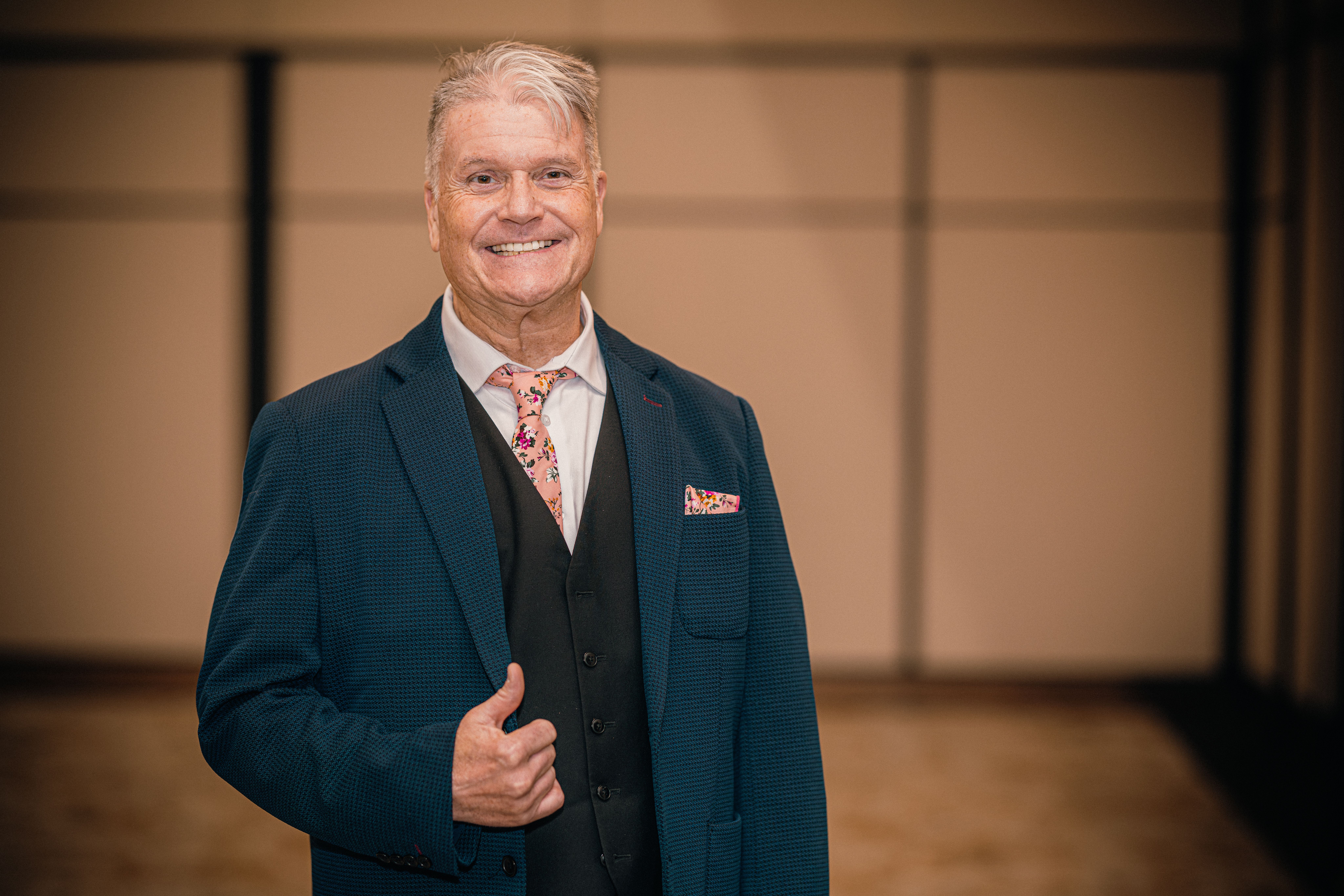
Paul Larsen
Paul Larsen admitted that he once confused managing with leading. Early in his career, he believed leadership was about having the right answers and directing others towards a goal. Over time—and after what he described as a lot of crashing and burning—he realised that genuine leadership starts with vulnerability.
Paul found that he was able to build stronger relationships and earn trust in ways that authority alone never could. Rather than treating DEI as static concepts, Paul reframed them as actions. Leaders must decide by questioning the assumptions that influence who gets opportunities, engage by creating psychologically safe spaces where different perspectives are welcomed, and inspire by fostering a culture where people genuinely feel they belong.
Underpinning this was a simple reminder that leaders are wired to react instinctively. Inclusive leadership happens when we pause long enough to question those instincts before responding.
Inclusion isn't something we have. It's something we do.
3. Navigating Uncertainty with Strategic Foresight
Rohit Talwar | Motivational Futurist Ranked #2 Globally & Keynote Speaker
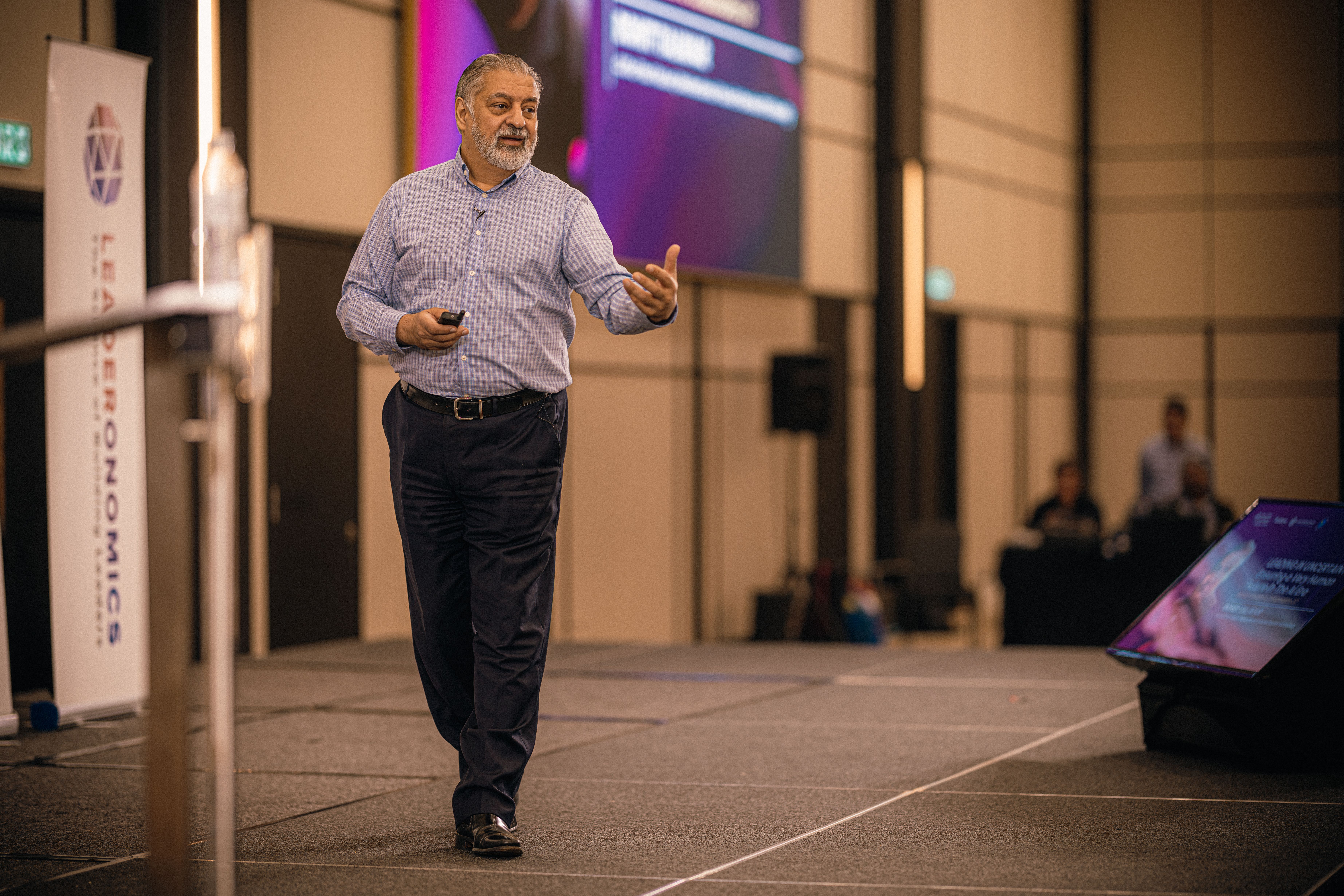
Rohit Talwar
In a world experiencing rapid geopolitical shifts and technological disruption, futurist Rohit discussed the necessity of operating effectively with imperfect information. By the time an organisation has perfect information, the opportunity has passed. He highlighted that structured strategic foresight significantly impacts corporate value, with organisations practicing it achieving 33% higher profits and notably stronger share price performance over time.
Addressing the widespread anxiety surrounding artificial intelligence, Rohit outlined five essential keys shared by the small percentage of organisations achieving genuine AI success:
- Prioritize continuous learning to build true technological fluency.
- Anchor AI initiatives in business goals instead of adopting technology for its own sake.
- Build trust through radical honesty about how new tools will impact the organisation.
- Resolve structural friction early by clarifying cross-functional ownership before deployment.
- Focus on growth, not just cost-cutting by using AI to create new opportunities.
4. The Inner Disciplines of Elite Performance
Nishant Kasibhatla | Human Performance Expert & Certified Speaking Professional (CSP)
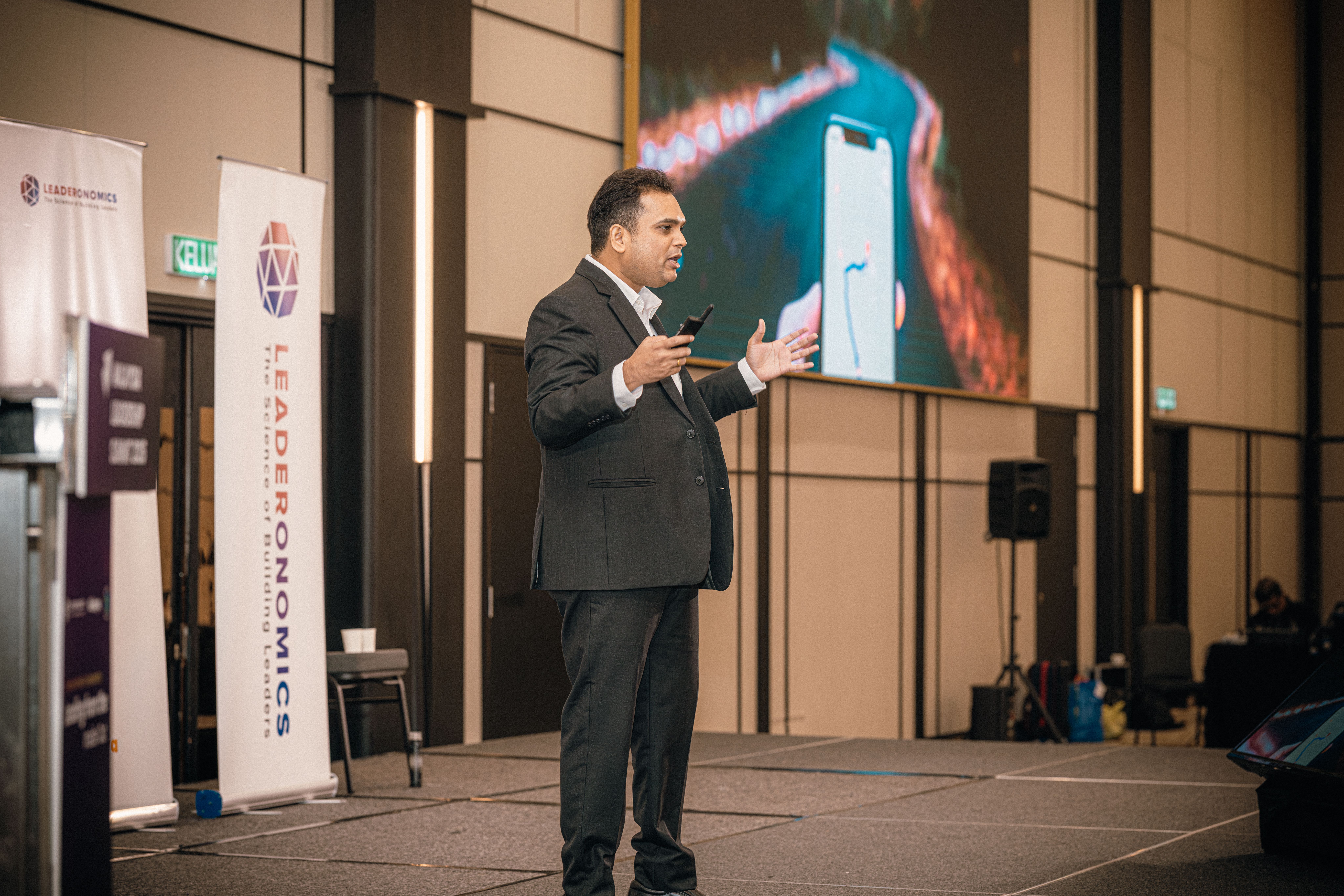
Nishant Kasibhatla
According to Nishant Kasibhatla, Guinness World Record holder in memory, the quality of our leadership is limited by the quality of our inner operating system. Attention, learning capacity, and self-awareness shape everything that follows. To strengthen these capabilities and move from consuming knowledge to mastering it, he introduced the FRR Framework:
- Focus: Utilize a 1-3-50-0 workflow. Select 1 needle-moving task, take 3 deep transition breaths to shift out of daily chaos, focus intensely for 50 minutes, and allow 0 distractions.
- Recall: Avoid passive information consumption by practicing an instant replay. Pause after meetings, videos, or reports to mentally retrieve three key takeaways without looking at notes.
- Reflect: Implement a brief nightly routine asking a singular, vital question to learn from experience rather than just information.
The quality of your leadership is ultimately shaped by the quality of your mind.
5. Leveraging the Magnificent Seven
Frank Furness | Global Sales & AI Keynote Speaker
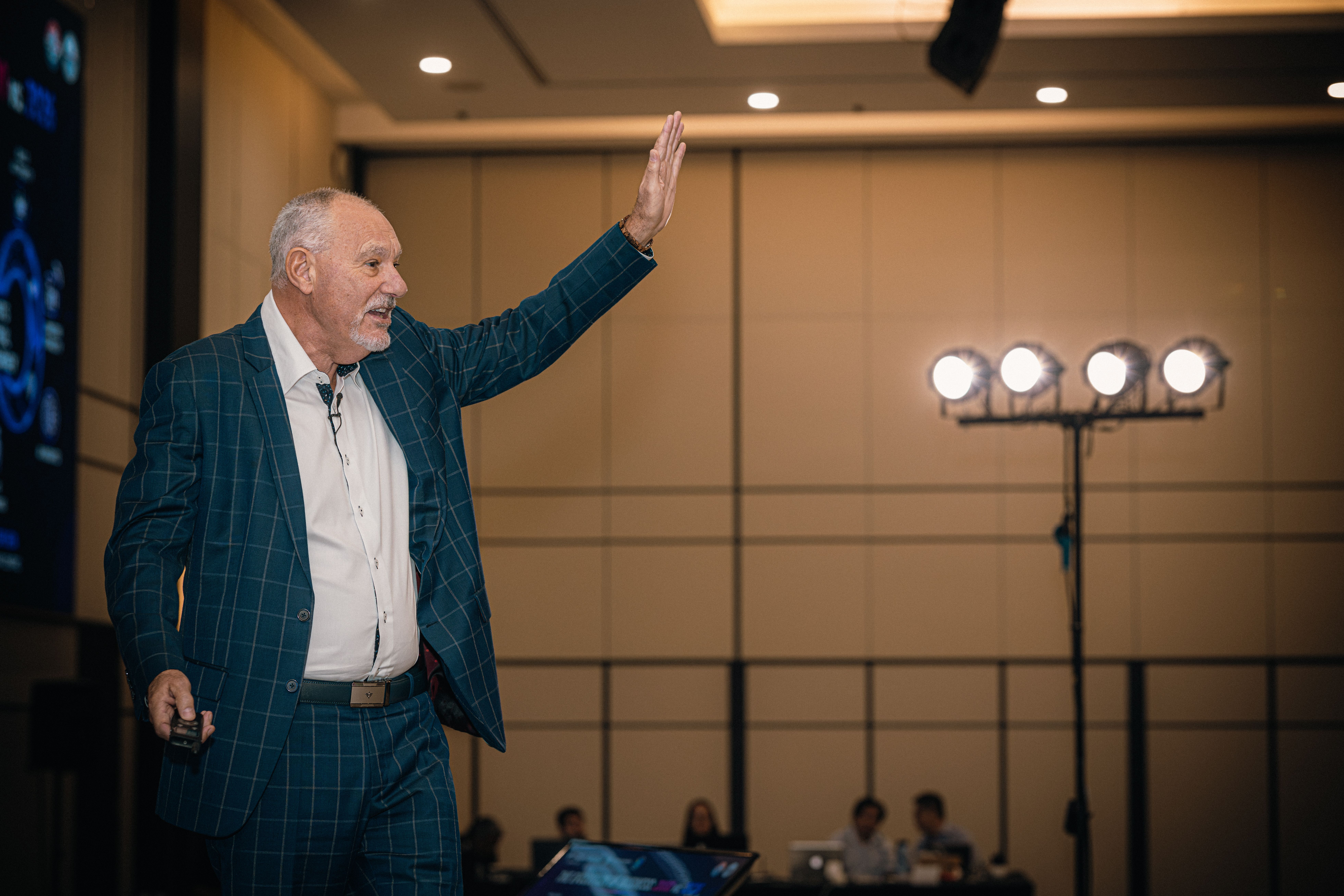
Frank Furness
While many view artificial intelligence merely as a collection of cool software shortcuts, Frank Furness framed the technological shift as a fundamental rewrite of a leader's day-to-day operating system. The true challenge for leaders is knowing exactly where to deploy automation so they can free up their time for high-value human interaction.
To make this transition actionable, Frank unpacked how a highly optimized tech stack changes the speed of professional output:
- Instant Synthesis & Direct Data: Tools like Perplexity change how we gather market intelligence by replacing traditional, link-heavy search engines with immediately synthesized data, complete with direct source queries. Similarly, Grok provides real-time analysis of trending global topics, allowing leaders to monitor live market conversations as they happen.
- Deep Context & Brand Continuity: Rather than relying on generic AI outputs, Frank highlighted Claude for its exceptional nuance in drafting long-form content and its distinct ability to mirror a specific brand voice. For broader content creation, initial brainstorming, and visual assets, ChatGPT and Gemini serve as essential baseline partners.
- Speed-to-Market Execution: Administrative friction can be systematically eliminated. Tools like the Gamma App turn raw ideas into polished presentations and slide layouts in seconds, while platforms like Hunter.io streamline professional outreach by instantly mapping out critical B2B email contacts.
Ultimately, Frank pushed leaders to look past the software itself and focus on the structural shift it allows. By built-in systems that handle the heavy lifting of research, layout, and outreach, leaders can pull themselves out of the operational weeds. The goal of building a modern tech stack isn't to replace the human element, but to fiercely protect it—giving leaders the breathing room to focus on the things automation cannot replicate.
Systems plus habits give results... but AI cannot manufacture human trust, empathy, courage, or culture.
6. The Geometry of Trust
Tareef Jafferi | Founder of Happily.ai & Culture Expert
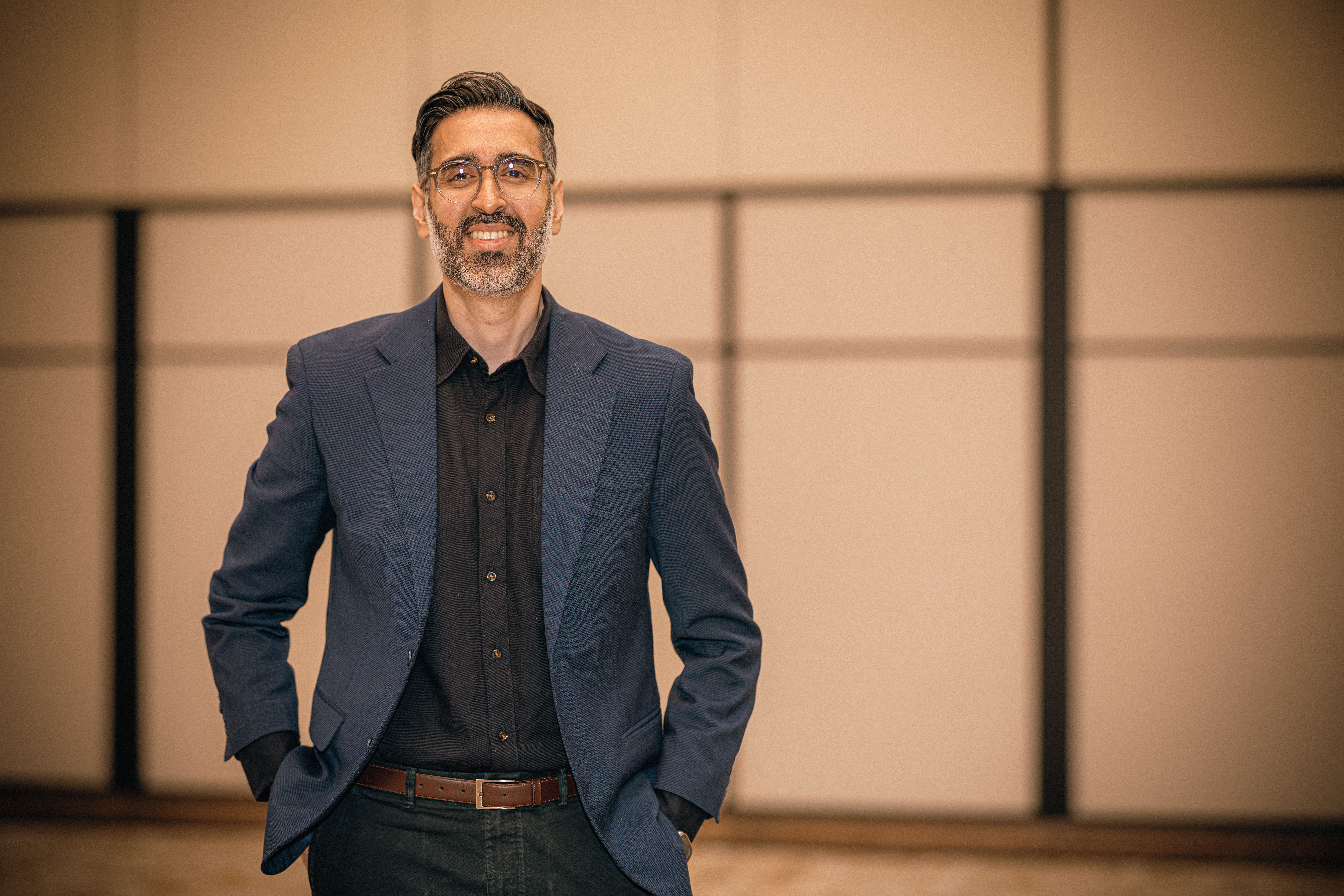
Tareef Jafferi
Scientist Tareef Jafferi challenged the audience to think about trust not as a feeling, but as a prediction. Every interaction, he explained, is shaped by our brain's quiet attempt to answer one question:
"Can I rely on this person?"
According to Tareef, we instinctively make that judgement by assessing three things: a person's capability (Can they do the job?), benevolence (Do they genuinely care about others?) and character (Will they do the right thing when it matters?).
As those questions are answered over time, trust naturally develops through three stages. It begins with calculus-based trust, where people cautiously assess one another through small interactions. With repeated positive experiences, relationships progress to knowledge-based trust. At its strongest, trust becomes identity-based, where people share a common purpose and can rely on one another almost instinctively.
Tareef then connected this idea to everyday organisational life. Although companies are structured around reporting lines and formal hierarchies, information rarely travels that way when people need to solve problems quickly. Instead, it flows through trusted individuals who naturally connect teams, bridge silos and help others navigate uncertainty.
These informal trust builders, he argued, often have the greatest influence on an organisation's ability to adapt. While they may not always hold the highest titles, they are frequently the people others turn to first.
Trust is actually a prediction about the future... and it is a deeply personal thing.
7. The Science of Scaling
Rejie Samuel | Board Member at Air International Thermal Systems
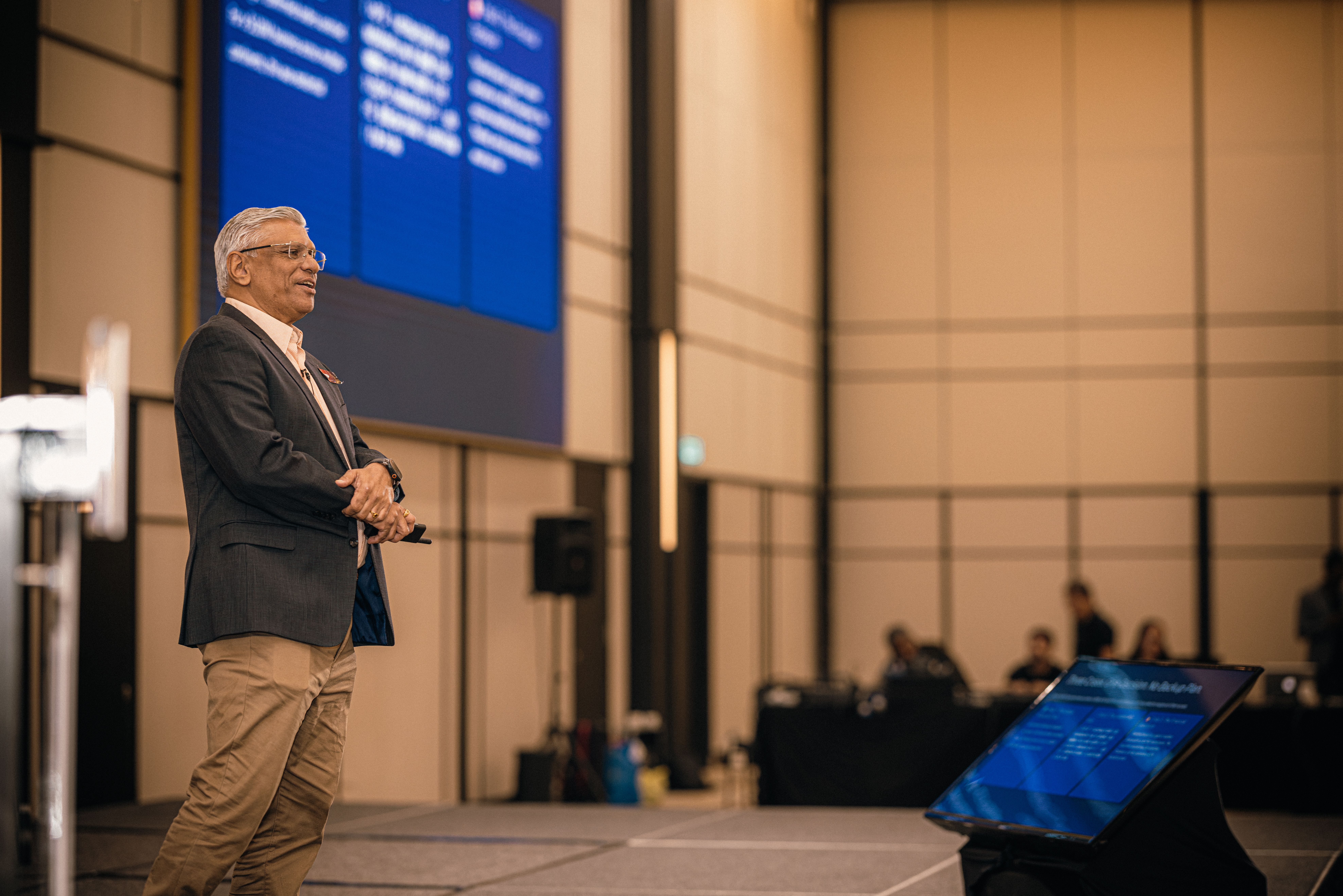
Rejie Samuel
Rejie Samuel took the audience back to 2008, when he found himself sitting alone in a hotel room in Pattaya facing what seemed like an impossible situation.
The global financial crisis had wiped out 60% of his company's business overnight after one of its largest customers declared bankruptcy. At the same time, the company's CEO had been diagnosed with cancer, leaving a leadership vacuum. To make matters worse, a creditor was demanding immediate payment for newly acquired manufacturing assets that the company could no longer afford.
The measure of a leader is not what they do when conditions are perfect. It's what they do when everything is falling apart at the same time.
Rather than reacting in panic, Rejie searched for options. While reviewing old acquisition documents, he stumbled across a forgotten clause that allowed the company to access a low-interest vendor loan. That unexpected discovery secured the funding needed to keep operations alive and ultimately laid the foundation for future growth.
The experience reshaped his approach to leadership. During times of crisis, he explained, leaders cannot try to solve everything at once. They must first decide what matters most.
That thinking became the basis of his Reduce, Stabilise, Grow framework:
- Reduce: Ask, "If we were starting this business today, would we still choose to keep this?"
- Stabilise: Rebuild the routines and confidence that allow the organisation to move forward together.
- Grow: Only after the foundation is secure should leaders invest in expansion and innovation.
As Air International recovered, the company invested early in electric vehicle technology, expanded globally and reshaped its business from supplying components to delivering complete thermal management systems. What began as a US$120 million company eventually grew into a global business exceeding US$2 billion.
Leading from Within
Together, these sessions explored the foundations of effective leadership—from knowing who we are and how we lead others, to building the trust and resilience needed to navigate uncertainty. Ultimately, these sessions invited leaders to look beyond the next challenge and invest in the qualities that will outlast it.
Continue reading Part 2.
Listen to the official Malaysia Leadership Summit 2026 theme song:



Leadership

Anggie is the English editor at Leaderonomics, where creating content is an integral part of her daily work. She is never without her trusty companion: a steaming cup of green tea or iced latte.