How to Make a Strong First Impression in Your Office Lobby
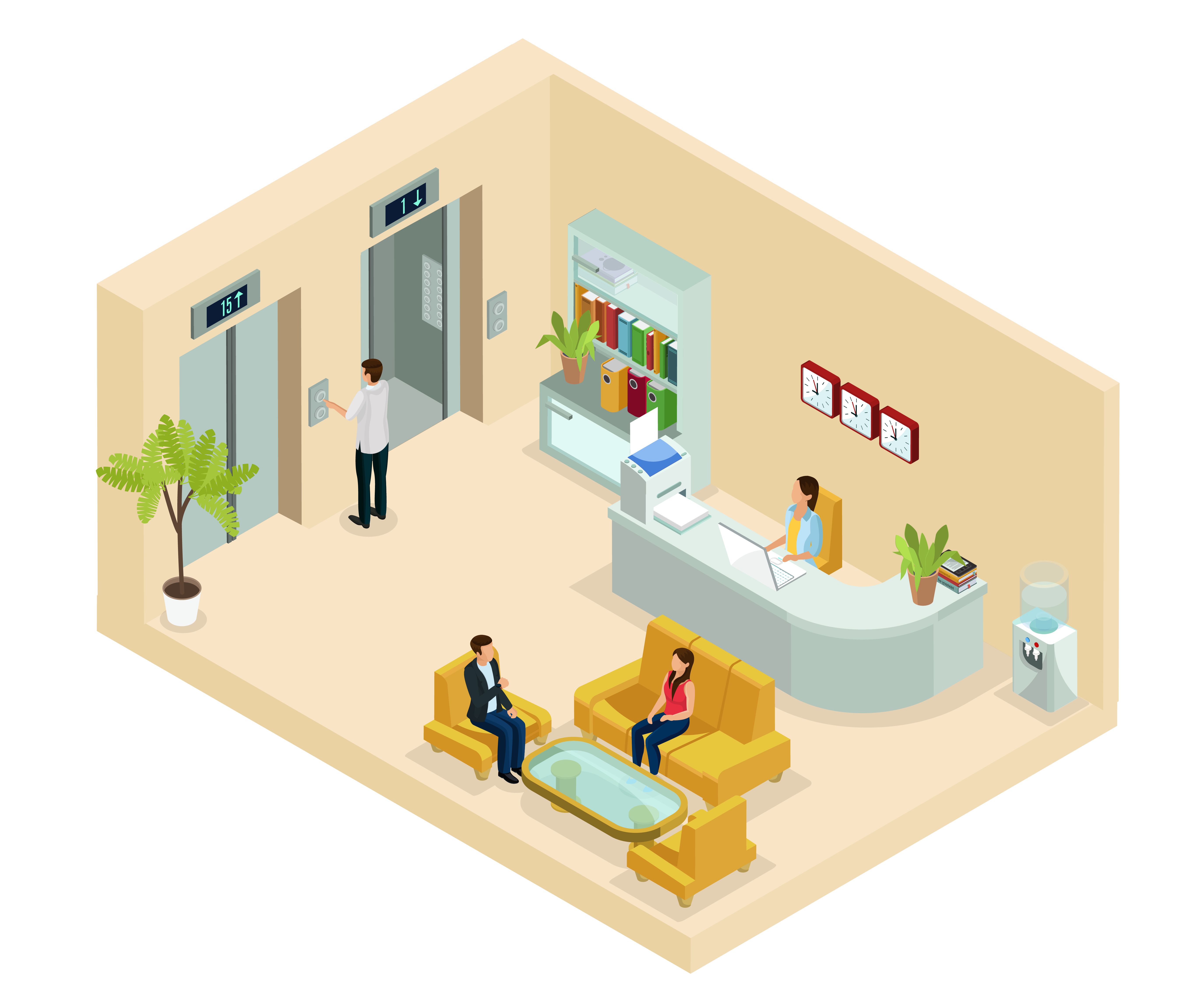
Photo by macrovector @ magnific
Many businesses treat the lobby as a utilitarian waiting area for guests until they are taken to their meetings. But this is such a waste of a great opportunity! Once a client, a job applicant or a supplier comes into your business premises, they make assumptions that will guide their further interaction with your business. And this is not about the decoration of the room but your brand as a whole.
Psychology of the first seven seconds
Numerous studies have found that within seven seconds before saying a word, a visitor makes several subconscious assessments of you. Environmental psychology research has confirmed what architects and interior designers have known from the very beginning – people read a room in a way they read a face. In a second, they are assessing your financial stability, dedication to excellence and corporate culture.
This is the perfect example of the primacy effect in action. A messy lobby area, harsh lighting and a receptionist struggling with a broken phone system set a strong first impression which is hardly possible to shake off even by a great meeting. And if you create a beautifully designed introductory area, you welcome your visitors with a positive first impression from the very first moment.
What do people actually respond to? Materiality communicates wealth. A worn carpet or flaking veneer tells about problems. Clear sightlines and proper furnishings signal authority. Light that is either "warm" or "cold" conveys a certain mood before the visitor is even aware of the fixtures in the room. Sound and lack of soundproofing cause stress. While your prefrontal cortex ignores all this subconscious information, the reptilian brain still registers it.
Biophilic design – more than just a potted plant
Luxury hotels and high-end professional services companies often use living walls and complex, always changing floral decorations in their lobbies. But this is not only due to money or aesthetics – they do this because they know how important first impressions are and that a visitor's body reacts to the space long before the conscious mind catches up.
This may interest you: Grow Through Design Thinking
Biophilic design – the idea that the incorporation of natural textures, colours, shapes and outdoor elements into our living spaces positively impacts our physiology and emotions – is becoming popular for good reasons.
Instead of keeping a bunch of plastic ficus trees or a dusty fern sitting on the reception desk, biophilic design goes much further. Some greenery is nice to have, but it is far from enough to convey the right message. A discreet living wall says a lot about the business – that it has the budget or ambition to do something special, that it cares about its employees and clients and that it is a big player in the field of environmentally conscious businesses.
Static greenery does some of the work, but rotating floral arrangements bring life to a space that can otherwise feel frozen. The biggest problem for most businesses with this is consistency – you need not only to purchase flowers regularly but also to style and arrange them in a proper way. Here, the corporate flowers program solves the issue as the professional curation and regular rotation ensure that the space never looks outdated.
Spatial zoning – design for different kinds of visitors
A lobby needs to accommodate the needs of different kinds of visitors at once, and the space should be adequate for each of them. The client coming to attend the meeting has different needs than the employee coming to pick up a delivery, and both of them have different needs than the courier coming to make a delivery.
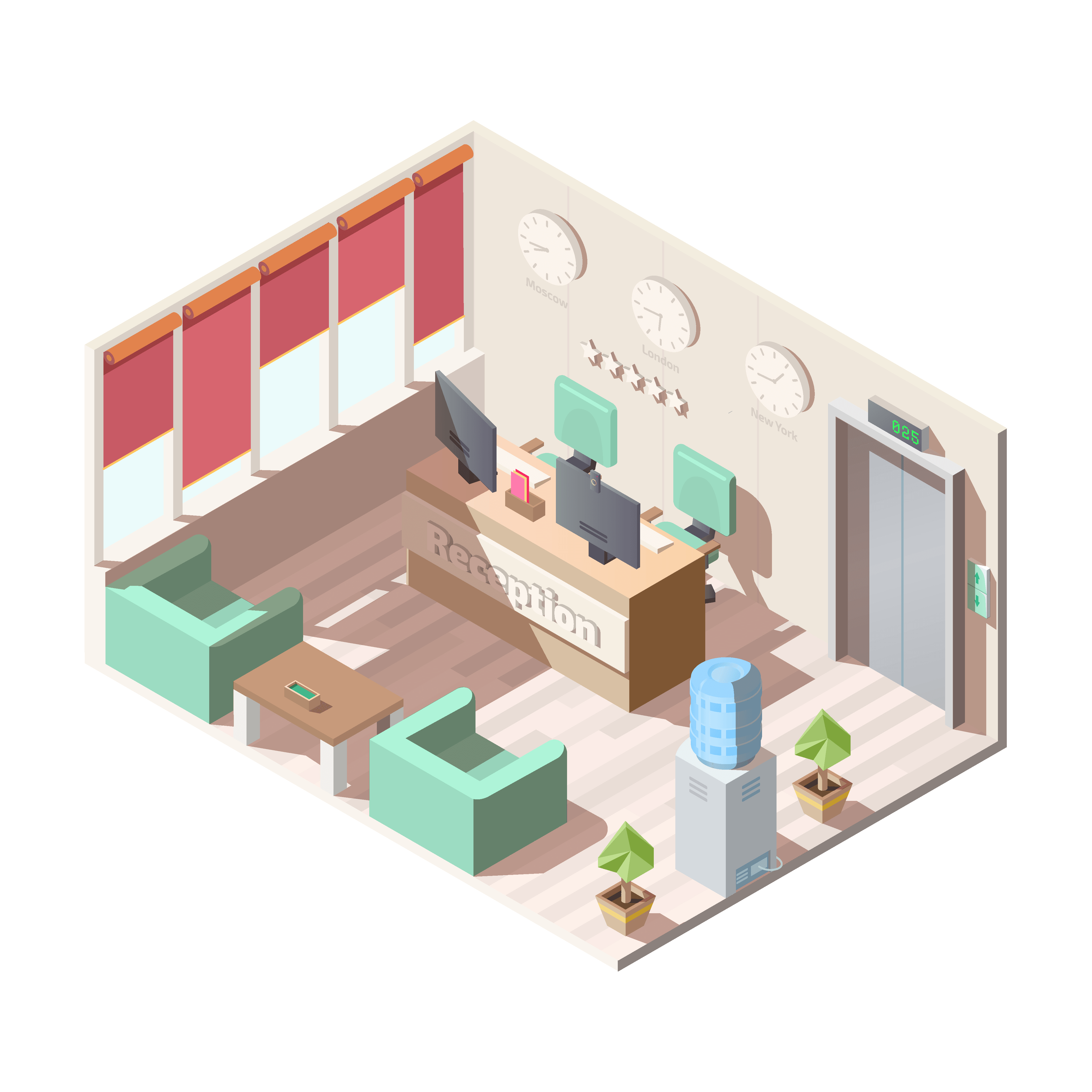
It is best to separate the space into zones. The reception desk serves as the focal point – it is responsible for greeting the visitors, guiding them to their destinations and taking phone calls. Right next to it, there should be a cosy waiting area for guests, and some degree of privacy should be incorporated into the design. This is not a set of chairs randomly arranged in the corner. The seating should provide the atmosphere of a lounge area rather than of a waiting room in a doctor's office.
If the office has a hybrid work policy, a third zone is helpful to accommodate visiting employees or partners who want to go through their emails or conduct a quick phone conversation without being guided to a work table that they can book for a day in the main work area. This way you show them that you appreciate the fact that they visit your offices as a destination and not as just another place to stop by for a minute.
Wayfinding connects visitors from one zone to another. They should not have to be directed where to go. Small changes in the colour of the floor, in the direction of the lighting and in beautiful but subtle signage can help visitors navigate the space intuitively. If someone stops in the middle of the path and tries to figure out where to go, the whole meaning of making the navigation easy is lost.
Sensory design – lighting, acoustics and air quality
A typical office lobby uses fluorescent lighting and hard flooring such as tiles. Lighting is the first thing that causes the lobby to feel sterile and impersonal. Fluorescent lamps produce a large amount of blue-white light, which numerous studies have proved can have a disorienting effect on a person. Similarly, the clinical association we all have with a doctor's waiting room, with floors made of reflective tiles, means that any sound bounces all over and distracts everybody.
Correct lighting can fix this problem. Warm lighting and low lighting create a tranquil atmosphere which not only helps to relax but stimulates communication as well. Other benefits include spotlights for lighting artworks and logos, which studies have shown increases brand awareness up to 75%.
Acoustic panels and baffles help to absorb the sound as well as bring changes in colours and textures from the usual sterile grey and white that can be seen in most office lobbies. Carpets and rugs also help to reduce the level of noise. A small water feature helps not only to soothe the atmosphere but to mask the conversations' noises as well. Visitors should not be able to hear the conversations of other visitors and the receptionist talking with her colleagues. This is a privacy as well as comfort feature.
Indoor air quality often gets overlooked in design discussions, but this is a measurable aspect. Proper ventilation and air filtration affect the cognitive abilities of not only employees who work at the reception all day long but visitors who might stay longer than they expected. Fresh air with a light, pleasant scent differs greatly from the sterile smell of industrial cleaning products and stale coffee. Scent doesn't need to be too intensive but needs to be consistent and intentional.
Aligning the lobby design with the brand identity
A lobby is the first physical point of contact for almost all companies. Everything else – the website, the presentation, the LinkedIn page – is digital. It is here that the brand takes physical form and the design decisions must be consistent with all the messaging.
The lobby of a heritage law firm and of a startup are two totally different stories. Wood panelling, deep seating and subdued tones signal stability and authority. Raw concrete, open shelving and modular furniture signal speed and adaptability. Neither is wrong; they just tell different stories, and the lobby that contradicts the message of the company causes cognitive dissonance.
Environmental graphics – the use of murals, typography installations and digital displays to communicate the values of the company – is a perfect tool here. You don't need to renovate your lobby to do this. One well-designed feature wall can speak about the origin or the mission of your company and give visitors something to focus on while waiting. This is also a sign of confidence in the corporate culture – a company that knows its mission and is proud of it.
Colour palette decisions should fit the brand identity but not literally transfer the logo to the walls. The main task is coherence rather than the branded room.
Workplace hospitality – treating visitors like guests
Corporate hospitality is not splendour; it is about eliminating friction. A self-service refreshment area with coffee, water at a comfortable temperature and some food if the visits last for more than an hour – doesn't cost much but makes a big difference. The availability of charging stations for phones and laptops is becoming ubiquitous, but the lack of them makes a company stand out negatively. Magazines have become obsolete due to smartphone browsing, but if you have them, make sure that they are top quality and up to date.

Supplementary reading: Creating and Delivering Value to Customers
These details are not luxuries. They are the physical equivalents of prompt email response. They say that you take care of your company and that visitors are treated as participants in the workspace, not as inconveniences.
The experience of the receptionist is just as important as the design of the space
A stressed or overwhelmed receptionist destroys everything that was created with the help of the design. The visitor reads the person before he/she reads the room. If the receptionist works at a cluttered and undersized desk without any storage facilities, manages a phone system that keeps losing calls and has no view of the entrance – this stress is evident and contagious.
The ergonomic reception desk is not only a design but a wellbeing issue as well. Height-adjustable surfaces, organisation of storage, intuitive technology and enough physical space to work comfortably are needed by the person who represents your brand.
A hybrid-friendly visitor management system – check-in kiosks, visitor pre-registration, and a host notification system – reduces the cognitive load on the receptionist but does not eliminate the human element of the interaction. The goal is to have a system in which the technology manages the logistics, and the receptionist manages the atmosphere.
The lobby sets the tone for everything that is to follow
All the visitor's judgments about whether to trust the company, whether to hire or work with it, are made – unconsciously and incessantly – from the very first space the visitor enters. The lobby is not the place of doing business. It is the place where the business is won or lost. Act accordingly.

Business
Tags: Alignment & Clarity, Abundance Mindset, Be A Leader, Building Functional Competencies, Business Management, Communication, Competence, Consultant Corner, Executing Leadership

Steve is a blogger outreach supplier and spend on the SEO field, and is focused and passionate about online marketing from Canada.