Beyond the Clay
Freepik
Melbourne, January 2017. Two Polish teenagers stand on a show court at the Australian Open, each clutching a runner-up’s plate from the junior girls’ doubles final. They have known each other since they were ten years old. They have won European junior titles together and lifted a Junior Fed Cup together. On that court, under that sun, they are indistinguishable: same flag, same dream, same trajectory aimed straight at the top of world tennis.
One of those girls was Iga Świątek. If you are a tennis fan, you will know how her story goes — four French Open crowns, years at World No. 1, a face on billboards across Europe. The other girl was Maja Chwalińska. Her story went somewhere else entirely. By 2021, at nineteen, she would walk away from tennis altogether, swallowed by a depression so heavy she could not lift a racket. She would slide outside the world’s top 300. She would spend years grinding through the lonely lower tiers of the tour, buying her own kit because no sponsor wanted her name — wearing a different brand’s logo almost every week, simply because she wore whatever she had.
Same starting line. Same talent. The same silver plate in Melbourne. Two girls who began as mirror images, and then watched their lives diverge like two rivers splitting around a rock — one toward the ocean, one, it seemed, toward the sand. And then came Paris, 2026. And the river everyone had written off found its way back.
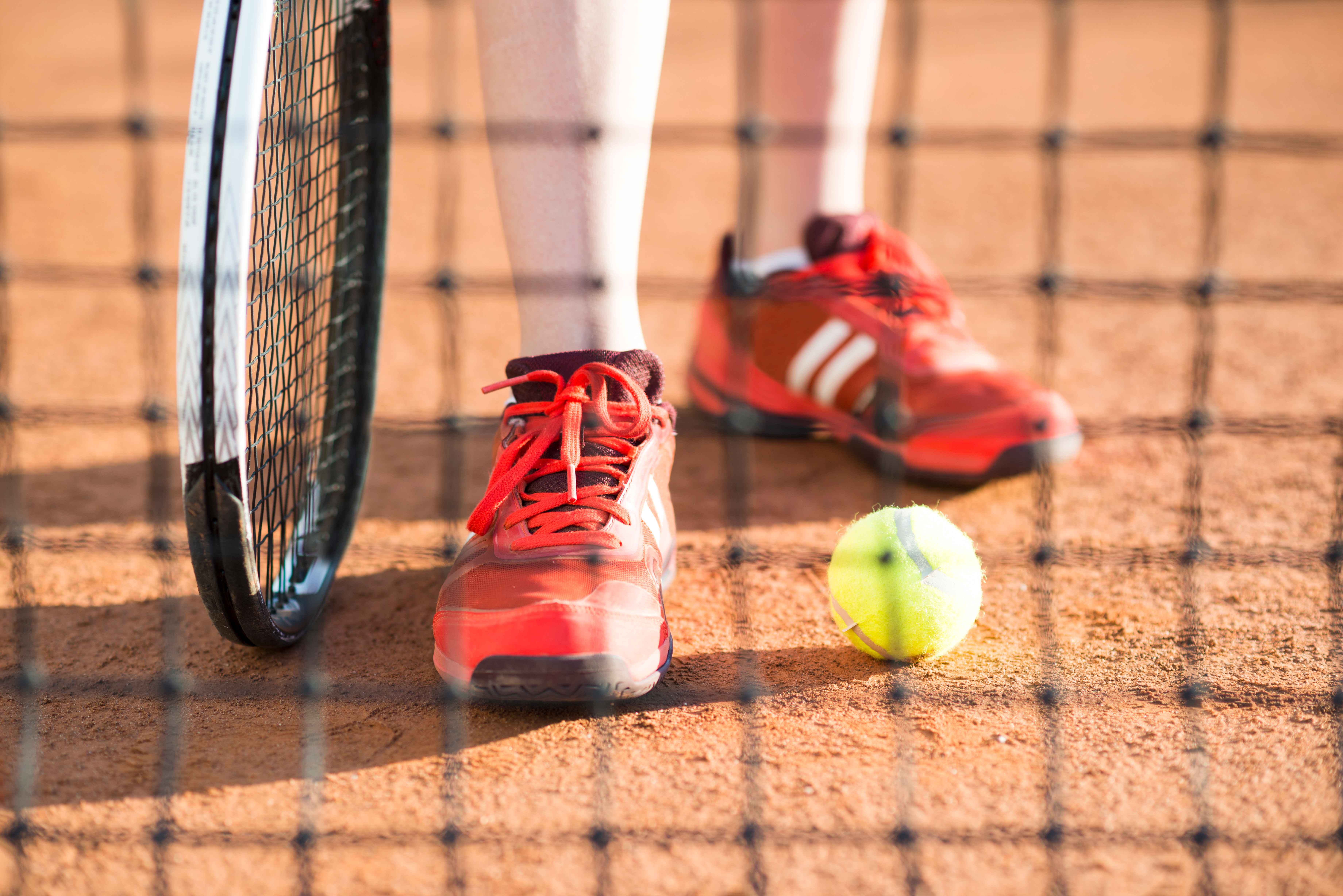
I have spent enough hours on a football pitch to know the particular electricity of scoring goals against the run of play — that moment when the ball kisses the back of the net and the impossible briefly becomes ordinary. But football is a team game. Eleven of us. If I shank a pass, I have ten brothers to cover my blindside, and the blame dissolves into the collective. Singles tennis (or badminton) offers no such mercy. You stand alone on an island of red clay, and every error wears your name on it, in front of fifteen thousand strangers. There is nowhere to hide and no one to blame. Which is precisely why what Maja Chwalińska did over a fortnight in Paris stopped me cold — and why I think it carries one of the most important leadership lessons I have encountered in years.
We have built, in the modern world, a gospel of success. It preaches that breakthroughs come from wanting it more, gripping it tighter, grinding it harder. Out-muscle the competition. Never let them see you need help. It is a seductive sermon. It is also, I have come to believe, mostly wrong. Maja’s run to the final preached the opposite on three counts: she broke through when she learned to care less about the result, when she stopped trying to hit harder and started playing smarter, and when she finally let other people carry her. Three quiet inversions of everything we are taught. Let me show you each one — but first, the miracle itself.
The Data Behind the Miracle
To grasp the magnitude of what happened, you have to sit with the numbers, because the numbers should not have been possible. Chwalińska arrived in Paris ranked World No. 114. She did not walk into the main draw; she clawed her way in through three rounds of qualifying, the trapdoor beneath the trapdoor of professional tennis. Standing five foot five in a sport increasingly ruled by power and height, she had been quietly, politely written off.
Then she went on a giant-slaying spree that belongs in a fable. In the first round she dismantled Olympic champion Zheng Qinwen, losing just four games. She took down 23rd seed Elise Mertens 6–4, 6–0. She survived her only wobble of the tournament against Maria Sakkari, dropping the first set before winning the next two. She beat the home favourite Diane Parry in front of a partisan Parisian crowd. She knocked out 22nd seed Anna Kalinskaya, then 25th seed Diana Shnaider in the semi-final. Nine straight wins, counting qualifying. A single set dropped in the entire fortnight.
By the time she walked onto Court Philippe-Chatrier for the final, she had become the first qualifier in history to reach a French Open final, and only the second in the entire Open Era at any Grand Slam — the last being Emma Raducanu, who in 2021 went on to win the whole thing. Her ranking would rocket ninety-three places, from No. 114 to No. 21. A woman whose entire career earnings stood around USD 864,000 would more than double that in two weeks.
But my favourite detail is the smallest one. Reporters kept noticing that Maja wore a different apparel brand almost every round, and they spun theories about clever sponsorship deals. When asked, she laughed. “There is no story really,” she said. “I’m not sponsored, so I guess that’s the story.” She was buying her own clothes. And midway through the greatest run of her life, she ran out of money for her Paris hotel — because at a Grand Slam, players are not paid until the tournament ends. A Polish drinks company called Oshee, better known for sponsoring her old friend Świątek, quietly stepped in to cover the bill so she could keep chasing history.
Her Cinderella run ended in the final, where the brilliant 19-year-old Mirra Andreeva beat her 6–3, 6–2 to claim her first Grand Slam. Maja did not lift the Coupe Suzanne-Lenglen. And yet I want to argue she won something the trophy could never measure. She won her life back. To understand how, we have to go down into the valley first.
The Breakdown That Built Her
We love to romanticise success. We frame the triumphant “after” photo and quietly crop out the agonising “before.” As leaders, we do this constantly — we want the transformation without the suffering that forges it, the harvest without the long, dark winter of the seed underground.
Rochak Shukla from Magnific
Maja’s hardest opponent was never Zheng or Andreeva. It was her own mind. She has been open about battling depression since the end of 2019, and in 2021 she stepped away from tennis completely. The sport had become emotionally unbearable. The root of the pain, she later explained, was that she could not separate her identity from her results. If she won, she was worthy. If she lost, she was nothing. Each match was not a contest; it was a referendum on whether she deserved to exist.
Here is the part the highlight reels skip: she did not climb out by gritting her teeth harder. She climbed out by going home, asking for professional help, and slowly learning a single, life-altering distinction — that she was a human being, not a human doing. She rebuilt her confidence not on the scoreboard but on the quieter, sturdier ground of simply being a person of worth. And it was precisely that detachment — that hard-won inner freedom — that later let her play in Paris with such joyful, fearless abandon. She had nothing to prove, and so she could risk everything.
We are not human doings. We are human beings — and our worth was settled long before our first win.
The psychology here is not soft sentiment; it is rigorously documented. The University of Michigan researcher Jennifer Crocker spent years studying what she calls “contingencies of self-worth” — the specific arenas on which we stake our value. Her findings are sobering: students whose self-esteem was contingent on external outcomes such as competition, appearance, and the approval of others were measurably more likely to develop symptoms of depression and anxiety. Their sense of self rose and crashed with every grade, every result, every comparison. Sport psychologists describe a parallel trap they call “athletic identity foreclosure”: when an athlete fuses so completely with the role of “athlete” that no other self is allowed to grow, a single bad season can feel like annihilation. Maja had foreclosed on her identity. Therapy reopened it. And the open self plays freer than the foreclosed one.
Three Inversions: Leadership Lessons From the Red Clay
Inspiration is cheap; execution is everything. So let me translate Maja’s fortnight into three concrete, slightly counter-intuitive practices for any of us trying to lead, build, or simply keep going.
1. Stop Letting the Scoreboard Tell You Who You Are
Maja’s breakthrough began the moment she divorced her identity from her output. Leaders rarely make this divorce. We quietly fuse our entire self-worth to the company’s revenue, the latest launch, the quarterly numbers. It works — right up until it doesn’t. And when the numbers turn, as numbers always eventually do, the failure does not feel like a bad quarter. It feels like a death, because we have wagered our personhood on a metric that was never built to carry it.
This is not an argument for caring less about excellence. Crocker’s research is clear that high standards and contingent self-worth are different things. You can pursue a result with everything you have without staking your soul on the outcome. In fact, the data suggests you will pursue it better, because fear is a clumsy coach and freedom is a sharp one.
Tie your worth to the scoreboard, and every opponent becomes a threat to your existence.
The Action Item: Build a “Portfolio of Self.” Deliberately cultivate domains of your life that have nothing to do with your title. When I walk through my front door to my wife Emelia and my 2 kids, I am not the Founder of Leaderonomics; I am just a husband and a dad, and that identity does not move when the markets do. Schedule your faith, your family, your friendships, and your hobbies with the same non-negotiable rigour you give to board meetings. Diversify your sense of self so that a professional setback is a bad day at one holding — not the collapse of the entire fund.
2. Don’t Out-Hit Goliath, Out-Think Him
At five foot five, Maja could not out-power the giants of the tour, so she refused to try. She built what she cheerfully calls an “annoying” game — a vintage, crafty, left-handed style of slices, heavy spin, drop shots and lobs, occasionally switching hands to flick a shot from the wrong wing. She does not blast opponents off the court; she frustrates them off it, methodically landing one more ball than they can bear, until the bigger hitter, rushing, finally cracks. Her semi-final victim Diana Shnaider summed it up perfectly: “Even if you think that you won the point, she’s there.” On the slow, high-bouncing clay of Paris, where ingenuity beats brute force, her perceived weakness became her sharpest weapon.
There is hard evidence that this is how underdogs are supposed to win. The political scientist Ivan Arreguín-Toft studied every asymmetric war between a strong power and a weak one over the past two centuries. When the weaker side fought the conventional way — meeting strength with strength, trying to out-Goliath Goliath — it usually lost. But when the weaker side refused the strong side’s game and fought on its own unconventional terms, it won 63.6% of the time. The lesson, which Malcolm Gladwell made famous in David and Goliath, is that David loses the instant he agrees to a wrestling match. He wins by bringing a sling to a sword fight. Maja brought a sling to Roland Garros.
She did not beat Goliath. She refused, point after point, to play his game.
The Action Item: Run a “Weakness Audit” with your team this week. Name honestly the places where a competitor holds the natural advantage — the deeper pockets, the bigger brand, the larger headcount — and then stop trying to win there. Instead, ask the more interesting question: what is our drop shot? If you lack a conglomerate’s marketing budget, you may still out-manoeuvre it with speed, with hyper-personal community, with authentic storytelling it is structurally too slow to copy. Find the surface where your constraint becomes a weapon — and drag every fight onto it.
3. Let Oshee Pay the Bill
When Maja was drowning in the absurd, mundane anxiety of not being able to afford her hotel room, Oshee quietly paid it. Earlier, when she was immobilised by depression, she went home and accepted professional help. At two of the most decisive moments of her life, she did the thing our success gospel forbids: she stopped being a lone wolf, and she let herself be carried.
We resist this because we assume asking will cost us — that people will think less of us, or simply say no. The research says we are badly miscalibrated. In a now-classic series of studies, the social scientists Frank Flynn and Vanessa Bohns found that people who needed help dramatically underestimated how many strangers would say yes. Askers predicted roughly half would help; in reality, closer to 84% did. We walk around carrying our hotel bills in silence, convinced no one will cover them, while a world of willing helpers waits on the other side of a question we are too proud to ask.
The strongest thing many leaders will ever do is admit, out loud, that they cannot do it alone.
The Action Item: This one cuts two ways. First, drop the cape. Name one struggle you are currently hiding from your team, your mentor, or your spouse — and ask for help today. You will almost certainly find more grace than you predicted. Second, and just as important: look around your organisation for someone quietly paralysed by their own “hotel bill” — a high-potential person stalled by a lack of resources, an administrative wall, or a private crisis. Then go and pay it. Remove the baseline anxiety so they can pour everything into their craft. This is what the best leaders actually do: they do not just demand the giant-slaying run; they quietly cover the hotel, so it becomes possible.
The Final Word
Here is the image I cannot shake. After Maja reached the final, ninety thousand people gathered at the Silesian Stadium in Chorzów, in the coal-mining south of Poland where she grew up the daughter of a miner. A famous Polish singer, a hometown boy himself, led the vast crowd in singing “Sto lat” — an old folk song that simply wishes a person a hundred years of life. Not a hundred trophies. A hundred years of life. They were not celebrating a champion. They were celebrating a daughter who had been lost in the valley and found her way home.
When the singer had earlier asked, half-joking, whether he could hold the trophy if she won, Maja — who came home with the runner-up’s silver plate, not the cup — offered him that instead. The same kind of plate, I would note, that she had held nine years earlier in Melbourne beside Iga Świątek. The girl who once believed a loss meant she was nothing now held a second-place plate above her head and turned it into a gift. That is the whole transformation, captured in a single object.
So, when you feel like quitting — when the change you are leading grows too heavy, when you are quite literally struggling to keep the lights on — remember the broke, unsponsored 24-year-old on the red clay of Paris. Do not waste your valley; let it build you. Stop letting the scoreboard tell you who you are. Refuse to play Goliath’s game, and find your own. And when the bill comes due, have the courage to let someone help you pay it.
Your worth was never on the scoreboard. And your greatest breakthrough may be just one match away.



Leadership
References:
• Olympics.com — “No hotel, no sponsors, no problem: Maja Chwalińska’s dream run”
• CNN — “Unsung Polish qualifier reaches French Open final”
• Wikipedia — Maja Chwalińska (draw, biography, playing style)
• Crocker & Knight — “Contingencies of Self-Worth” (research)
• Arreguín-Toft — “How the Weak Win Wars: A Theory of Asymmetric Conflict”
• Flynn & Bohns — “If You Need Help, Just Ask” (underestimating compliance)
Roshan is the Founder and “Kuli” of the Leaderonomics Group of companies. He believes that everyone can be a leader and "make a dent in the universe," in their own special ways. He is featured on TV, radio and numerous publications sharing the Science of Building Leaders and on leadership development. Follow him at www.roshanthiran.com