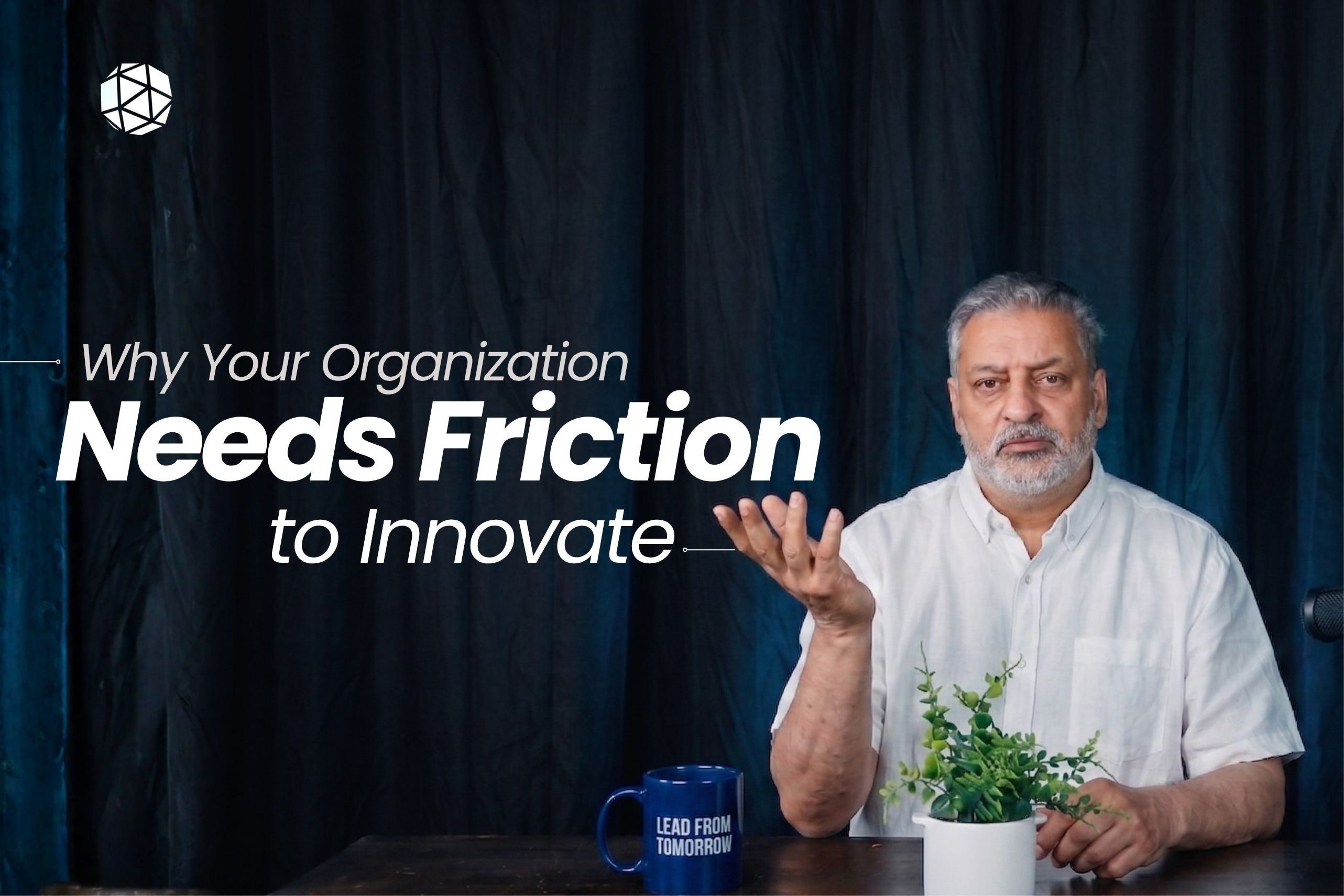
Why Your Organization Needs Friction to Innovate
Building the "Ready for Anything" Organization
In a rapidly shifting world, adaptability is no longer a competitive advantage—it is a business necessity. Organizations that thrive are those willing to embrace constructive friction, creating opportunities to learn, innovate, and evolve. Yet many businesses remain constrained by rigid structures and cultural habits that were designed for a different era.
The Pitfall of Consistency
Most organizations were built around repeatability and consistent quality. While consistency remains essential in delivering products and services, the systems and processes behind them must be flexible enough to evolve. Problems arise when companies attempt to force modern challenges into outdated operating models instead of redesigning how they work to meet current realities.
Overcoming Internal Resistance
One of the greatest barriers to transformation is resistance from within. Employees are more likely to push back against change when they do not understand why it is necessary.
To build a truly adaptable organization, leaders should focus on:
Clear Communication – Explain the purpose and urgency behind change initiatives.
Employee Buy-In – Encourage teams to observe market trends, customer expectations, and competitive shifts so they can recognize the need for change themselves.
Shared Ownership – Create an environment where adaptation is seen as everyone's responsibility, not just leadership's.
The Secret Sauce: Learning and Development
Technology alone does not drive transformation—people do.
A common mistake organizations make is investing heavily in new technologies while underinvesting in employee development. Without proper training, even the most advanced tools fail to deliver meaningful results.
Effective learning journeys should guide employees through several stages:
Building awareness and understanding.
Developing foundational skills.
Gaining confidence through practical application.
Achieving mastery and the ability to support others.
Organizations that invest in continuous learning create a workforce that can adapt alongside technological and market changes.
Preparing for Multiple Futures
Future-ready organizations continuously look beyond their own walls. They recognize that customer needs, technologies, and business models are constantly evolving—and that what works today may not work tomorrow.
By combining continuous learning, innovation, foresight, and transformational thinking, leaders can create organizations that are resilient, agile, and prepared for multiple possible futures.
The goal is not simply to survive change, but to build an organization that is truly ready for anything.

Leadership