Why Psychological Safety is the Secret Engine of High-Performance Teams (And How to Build It)
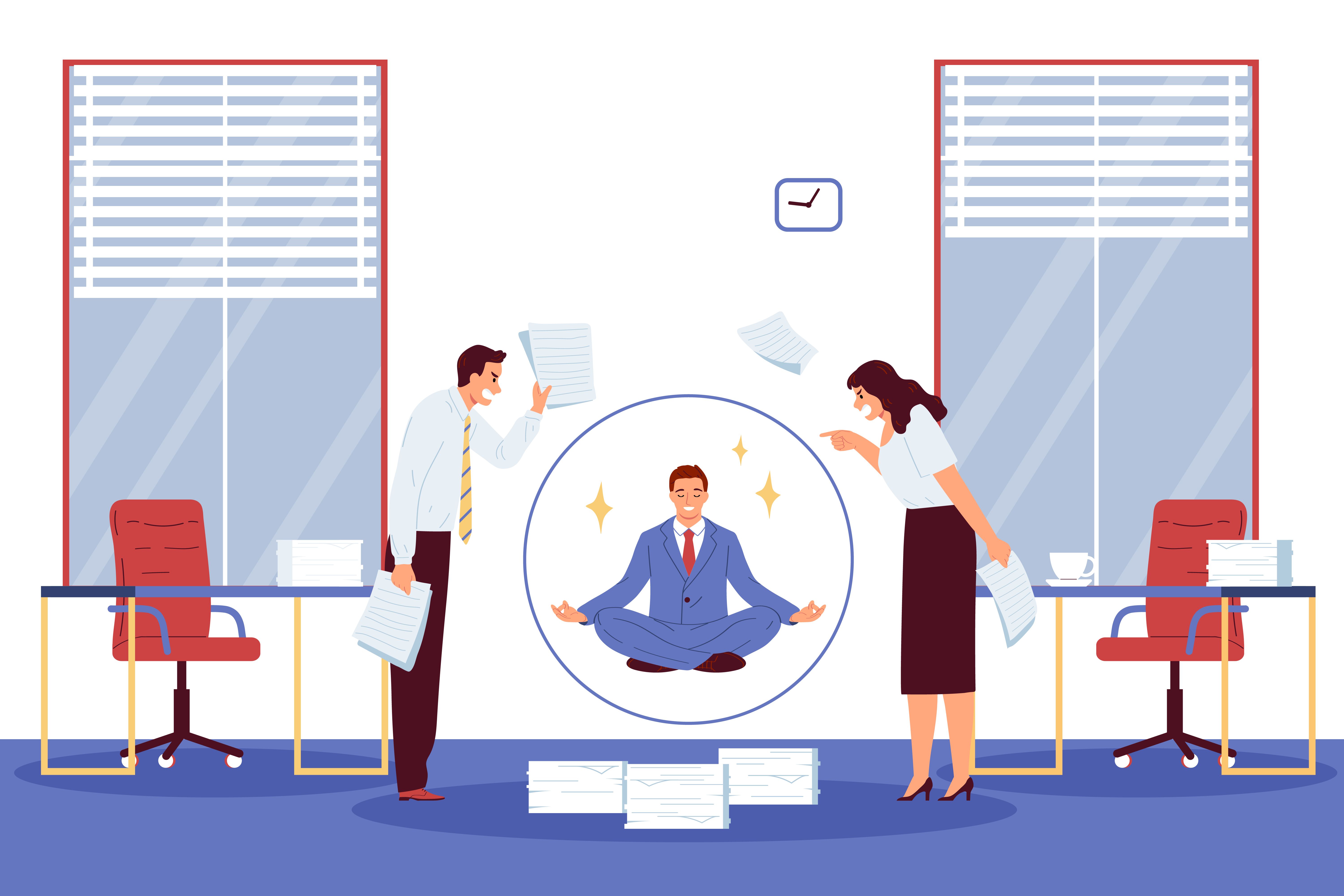
Photo by macrovector @ Magnific
TL;DR
For decades, organisations believed that compiling the smartest, most experienced individuals was the guaranteed formula for a high-performing team. Modern behavioural science and extensive corporate research have proven this false. The true differentiator between average groups and elite, highly innovative teams is psychological safety - a shared belief that the team is safe for interpersonal risk-taking. This article breaks down the science of psychological safety, explores why it is the ultimate multiplier for organisational performance, and provides leaders with actionable strategies to cultivate trust. By modelling vulnerability, reframing failure, and intentionally engineering shared, low-stakes experiences outside the office, leaders can transform a culture of silence into a dynamic engine of innovation and resilience.
Imagine you are tasked with building the ultimate corporate task force. Your instinct, naturally, would be to recruit the brightest minds in the company: the top-performing sales director, the most brilliant software engineer, the sharpest financial analyst, and the most visionary marketer. You put them in a room, give them a massive budget, and wait for the magic to happen.
Yet, time and time again, these "all-star" teams fail to deliver. They suffer from gridlock, ego clashes, and a distinct lack of cohesive output. Conversely, you will often find teams comprised of seemingly average performers who consistently exceed targets, innovate rapidly, and navigate complex crises with remarkable agility.
Why does this happen?
This exact question launched Google’s famous "Project Aristotle," a massive, multi-year study analysing hundreds of teams to discover the secret recipe for productivity. The researchers looked at everything: educational backgrounds, gender balance, frequency of socialising outside of work, and even whether team members sat next to each other.
The data revealed a shocking truth. Who was on the team mattered far less than how the team interacted. And the single most important dynamic that drove team success—above dependability, structure, meaning, and impact—was psychological safety.
Defining Psychological Safety in the Modern Workplace
Coined by Harvard Business School professor Dr Amy Edmondson, psychological safety is defined as "a shared belief held by members of a team that the team is safe for interpersonal risk-taking."
In a psychologically safe environment, employees feel confident that they will not be punished, humiliated, or marginalised for speaking up with ideas, questions, concerns, or mistakes.
However, it is equally important to define what psychological safety is not. It is not about being universally "nice" or lowering performance standards to protect people's feelings. It is not an excuse for incompetence or a shield against accountability. In fact, true psychological safety requires high accountability.
When you have high psychological safety but low accountability, you get a "Comfort Zone"—people enjoy working together, but little gets done. When you have high accountability but low psychological safety, you create an "Anxiety Zone"—a toxic environment where people are terrified of making mistakes.
The goal of a modern leader is to drive the team into the "Learning Zone," where high-performance standards are met with a deep, unwavering foundation of interpersonal trust.
The Anatomy of a Fear-Based Culture vs. A Safe Culture
To truly understand the value of this concept, we must look at the devastating cost of its absence. In a fear-based culture (the Anxiety Zone), self-preservation becomes the primary driver of employee behaviour.
When employees do not feel psychologically safe, they engage in "impression management." They hide their mistakes, nod along to strategies they know will fail, and withhold innovative ideas because the risk of being mocked or shut down is too high. In these environments, friction is swept under the rug. Small, manageable errors are hidden until they snowball into catastrophic, multi-million-dollar corporate failures. Silence becomes the default response to uncertainty.
In stark contrast, a psychologically safe culture actively utilises friction as a tool for growth. When an employee spots a flaw in a project plan, they speak up immediately, knowing their input will be valued rather than punished. When a manager makes a mistake, they admit it openly, turning a failure into an organisational learning moment. In these environments, the focus shifts from who is to blame to how the system can be improved.
Read more: Why Psychological Safety Drives Innovation And Team Performance
Why Psychological Safety is the Ultimate Performance Multiplier
Investing in team culture is not merely a "feel-good" HR initiative; it is a hard-nosed, strategic business imperative. Psychological safety acts as a massive performance multiplier across several critical organisational metrics:
Accelerated Innovation and Problem Solving
Innovation is, by definition, the process of trying things that might not work. If a company punishes failure, it will inevitably extinguish innovation. High-performing teams must be able to brainstorm wildly, challenge the status quo, and propose unconventional solutions. Psychological safety removes the mental handbrakes that keep employees doing things "the way they’ve always been done." It allows for the rapid prototyping of ideas and the cognitive diversity necessary to solve complex, 21st-century business challenges.
Enhanced Employee Retention and Engagement
The modern workforce, particularly younger generations, will not tolerate toxic, fear-driven leadership. Employees want to feel seen, heard, and respected. When individuals feel they must constantly wear a mask of perfection at work, it leads to deep cognitive fatigue and burnout. Psychological safety creates an environment where people can bring their authentic selves to the office. This sense of belonging naturally drives up employee engagement, discretionary effort, and long-term retention, saving the organisation immense costs associated with turnover.
Agile Adaptation to Change
We operate in an era of unprecedented macroeconomic and technological volatility. To survive, organisations must be agile. Agility requires rapid information sharing. If frontline workers are afraid to tell upper management that a new competitor is eating into their market share, the company cannot pivot in time.
Psychological safety ensures that vital information flows seamlessly up, down, and across the organisational hierarchy, allowing the business to adapt to external shocks with speed and precision.
How to Actively Build Psychological Safety in Your Teams
The challenge for leaders is that psychological safety cannot be mandated. You cannot write "We trust each other" on a whiteboard and expect behaviour to change. It must be meticulously and consistently engineered through leadership behaviours and team structures. Here is how you can build it.
Lead with Vulnerability and Humility
The tone of any team is set from the top. If a leader projects an image of absolute infallibility, the team will assume that perfection is the baseline expectation. To break this cycle, leaders must model vulnerability.
This starts with simple phrases: "I don't have the answer to this," "I made a mistake on that last project," or "I need your help." When a leader admits a gap in their knowledge or owns a failure, it creates a powerful ripple effect. It gives permission to everyone else in the room to be human. By displaying "situational humility," you show your team that it is safe to take risks and that you value their expertise over your own ego.
Reframe Failure as a Learning Metric
How a leader reacts to bad news dictates the future flow of information. If a team member admits a mistake and the leader reacts with anger or public reprimand, that employee—and everyone who witnessed it—will never bring bad news forward again.
Instead, leaders must separate the failure from the individual. Implement regular "blameless post-mortems" after projects. Instead of asking, "Who messed this up?" ask, "What broke down in our system that allowed this error to occur, and how can we build a safeguard for next time?" By reframing failure as a systemic issue rather than a personal defect, you encourage radical transparency.
Engineer Shared Human Experiences
While a streamlined digital work environment is crucial for operational efficiency, human connection is the glue that binds a team together. In an era of remote work, hybrid schedules, and constant digital communication, companies must be highly intentional about creating opportunities for social bonding.
Supplementary reading: Psychological Safety Unlocks the Potential of Diverse Teams
You cannot mandate psychological safety; it must be organically cultivated through shared human experiences. Taking your team out of the daily grind provides a safe space for employees to take risks, make mistakes, and collaborate without the pressure of professional repercussions. By utilising structured, expertly facilitated programs from Jambar Team Building, leaders can intentionally engineer these shared moments of low-stakes adversity, laying the foundation of genuine workplace trust.
When a manager and a junior associate have to communicate creatively to solve a physical puzzle or navigate an escape room, the rigid corporate hierarchy temporarily dissolves. These shared moments of levity, frustration, and eventual triumph trigger the release of oxytocin—the neurochemical responsible for bonding and empathy. When the team returns to the office, the friction of interpersonal communication is drastically reduced because they have built a reservoir of human connection.
Institutionalise Inclusive Communication
Dominant personalities can unintentionally crush psychological safety by monopolising meetings and drowning out introverted team members. To combat this, leaders must design communication structures that democratise voice.
Implement meeting practices like "round-robin" sharing, where every single person is given a mandatory two minutes to speak without interruption. Utilise digital whiteboards for anonymous brainstorming before opening the floor to verbal debate. Explicitly ask for dissenting opinions: "We seem to be agreeing too quickly. Who can play devil's advocate and tell me why this plan might fail?" By building specific avenues for participation, you prove that every voice is structurally valued.
The True Role of a Modern Leader
Today's most effective leaders understand that their primary job is not to be the smartest person in the room. Their job is to create the environment where the smartest, most innovative ideas can surface from anyone in the room.
Building psychological safety is not a one-time workshop; it is a daily, relentless commitment to the science of human behaviour. It requires patience, immense self-awareness, and a willingness to embrace vulnerability. But for those leaders willing to put in the work, the reward is an unstoppable, high-performing team capable of navigating any challenge the future holds.


Functional
Tags: Abundance Mindset, Alignment & Clarity, Be A Leader, Building Functional Competencies, Business Management, Psychological Safety, Consultant Corner, Executing Leadership, Empathy, Emotional Intelligence

Content Writer | SEO Specialist | Creative Storyteller
Passionate content writer with strong expertise in SEO, blog writing, and digital marketing. I specialise in creating engaging, informative, and results-driven content across a wide range of niches, including business, technology, lifestyle and finance. With a focus on clarity and audience engagement, I craft content that not only informs but also builds trust and authority.
Dedicated to delivering high-quality work, I aim to help brands grow their online presence through strategic, well-researched, and compelling writing. From blog posts to web content, I ensure every piece is optimised for search engines while maintaining a natural and engaging tone that connects with readers and drives meaningful results.