The SEO Framework Used by High-Growth Companies
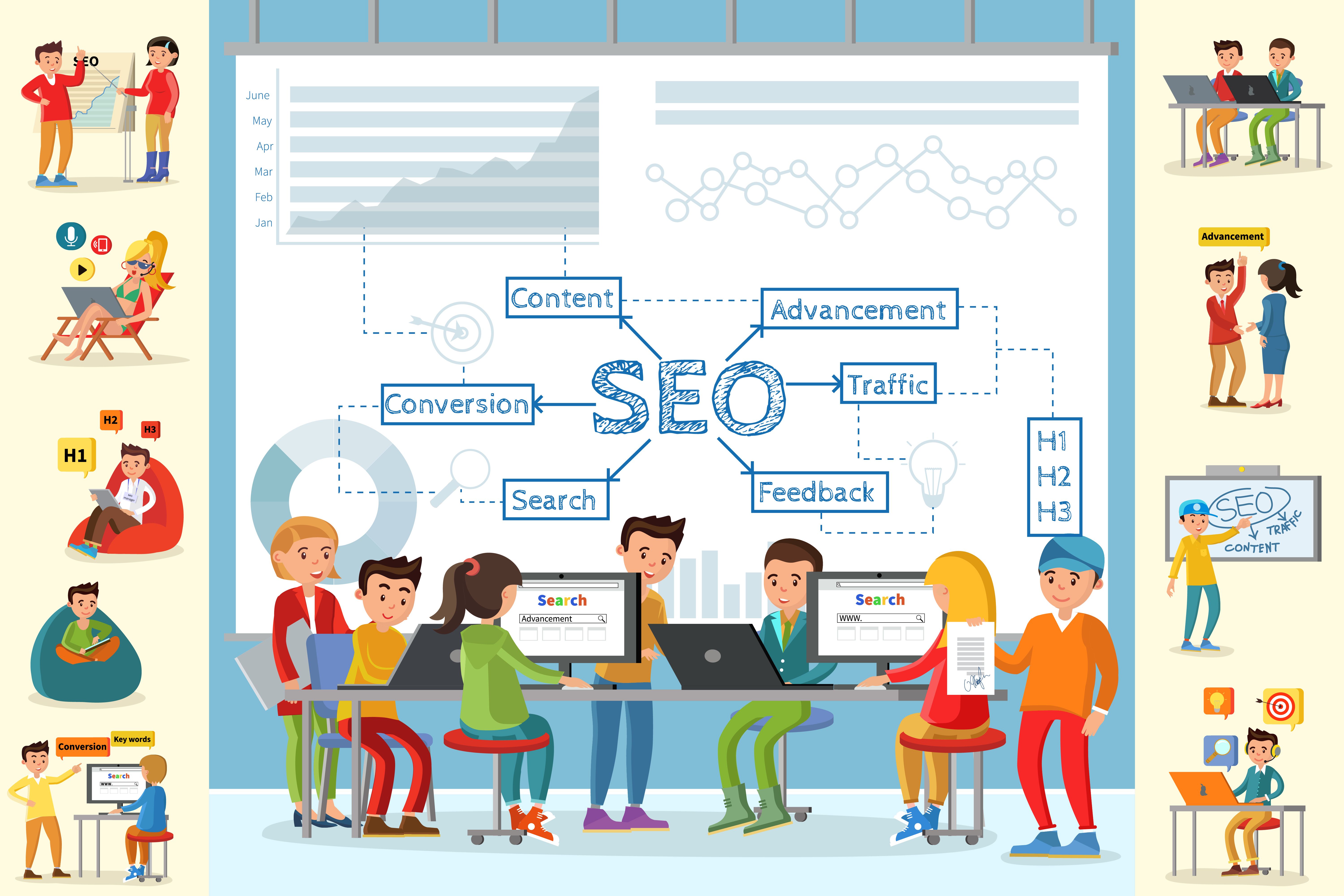
Photo by macrovector @ magnific
Most companies treat SEO like a traffic lever. Pull it, get visitors, call it a day. High-growth companies see it differently; they treat SEO as a revenue engine, one that compounds over time and feeds directly into pipeline, ARR, and real customer acquisition. That distinction sounds subtle. It isn't. The gap it creates between competitors is enormous.
This article breaks down the exact framework separating top-performing organisations from everyone else. Not vague advice. Actual structure, grounded in data, built for scale.
Decoding the Framework: What Enterprise SEO Actually Looks Like
Success in enterprise SEO doesn't come from publishing more content alone. It requires a strategic approach that aligns technical optimisation, content development, and authority building with measurable business goals such as lead generation, revenue growth, customer acquisition, and long-term market visibility.
Tying SEO Directly to Business KPIs
Mature SEO programs don't report on traffic in isolation. They report on pipeline contribution, MRR lift, and organic-sourced ARR. When SEO is properly integrated with sales, product, and marketing operations, every technical fix and every piece of content is doing real work, not just generating sessions nobody converts from.
Agencies and growth-focused teams often hit a ceiling on internal capacity. One effective way around that? Partnering with a white label seo reseller. Done right, it extends execution capabilities under your own brand, without the overhead of scaling headcount. That's a genuinely smart structural move.
Automation and Scalability: The Compounding Advantage
AI-assisted tools have fundamentally changed what's possible for competitive analysis, content briefing, and technical auditing. Speed that previously required a five-person team now fits in a single workflow. That time savings compounds, and teams that embrace scalable processes consistently outpace those still doing everything manually.
The Three Building Blocks You Can't Skip
Every high-growth SEO strategy rests on three interconnected pillars: technical health, content quality, and domain authority. Weaken any one of them, and the other two underperform.
Technical SEO: The Foundation That Actually Holds Weight
Core Web Vitals, crawl budget management, and structured data remain fundamental components of a strong SEO strategy. For enterprise websites managing multiple brands, regions, or large volumes of content, these technical elements play a critical role in ensuring search engines can efficiently crawl, understand, and rank pages.
Technical SEO is not something businesses can afford to overlook. Slow-loading pages, indexing issues, broken links, and poor site architecture can negatively impact visibility, user experience, and overall performance. Addressing technical challenges early helps create a stable foundation that supports long-term search growth and maximises the effectiveness of all other SEO efforts.
Content Strategy: Beyond Keywords, Into Full-Funnel Thinking
The best-performing companies have moved past keyword targeting. They're building full-funnel content journeys, programmatic content systems, EEAT-driven authority signals, proprietary data assets, and interactive formats that genuinely engage. Static blog posts, in isolation, just don't compete anymore across most verticals.
Authority and Trust: Building What Search Engines Reward
Digital PR, strategic link acquisition, executive thought leadership, and user-generated content aren't separate initiatives. When layered together, they create a trust profile that search engines consistently reward. Passive link building alone won't move the needle at enterprise scale.
Read more: How Does an SEO Specialist Affect the Company's Success?
The Data Infrastructure Behind Scalable SEO
Performance Layer | Metric Focus | Growth Outcome |
| Technical SEO | Crawlability, Core Web Vitals | Indexation at scale |
| Content Strategy | Engagement, intent match | Pipeline contribution |
| Authority Building | Domain rating, referring domains | Competitive positioning |
| Analytics & Attribution | Closed-loop ROI | Revenue accountability |
Strong foundations stall without measurement. Closed-loop attribution is what connects organic performance to real revenue, not just rankings on a dashboard nobody checks.
Agile SEO: Testing, Learning, and Adapting Fast
Algorithm updates don't wait for quarterly planning cycles. High-growth programs run A/B tests, multivariate experiments, and structured response protocols when Google shifts the landscape. AI signals, UX data, and performance analytics feed back into strategy in near real-time. That kind of adaptability is what keeps enterprise SEO programs durable, not lucky.
The Next Frontier: Emerging Search Formats You Need to Take Seriously
Agile measurement keeps you sharp today. But the sharpest organisations are already thinking about 2026 and beyond.
Generative Engine Optimisation: The New Visibility Game
Search behaviour is evolving rapidly as AI-generated answers increasingly provide users with the information they need without requiring them to visit external websites. As a result, visibility within AI-powered search experiences is becoming just as important as traditional search rankings.
For businesses and publishers, this means optimising content not only for clicks but also for inclusion in AI-generated responses. Appearing as a trusted source within these answer engines can significantly expand brand visibility, authority, and audience reach in an increasingly AI-driven search landscape.
Voice, Visual, and Multimodal Search
Schema markup and structured data aren't just technical hygiene; they're how content surfaces across voice, visual, and conversational search interfaces. Content architecture needs to serve both crawlers and real people asking real questions out loud. That's a meaningful design shift for most content teams.
Embedding SEO Into Product and UX Workflows
When SEO recommendations sit in a separate document nobody reads, they don't get implemented. Embedding organic priorities directly into agile sprints ensures fixes actually ship. Site structure aligns with search intent. Conversion paths support the traffic being driven. That's how traffic turns into revenue, not just sessions.
Building Systems That Scale Without Breaking
Innovation means nothing without repeatable execution. The organisations that sustain SEO growth long-term have built operational infrastructure, not just good ideas.
SOPs, Templates, and Automated Workflows
Standard operating procedures and content templates allow rapid, consistent onboarding of new brands, markets, and locations. Knowledge doesn't stay siloed in one person's head. It lives in documented systems that any team, internal, agency, or a white label seo reseller partner can execute against reliably and at pace.
Building a Future-Ready Tech Stack
Platform selection matters. API extensibility, team adoption, BI integration, and workflow compatibility are non-negotiable evaluation criteria. Combine robust enterprise SEO platforms with AI content tools, generative optimisation capabilities, and performance dashboards, and every tool investment should have a measurable ROI metric tied to it from day one.
Supplementary reading: Why Personal Injury SEO Is Its Own Beast
Real Results: What This Looks Like in Practice
SaaS companies running structured frameworks have directly linked organic traffic growth to ARR expansion and product signups. E-commerce brands deploying programmatic content at scale have driven measurable revenue without proportional budget increases. Franchise networks have protected and grown rankings across hundreds of locations through technically sound migration strategies.
For holding companies and agencies managing multiple clients simultaneously, the white label seo reseller model has proven particularly effective, structured with clear service-level agreements, branded reporting, and dedicated support that keeps client retention strong.
Your 12-Week Starting Point
Weeks 1–3: Executive alignment, KPI definition, baseline audits.
Weeks 4–6: Tech stack evaluation, analytics infrastructure, gap identification.
Weeks 7–9: Content workflows, link acquisition systems, and technical fix prioritisation.
Weeks 10–12: Automation activation, reporting cadences, knowledge-sharing frameworks.
The most common failure modes? Legacy technical debt left unaddressed, team silos preventing implementation, and tooling overload that slows rather than accelerates. Quarterly reviews of algorithm updates and SERP feature shifts keep your approach current, not outdated the moment it's deployed.
What This All Comes Down To
A proven SEO framework doesn't just produce better rankings; it builds a compounding growth asset tied directly to business outcomes you can defend in any boardroom conversation. Technical precision, intent-matched content, genuine authority signals, and smart partnerships each layer compounds on the last.
The organisations outpacing their competition aren't doing more SEO. They're doing smarter SEO, built on systems designed to scale. Start with one layer. Build the next. Keep iterating with discipline. The window to establish this kind of structural advantage won't stay open indefinitely, and the teams moving now are already pulling ahead.
Common Questions About High-Growth SEO Frameworks
Which SEO framework fits rapid market expansion best?
Frameworks anchored in closed-loop attribution, full-funnel content systems, and technical scalability consistently outperform during rapid growth phases. They adapt quickly when algorithms shift or new markets are entered.
How do high-growth companies choose between in-house, agency, and white label models?
Most use a hybrid approach, keeping strategic oversight and analytics internal while delegating technical execution, content production, and link building to agencies or a white label seo reseller. It accelerates scope without inflating permanent headcount.
What metrics matter most for SEO ROI?
Pipeline contribution, organic-sourced MRR, closed-loop attribution, and ranking velocity. Traffic volume, by itself, tells you very little about whether SEO is actually working.


Business
Tags: Abundance Mindset, Alignment & Clarity, Brain Bulletin, Brand, Building Functional Competencies, Business Management, Digital, Data

Ahmad Shahmir is the Founder & CEO of Backylinks and a strategic content specialist who writes SEO-driven guest posts for leading SaaS and tech sites.