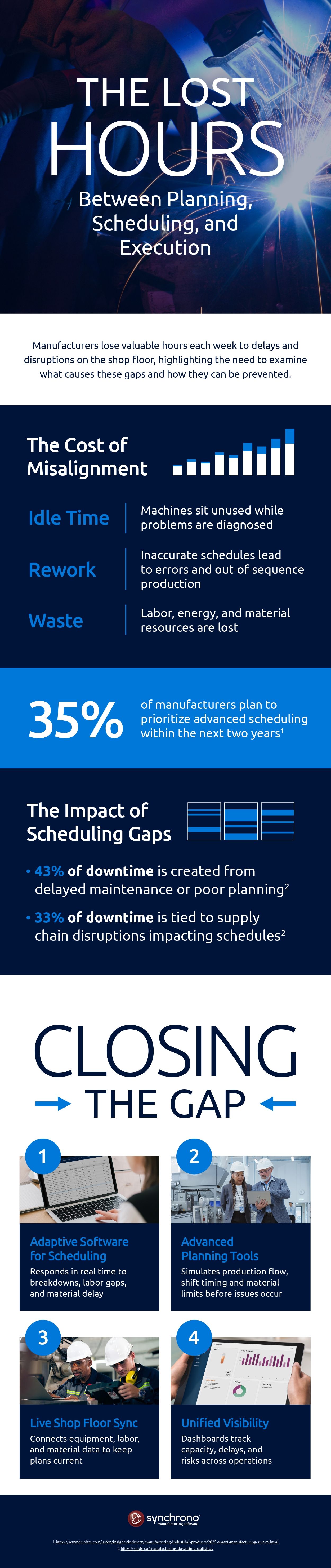
Eliminating Lost Hours Between Planning, Scheduling, And Execution In Manufacturing

Photo by pch.vector @ Magnific
Every manufacturing operation depends on a steady flow of information from planning to production. Even when demand forecasts are accurate and production targets are realistic, valuable time can disappear between creating a plan and completing the work on the shop floor. These lost hours often result from communication delays, outdated information, equipment downtime, or changing priorities that disrupt the production schedule. Business leaders who recognise where these inefficiencies occur can make targeted improvements that increase productivity without adding unnecessary resources.
Why Lost Hours Accumulate
Production delays rarely stem from a single event. Instead, they are usually the result of several small interruptions that build throughout the day. Materials may arrive later than expected, maintenance may take longer than planned, or production teams may wait for updated instructions before beginning the next job.
Even brief delays can affect downstream operations. When one workstation falls behind, the next process may sit idle while employees wait for completed parts. Over the course of a week or month, these interruptions add up to many hours of lost production time. Leaders should regularly review where delays occur instead of assuming the original production schedule is the source of the problem.
Connect Planning With Real-Time Operations
Production plans are most effective when they reflect current operating conditions. A schedule created days earlier may no longer match equipment availability, staffing levels, or customer priorities.
Manufacturers that connect planning with real-time production data can adjust schedules more quickly as conditions change. Supervisors gain greater visibility into work in progress, allowing them to shift resources before delays spread across multiple production lines.

This may interest you: From Busy to Effective: Leveraging Time Tracking for Strategic Leadership
Using manufacturing planning and scheduling systems can also improve coordination between production planners, purchasing teams, maintenance personnel, and shop floor supervisors. When everyone works from the same information, decisions can be made faster and with greater confidence.
Improve Communication Across Departments
Planning, purchasing, production, quality assurance, and maintenance all influence production performance. When these departments operate independently, information gaps become more common.
Daily production meetings provide an opportunity to review priorities, identify equipment concerns, confirm material availability, and discuss staffing needs. These conversations help prevent misunderstandings that may otherwise delay production later in the day.
Digital communication tools also reduce dependence on paper schedules or email chains that quickly become outdated. Employees can receive updated priorities immediately, reducing confusion and unnecessary downtime.
Strengthen Equipment Reliability
Equipment performance directly affects production schedules. A machine that experiences frequent unplanned downtime creates uncertainty for planners and supervisors alike.
Preventive maintenance programs reduce unexpected failures by identifying wear before it causes production interruptions. Monitoring machine performance through operating data also allows maintenance teams to recognise developing issues early.
Production schedules become more dependable when equipment reliability improves. Instead of reacting to breakdowns, organisations can allocate maintenance during planned downtime, minimising disruption to manufacturing operations.
Build Flexibility Into Scheduling
Manufacturing environments rarely operate exactly as planned. Customer orders change, suppliers encounter delays, and workforce availability can shift with little notice.
Flexible scheduling helps manufacturers respond without creating unnecessary disruption throughout the facility. Rather than developing rigid production sequences, planners can identify alternative production paths, secondary equipment, or backup staffing options for critical operations.
Cross-training employees also increases scheduling flexibility. Workers who can perform multiple roles allow supervisors to respond more effectively when staffing shortages or production bottlenecks arise.
Business leaders should also evaluate production capacity regularly instead of relying on historical assumptions. As product mixes and customer demand evolve, scheduling strategies should evolve as well.
Measure the Right Performance Indicators
Reducing lost hours requires accurate performance data. Organisations that rely only on daily production totals may overlook recurring issues that quietly reduce efficiency.
Useful performance indicators include schedule adherence, machine uptime, changeover duration, first-pass quality, work order completion time, and material availability. Modern companies prefer to use efficient time-tracking software to understand how employees spend their working hours across tasks and projects, helping them identify inefficiencies and allocate resources more effectively. Tracking these measurements consistently helps managers identify trends before they become larger operational problems.

Read more: 5 Factors to Consider When Choosing KPIs for Your Business
Production data should also be reviewed alongside employee feedback. Operators often recognise recurring obstacles that are difficult to detect through reports alone. Encouraging employees to share observations creates opportunities for practical improvements that support smoother production. Reviewing performance on a regular schedule keeps improvement efforts focused on measurable results rather than assumptions.
Create a Culture of Continuous Improvement
Eliminating lost hours is an ongoing effort rather than a one-time initiative. Manufacturing leaders who encourage continuous improvement help employees identify waste, simplify workflows, and strengthen communication across the organisation.
Small operational improvements often produce meaningful gains over time. Reducing a few minutes of delay during each production cycle can translate into significant increases in available production capacity across an entire year.
Organisations that consistently evaluate planning, scheduling, equipment performance, communication, and workforce collaboration are better prepared to respond to changing business conditions. Closing the gap between planning and execution creates more reliable production schedules, improves resource utilisation, and supports stronger operational performance without sacrificing product quality or customer satisfaction. For more information, feel free to look over the accompanying resource below.