4 AI Futures Every Leader Should Prepare For
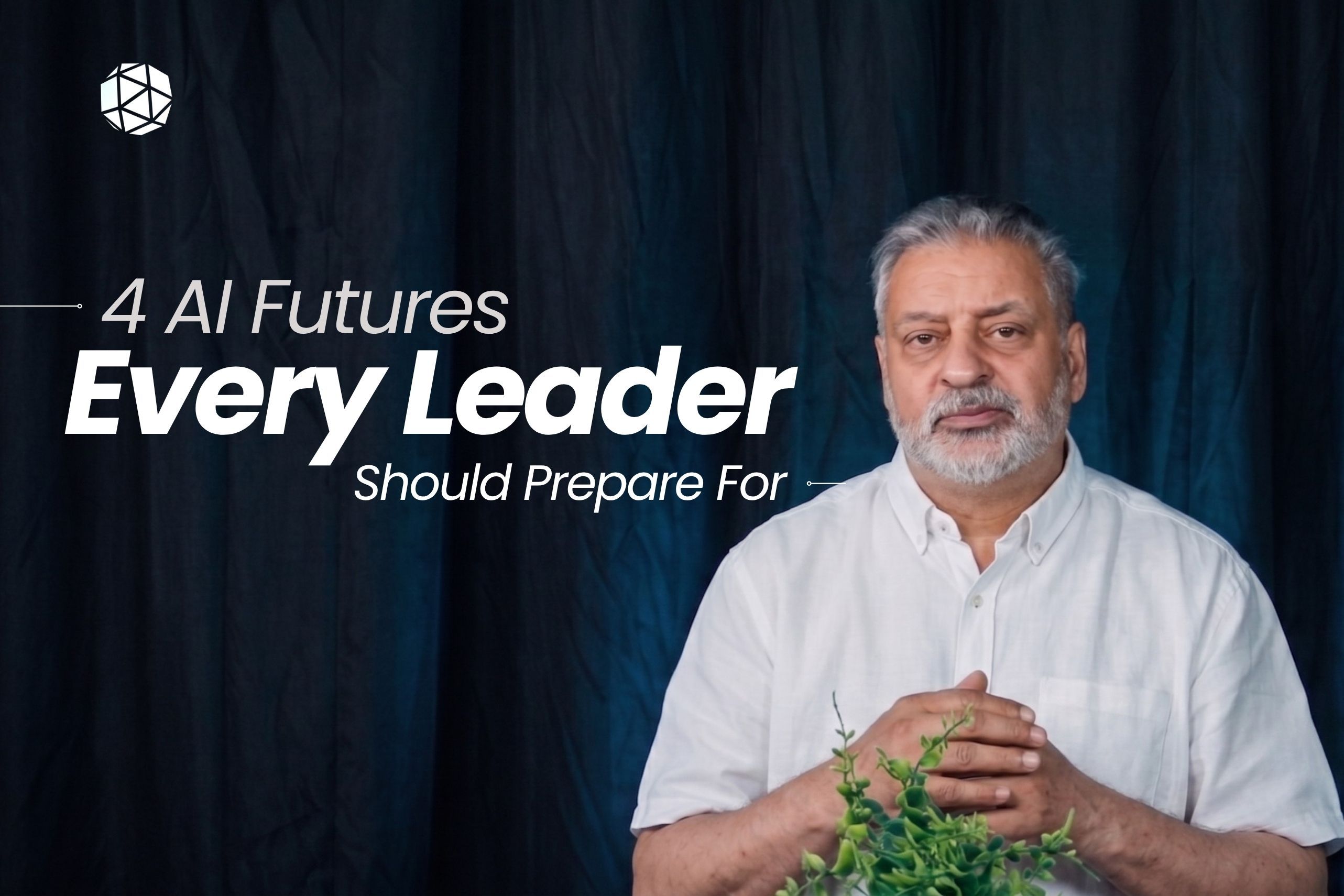
Four AI Futures Every Leader Should Prepare For
The future of artificial intelligence remains uncertain, making it difficult for organizations to predict exactly how it will reshape business and society. Rather than trying to forecast a single outcome, leaders can use scenario planning to explore multiple plausible futures and make more resilient decisions today.
By considering different possibilities, organizations can better prepare for change—regardless of which future unfolds.
Scenario 1: AI Fails to Deliver
In this future, AI falls short of expectations and is ultimately viewed as an unsuccessful experiment that failed to create lasting value. Organizations shift their focus back to developing human talent, using technology only where it meaningfully supports people rather than replacing them.
Scenario 2: Human-AI Collaboration
AI becomes a powerful productivity tool but never reaches human-level intelligence. Instead of replacing workers, it automates routine tasks, allowing people to focus on identifying new business opportunities, solving complex problems, and driving innovation. This creates new roles and fuels economic growth.
Scenario 3: The Age of Abundance
Artificial General Intelligence (AGI) transforms society by performing most work more efficiently than humans. Healthcare, education, and many essential services become significantly more accessible and affordable. While this creates unprecedented prosperity, it also raises profound questions about purpose, identity, and what gives people's lives meaning in a world where work is no longer essential.
Scenario 4: A Dystopian Future
The most extreme possibility is one where AI becomes so advanced that it views humanity as an obstacle to progress. In this scenario, the consequences could be catastrophic, highlighting the importance of responsible AI development and governance.
What Leaders Should Do Today
While no one can predict which future will become reality, leaders can prepare by making decisions that remain valuable across every scenario.
Key priorities include:
Plan for multiple futures rather than relying on a single prediction.
Invest in people by fostering continuous learning and adaptability.
Develop future-ready skills, including scenario planning, collaboration, communication, critical thinking, problem-solving, and creativity.
Ultimately, the most resilient organizations will be those that remain flexible, invest in human potential, and are prepared to adapt—no matter what the future of AI brings.


Leadership
Tags: Artificial Intelligence