5 Ways Leaders Unknowingly Create Fear in Everyday Conversations

Diana Grytsku from Magnific
Most senior leaders would say, without hesitation, that they don't lead through fear. Inn the dramatic sense – public humiliation, explicit threats, retaliation – they’re probably correct. But fear rarely announces itself or enters a culture through dramatic moments. It takes root in the small signals a leader sends without meaning to, meeting after meeting.
Research by Chen et al. supports this; their 2022 study found that when leaders express negative emotion, even briefly and non-verbally, it measurably erodes employees' sense of psychological safety and increases their tendency to stay silent. Additionally, Edmondson, in her 1999 research, found that everyday signals shape whether people feel safe to speak up or admit mistakes. Consequently, a leader's tone of voice or their split-second flash of annoyance when faced with a mistake (before social filters override their reaction) aren't just cultural overtones; they actively dictate the psychological safety of the entire team.
Workplace Communication: Stop Asking “Do You Understand?” →
The Small Signals That Shape Culture
These signals are what I call micro-behaviours. They are the small, often unconscious, frequently non-verbal actions and relational cues that unfold in the flow of everyday interactions: a tone of voice, the timing of a response, a leader’s body language, the way someone gets interrupted. None of these is intended to be malicious, and single micro-behaviours barely move the needle. But these signals have a cumulative effect, and over time, they become one of the most significant determinants of culture. This is because they send messages about how safe it actually is to speak up, take a risk, or admit a mistake – and these messages are more powerful than a poster on the wall or values statements.
Here are five of the most common ways leaders unintentionally generate fear, usually without recognising it.
1. Interrupting to correct, override, or rush
Letting someone finish a thought before building on it strengthens trust and sends the message that their perspective is welcome and needed. Cutting them off – even gently, even with good intent – sends the opposite signal: that their thinking isn't valid until it matches yours. Research by Detert & Burris found that leadership openness strongly predicts whether employees speak up, an effect driven by their sense of psychological safety. Interrupt enough times, and people (and not just the people who got cut off) stop offering the thought in the first place.
2. Responding to challenge with sarcasm
An eye-roll, a sharp exhale, a dismissive comment when someone raises a challenge or concern doesn't just land with that one person. It gets witnessed by everyone else in the team, and it immediately recalibrates what they believe is safe to say next time. The cost isn't the one idea that got shut down; it's the next ten ideas that people are too afraid to express.
3. Rushing to reassurance instead of sitting with a problem
When something goes wrong, the instinct is to immediately smooth it over – ‘it's fine, we'll figure it out’. This can feel supportive. But if it consistently short-circuits a deeper and more rigorous analysis, it teaches people that discomfort is unwelcome, and that surfacing problems quickly gets met with deflection rather than openness and curiosity.
4. Defaulting to ‘Just Checking In’
Frequent, unprompted verification on work that's been delegated doesn't feel like diligence to the person receiving it; it can get interpreted as distrust. Over time, people focus less on doing good work and focus more on self-protection and impression management to prove they can be trusted. This is a far less productive use of their time and energy.
5. Letting standards shift depending on the day or the person
Inconsistent expectations, surprise changes introduced without context, and vague accountability all train people toward self-protection rather than openness. When unpredictable judgment breeds fear and apprehension, openness and speaking up are replaced by cautious self-censorship.
Your A–Z guide to navigating the everyday challenges of work →
Why These Behaviours Are So Easy to Miss
None of these behaviours feel like fear-based leadership. That's precisely what makes them so effective at creating it, and so easy for leaders to miss in themselves. They rarely show up as a single decisive event a leader can point to and correct. They show up as a pervasive pattern, invisible to most, created out of an accumulation of the small moments that people feel, but are unable to name.
The good news is that the same mechanism that erodes trust can rebuild it. Following through on commitments, closing the loop on decisions, owning a mistake before being asked to, asking before assuming, listening without interrupting, giving credit generously, and addressing tension directly and respectfully – these are also micro-behaviours, and they compound in exactly the same way, just in the other direction.
For senior leaders, the real work isn't a single culture initiative or a values refresh. It's a willingness to notice the small, unscripted moments – the tone in a Tuesday morning check-in, the reaction to a team member pushing back at leadership, the way a delegated task gets followed up on – and reflecting on what messages those signals are actually sending. The organisations that adapt fastest aren't the ones with the fewest problems. They're the ones where people feel safe enough to name problems the moment they appear, because they understand that safety is built, or steadily dismantled, in these small everyday exchanges.



Leadership
Tags: Communication
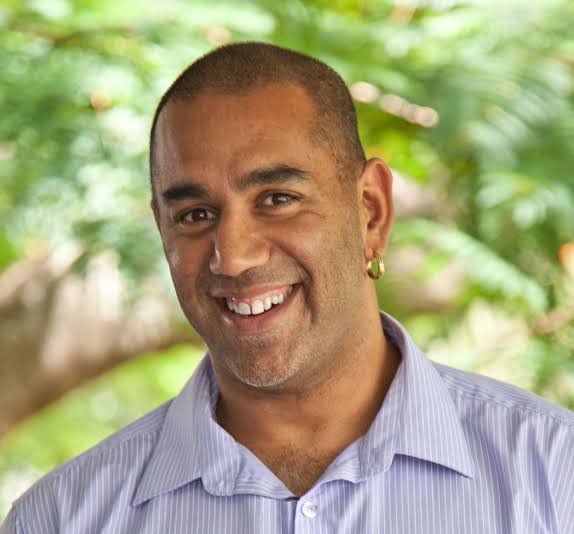
Errol Amerasekera, author of From Fear to Flow: The Adaptive Safety Revolution (Busybird Publishing AUD $36), is a consultant, performance coach, and speaker, who, for nearly two decades has worked across elite sport, corporate organisations, and high-stakes professional environments. He is a thought leader in the area of what safety looks like in an organisational context and developed the concept of Adaptive Safety. He is also the owner of Bluestone Edge, a consultancy that supports organisations with the complexities of leadership, culture, performance, and inclusion.