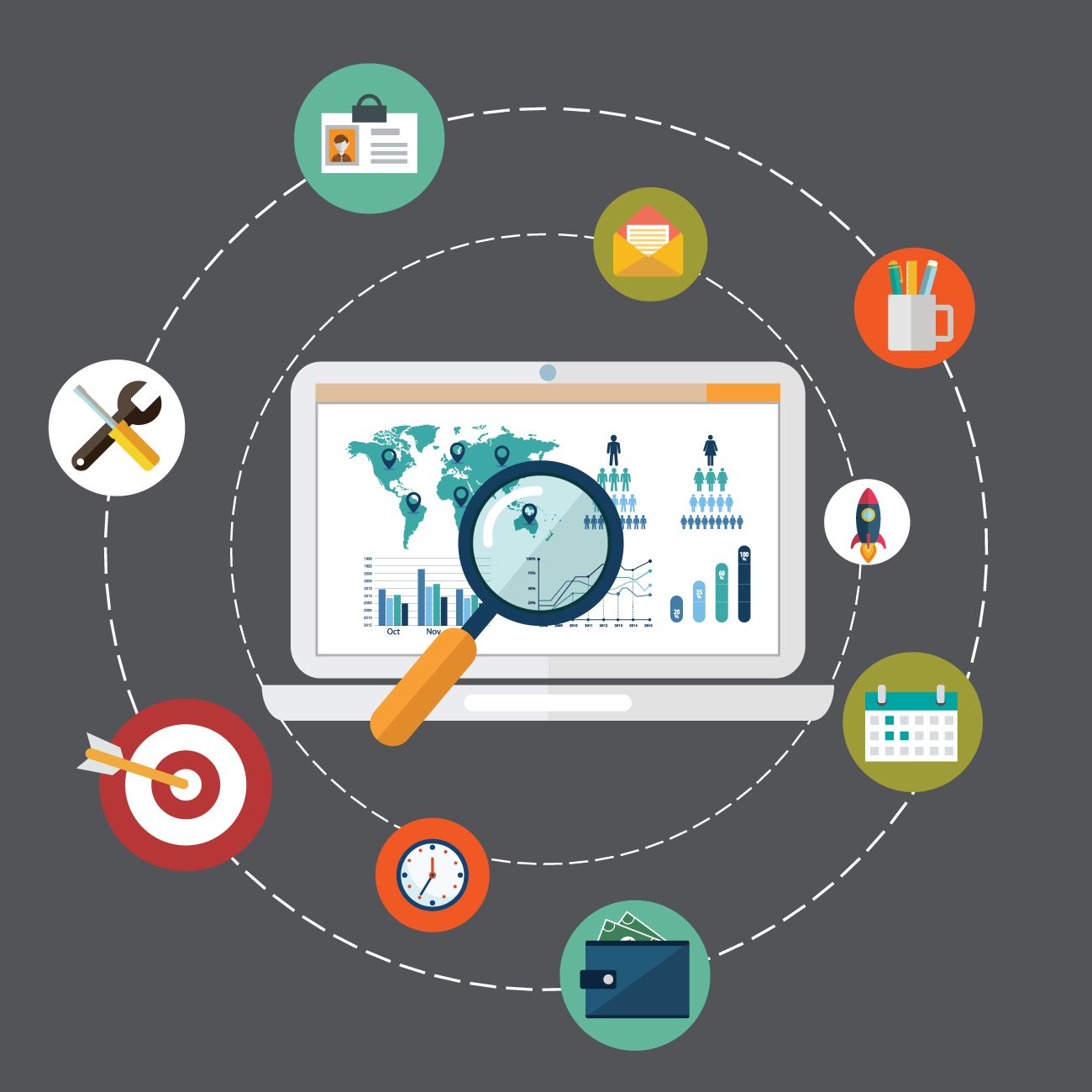
Why Predictive Analytics in FinTech Is Reshaping Financial Decision-Making

Photo by pch.vector @ magnific
Data abundance is no longer a bottleneck for modern fintech companies. The real differentiator is processing speed—turning raw data into predictive insights before market shifts or risks damage the bottom line. Rapid growth in the global AI in fintech market, coupled with cheap cloud computing, has pushed forward-looking software into the core workflows of daily operations. Today, understanding what predictive analytics is has shifted from a theoretical tech discussion to an essential business requirement for fintech firms trying to survive.
Shift From Static Reports to Real-Time Action with fintech analytics
Traditional reporting looks backward. It summarises what went wrong or right last month. Modern financial technology demands a proactive approach. Waiting for historical recaps means reacting after a loss has already materialised or an opportunity has passed.
Processing Complex and Evolving Financial Data
Modern fintech systems merge deep historical records with continuously updated inputs. Instead of delivering static PDFs, predictive analytics in fintech surface patterns that allow fintech companies to make smarter decisions on the fly. As new data enters the system, forecasts refresh automatically.
This setup allows platforms to mitigate risk before market conditions break. Speed defines modern competition; leveraging big data in finance to generate forward-looking insights is now a baseline infrastructure requirement for financial services.
How AI and Advanced Architecture Power Machine Learning
Modern predictive systems avoid relying on isolated formulas or a single simple algorithm. They integrate multiple machine learning algorithms that constantly cross-reference real-time transactions against historical baselines. The goal isn't absolute certainty; it is optimising the probability of a positive outcome as conditions evolve.
The Technical Infrastructure of Digital Finance
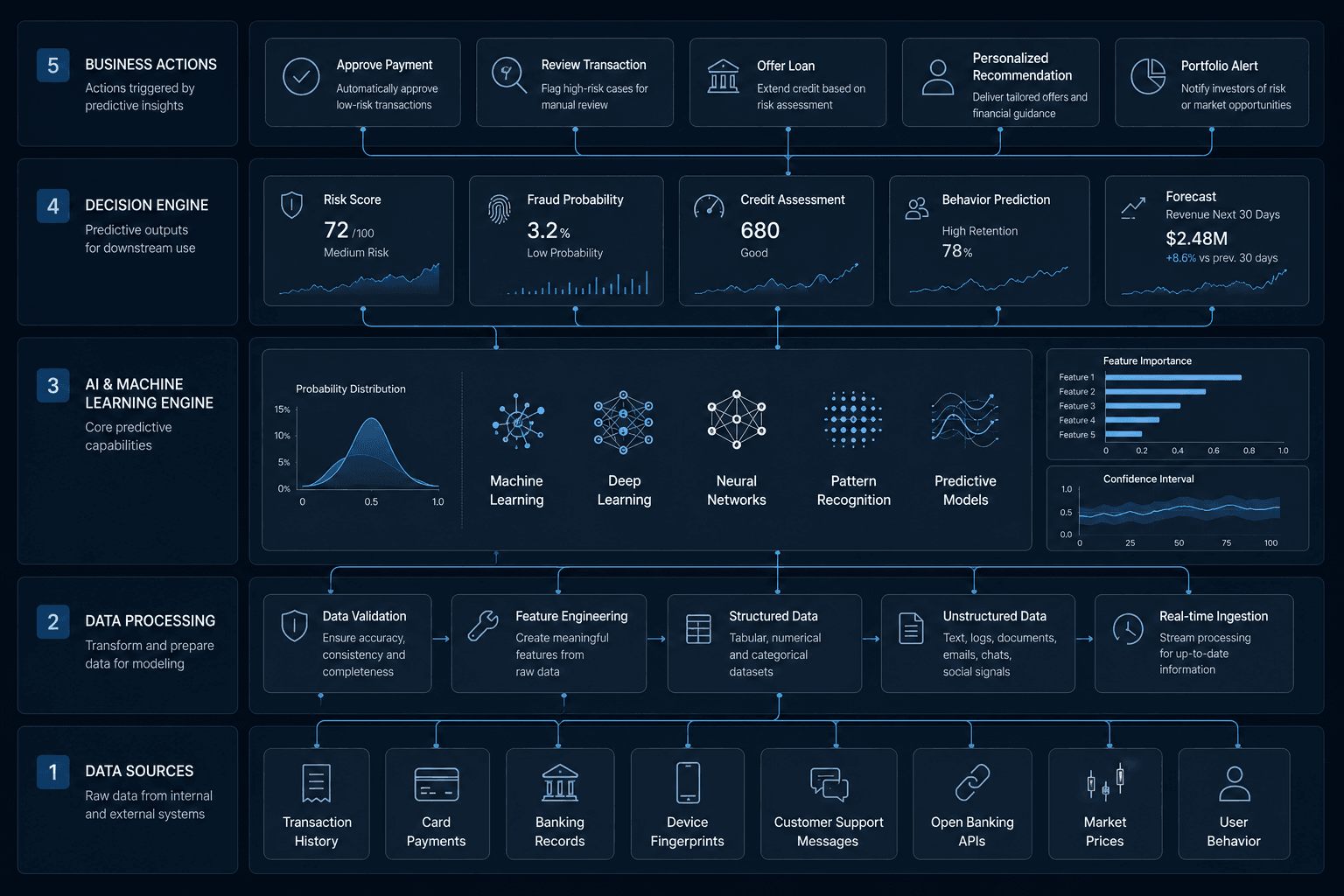
These models ingest both structured and unstructured data, combining standard transaction files with unstructured inputs like customer support text, social signals, or device metrics. Deep learning algorithms and artificial intelligence allow platforms to evaluate these diverse datasets at a scale manual auditing cannot match.
Let’s look at real-world examples.
- Stripe Radar runs proprietary AI models to assess checkout risk and block fraudulent attempts instantly.
- PayPal applies AI and machine learning to protect its global transaction volume while minimising false positives for real buyers.
- Revolut uses AI-driven systems to personalise customer interactions, track account security, and provide smart spending forecasts.
- Upstart evaluates borrowers beyond traditional credit scores by deploying custom learning models that analyse a broader spectrum of applicant behavioural signals.
The pattern is clear: modern software relies on flexible training datasets rather than rigid, hard-coded rules to enhance customer experiences.
Read more: Leadership And Leverage: Smart Financing For Growth
Maximising ROI: Deploying Practical Analytics Tools
Real-Time Fraud Prevention
Stopping fraud is about milliseconds. Modern fraud detection analytics scans hundreds of live points, checking user behaviour, location shifts, device metrics, and transaction speed all at once.
When the system catches a weird pattern, it acts immediately. The app either demands extra verification or dumps the file on a human reviewer. This setup blocks bad actors before they clear checkout, saves on operational waste, and lets normal buyers pay without annoying delays.
[Raw Signals] -> [AI-Powered Predictive Engine] -> [Instant Fraud/Legit Risk Score]
Evolving Beyond Traditional Scoring Models
Legacy scores offer an incomplete picture of consumer health. Advanced credit risk modelling broadens the evaluation by factoring in real-time cash flows, transaction frequencies, and repayment behaviours. These learning algorithms compare an applicant’s pattern with thousands of historical records to estimate credit risk.
This data flips the script for lenders. They can safely approve people who lack a standard credit history, opening up entirely new customer bases without exposing their books to bad debt.
User Retention and Tailored Experiences
Forward-looking models directly impact the consumer interface. Applying customer analytics in finance helps digital platforms decode user behaviour and offer timely, automated interactions throughout the customer journey.
Common use cases include:
- Recommending specific budgeting or investment tools based on active spending habits.
- Flagging accounts displaying early signs of user churn before they close their profile.
- Using personalised insights to optimise onboarding sequences and reduce user drop-off.
- Deploying AI-powered predictive nudges when behavioural changes show a user needs help.
Rather than relying on broad customer segments, fintech apps continuously refine their recommender system logic as new info enters the loop, strengthening long-term customer retention.
Implementation Across Banking and Capital Markets
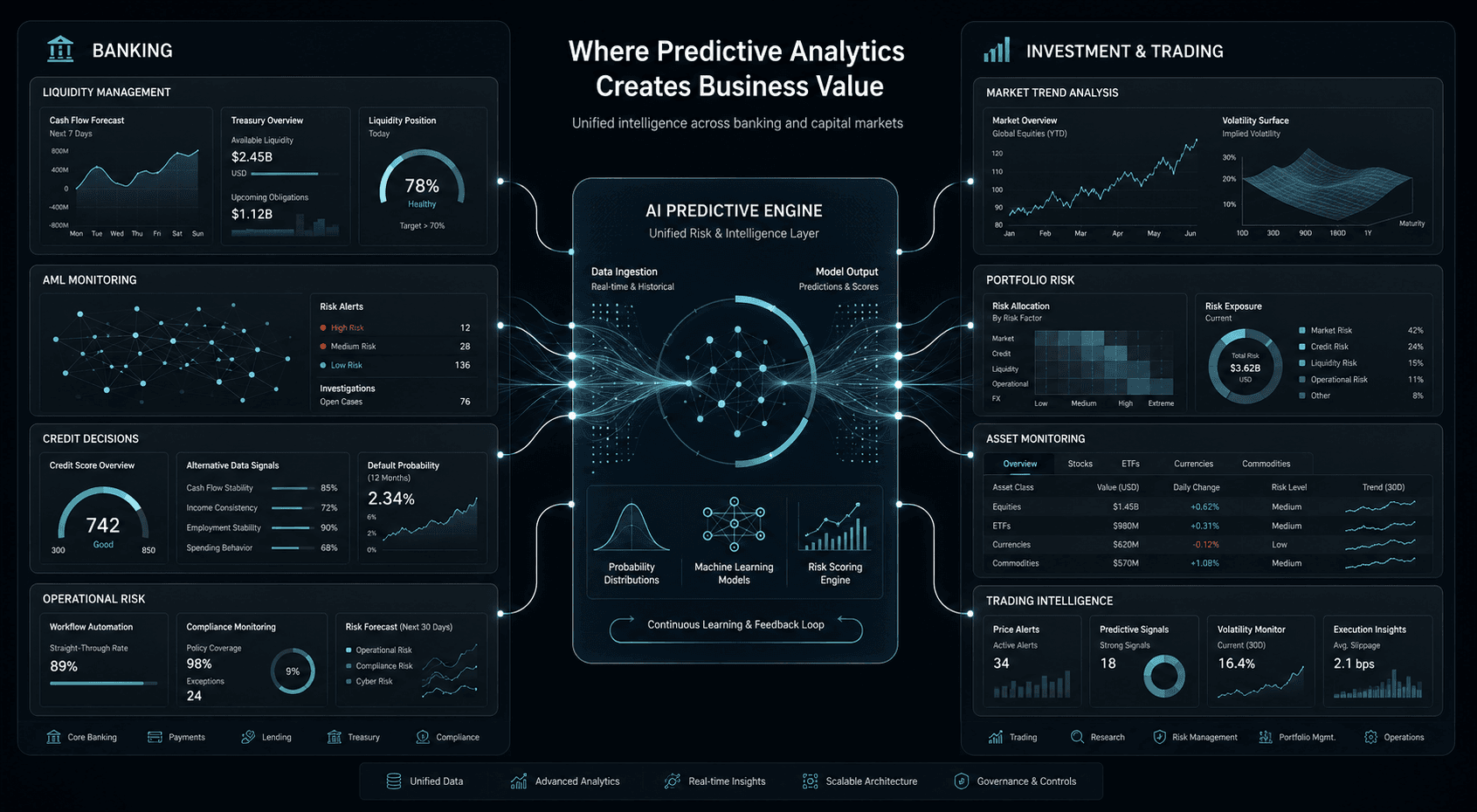
Predictive tools have moved far beyond consumer lending. Deploying predictive modelling in banking supports liquidity management by calculating future cash requirements, helps compliance teams automate anti-money laundering workflows, and streamlines asset allocation. Banks can spot system risks proactively rather than auditing them months later, which increases total return on investment.
Investment platforms use these exact mechanisms to monitor market trends and manage asset exposure. For instance, services allowing users to trade CFD positions integrate predictive capabilities to provide real-time risk scoring and price volatility alerts. Many trading platforms also make these capabilities available through demo trading accounts, allowing users to explore predictive dashboards before trading live.
Supplementary reading: Can Fintech Be a Force for Good?
Key Hurdles: Data, Transparency, and Regulation
Predictive technology depends entirely on the quality of data it consumes. Outdated, incomplete, or biased information outputs flawed forecasts, rendering advanced machine learning models useless. Accuracy and precision remain constant struggles.
| Challenge | Impact on Fintech Firms | Solution Strategy |
| Lack of transparency | "Black box" AI models hide decision logic | Adopting explainable artificial intelligence |
| Data Quality Issues | Flawed predictions, biased risk assessment | Strict data validation & clean pipelines |
| Compliance Strain | Changing data privacy regulations | Implementing strong data governance |
A major issue is the lack of transparency in sophisticated AI models. When neural networks function as opaque black boxes, explaining a rejected loan application to a customer or regulator becomes difficult. This challenge makes explainable artificial intelligence crucial for modern compliance.
Then there’s the legal side. Strict privacy laws mean a single data leak can ruin a company. Fintech teams have to protect user identities without breaking their own automated workflows. It’s a brutal balancing act. Winning here doesn’t take fancier math—it takes clean databases, constant code audits, and human engineers who actually monitor what the software is doing.
Conclusion
Predictive tech isn’t a premium add-on anymore. It’s basic code. Users don’t notice it, but the moment they log into a wallet, background models instantly recalculate individual risk profiles and adjust personal limits. The industry gap is widening fast. Platforms running clean data under tight deployment rules will dominate the space. The rest will keep losing margins to slow, manual execution.


Business
Tags: Abundance Mindset, Finance, Data, Digital, Building Functional Competencies, Business Management

PR & Brand Director