Trapped in the Cycle of Rejection
Freepik
For preface, these aren’t career advice articles…
It’s an article series about what it feels like to be at the starting line.
Not to provide answers, but to help make sense of the experience - the learning curve.
Everyone wants to succeed in their career. The faster the better.
But the truth is, it’s okay to not have everything figured out.
Recognise that you aren’t alone, and that your experiences are valid.
This isn’t a game of speed or comparison, it's a game of endurance and patience.
Everyone remembers their first interview rejection.
Mine happened when I was 16.
I was still in high school, applying for the president position of my school’s Interact Club. On paper, everything seemed to be in my favour, my sister was a legacy, my friends supported me, and I was considered one of the stronger candidates by the current team.
But when it came to the interview, I was nervous.
Not just nervous, but unsure of myself. I had never gone through something like that before, and the self-doubt showed. I didn’t present myself well. I didn’t come across as someone who really wanted the role.
I didn’t get it.
I was offered the vice president position instead, but the rejection still stuck with me more than the outcome did. At the time, I didn’t realise it, but that was the beginning of something I would feel again and again.
It was the first time I realised that trying doesn’t always lead to the result you expect.
When I First Learned to Doubt
It happened again in college.
I applied for the student council. This time, I told myself it would be different. I prepared. I dressed professionally. I answered every question as best as I could.
And I still didn’t get it.
That was when the doubt started to grow louder.
At some point, you stop expecting a response.
You apply, close the tab, and move on, almost like it was never going to work anyway.
How It Became a Pattern
In university, there were moments that felt like progress. I joined a sub-team and took on a leadership role in my first year. For a while, it felt like I was finally getting somewhere.
But it was during COVID, and when that period ended, so did the confidence. What stayed was the fear.
I became so afraid of rejection that I stopped putting myself out there. I avoided joining new clubs or activities, not because I didn’t want to, but because I had already convinced myself of the outcome.
That I would be rejected immediately, after stepping in. It sounds irrational when you say it out loud. But in the moment, it felt real.
It’s strange how rejection doesn’t just make you afraid of failing, it makes you afraid of even trying.
The Weight of Repetition
After graduation, the cycle came back stronger. Applications. Rejections. Silence.
Sometimes I didn’t even make it to the interview stage. I started asking myself questions I didn’t know how to answer. What was wrong with me? Was I not good enough? Was I expecting too much just to be given a chance?
I knew what I was capable of, but it didn’t seem to matter. And slowly, it got heavier.
There were days I didn’t want to get out of bed. Days where the silence felt louder than any rejection email. Days where I felt like I had somehow fallen behind without knowing when it started.
You tell yourself you’ll try again soon.
Just not now. Not like this.
A Different Kind of Opportunity
Then something small shifted.
A close friend asked me to join a youth programme as a volunteer. I almost said no, but I didn’t.
This is where it started. In a completely new environment, I started to see myself differently. I realised I was capable. That I could lead. That I could contribute, naturally, without overthinking every move.
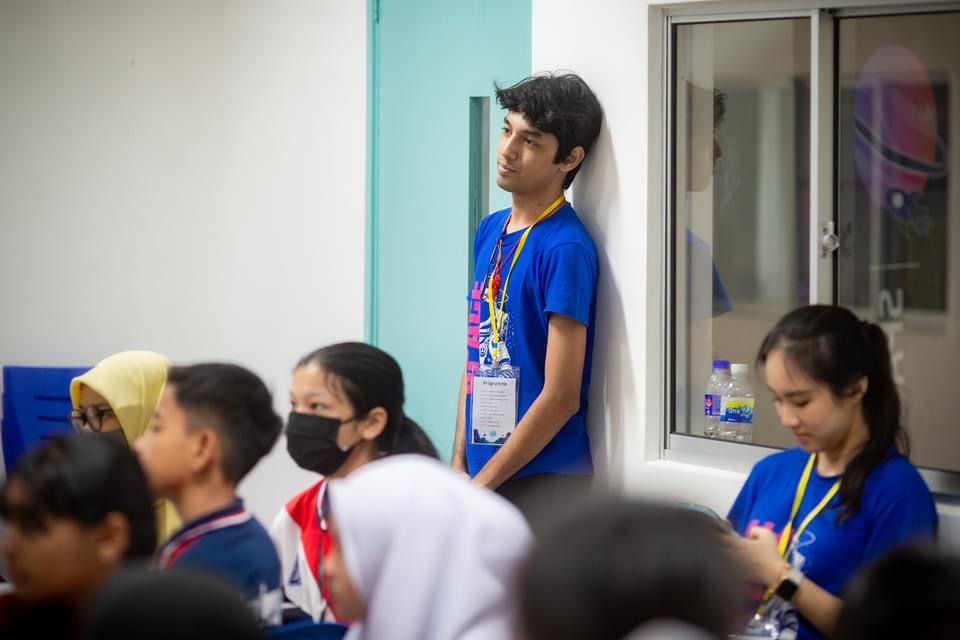
For the first time in a while, effort felt like it meant something again. Because I showed up, people started to notice. That eventually led to a referral for a role in a company.
Ironically, I was rejected for the first position I applied for there, but I was offered a different role instead. And since then, I’ve been learning. Making mistakes. Growing into it.
Looking back, the hardest part wasn’t the rejection itself. It was what repeated rejection made me believe about myself.
How it slowly changed the way I approached opportunities, with less confidence, less expectation, and sometimes, less willingness to even try.
Even now, I still feel it. There’s still a bit of anxiety before interviews. And now, being involved in recruitment, I’ve seen the other side too.
I’ve realised something.
Rejection isn’t always a reflection of your ability.
Sometimes it’s timing. Sometimes fit. Sometimes things you’ll never fully see.
The job market is tough. There are thousands of people trying for the same opportunities.
And rejection is, in many ways, unavoidable.
Learned Helplessness
What I didn’t realise at the time was that what I was going through had a name.
It’s called learned helplessness.
It’s what happens when you go through repeated setbacks for so long that you start believing your actions don’t make a difference anymore. After enough disappointments, even your best efforts can begin to feel futile.
Looking back, that was exactly where I was.
I wasn’t just dealing with rejection.
I had started expecting it.
I stopped applying with the same energy.
I avoided opportunities before they even had the chance to reject me.
I convinced myself of the outcome before anything even happened.
Not because I lacked ability, but because somewhere along the way, I had learned that trying didn’t feel worth it anymore.
Continue reading Part 2.



Personal

Arric has years of experience in the corporate world, specialising in marketing and project management. Coming from a Biomedical Science background, his career journey began in uncertainty as a fresh graduate navigating a path he did not initially plan for. Through his writing, he hopes to reflect the realities of career life in a way that helps others feel seen and validated. That it is okay not to have everything figured out. And it is okay to admit when you are struggling.