Promoted Off The Tools: Online Gaps In Construction Management Leadership

Photo by magnific @ magnific
One established route into construction supervision is advancement from the field. The U.S. Bureau of Labour Statistics (BLS) notes that first-line supervisors of construction trades typically enter the occupation with significant related work experience, while experienced construction workers may advance into supervisory positions.
That experience matters. A seasoned tradesperson may already understand jobsite conditions, construction methods, safety requirements, and coordination between crews. But moving into a supervisory or management role also expands the job considerably. Construction managers may be responsible for scheduling, budgets, cost tracking, contracts, subcontractor coordination, progress reporting, and regulatory compliance. BLS construction managers profile
The challenge, then, is not that field experience loses its value after a promotion. It is that technical expertise alone does not cover every responsibility of a management role. Newly promoted leaders may also need structured instruction, mentoring, and practice with administrative and digital systems.
Contractors can reduce this skills gap by treating the field-to-office move as a professional transition rather than simply a title change. The goal is to preserve the practical judgment developed in the field while adding the financial, administrative, communication, and technology skills required to manage projects effectively.
The field-to-office friction point
Moving from craft work into management changes the emphasis of the job. Ironworkers, electricians, carpenters, and other tradespeople spend much of their time executing work and solving immediate field problems. Managers must still understand that work, but they also have to plan, coordinate people and resources, track costs and schedules, document decisions, and communicate across project teams.
These responsibilities are reflected in current occupational data. O*NET's construction manager profile lists planning and scheduling, budget and cost reporting, contract preparation, labour allocation, coordination, and project monitoring among the core tasks associated with construction management.
That makes the transition a skills-development issue rather than a judgment about field employees' abilities. A newly promoted supervisor may be highly capable on-site while still needing support with project controls, documentation, contracts, reporting systems, or communication with owners and office teams.
Read more: Project Management In Construction: Importance, Trends, And Practice
Executive teams should therefore define what the new management role actually owns. Instead of assuming that an experienced tradesperson will learn every administrative process informally, companies can specify the procedures, systems, decision rights, and performance expectations that come with the promotion. This approach is consistent with BLS guidance stating that newly hired construction managers typically work under an experienced manager, often for up to a year.
Companies can strengthen this transition with a structured development plan that pairs new supervisors with experienced managers, identifies gaps in project controls and communication, and sets measurable checkpoints for responsibilities such as cost tracking, documentation, delegation, and team leadership. Reinforcing these expectations through consistent leadership practices can help new managers build credibility with both field crews and office teams. The goal is not to turn skilled tradespeople into administrators overnight, but to give them a clear path for developing the management capabilities that support safety, quality, schedule, and profitability.
The evolving role of digital up-skilling
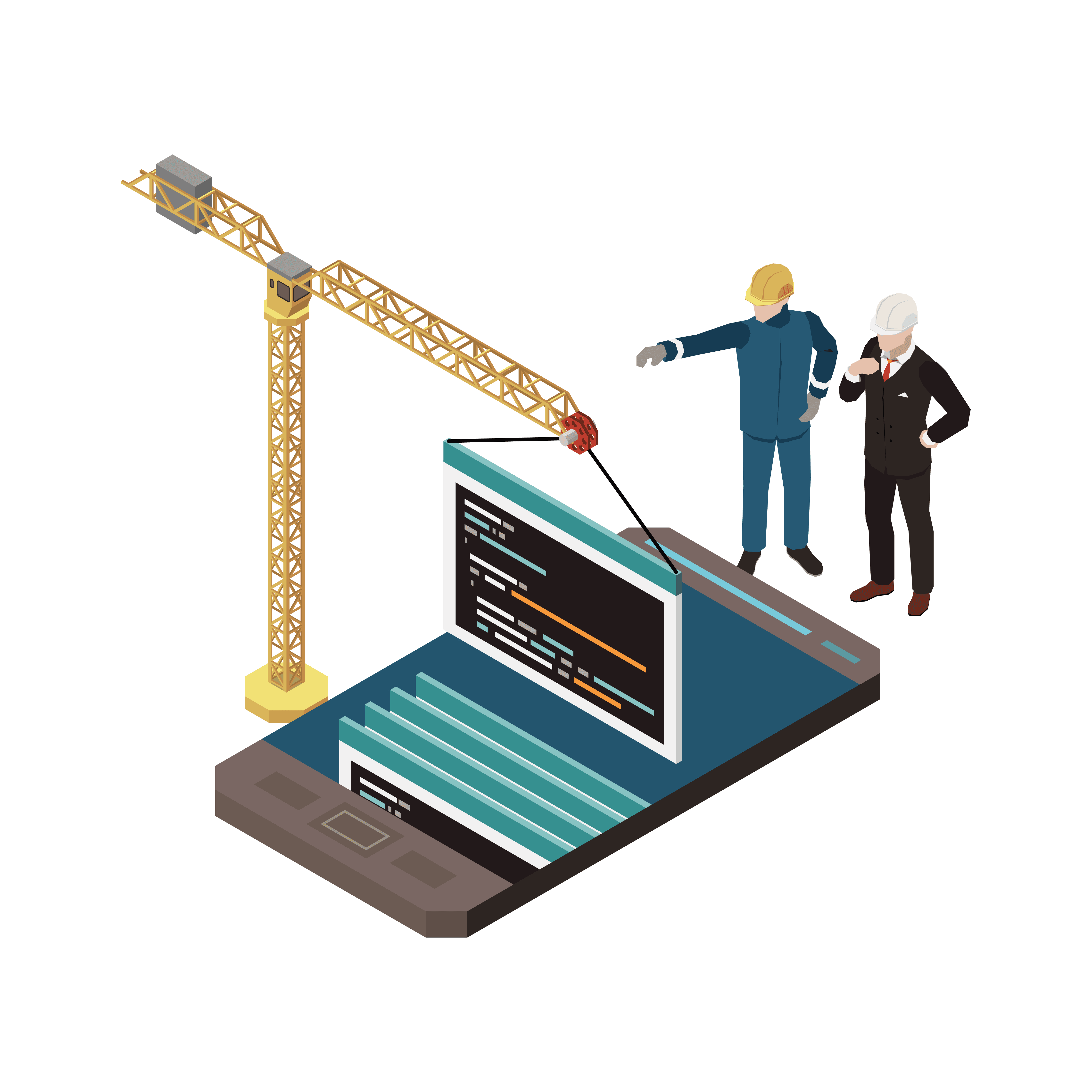
Digital tools are now a substantial part of construction management. Depending on the company and project, managers may work with scheduling and estimating software, document-management systems, enterprise resource planning platforms, cloud-based project tools, and Building Information Modeling (BIM).
Industry data also show that technology adoption is more than a theoretical trend. In the Associated General Contractors of America's 2025 outlook, 61% of surveyed firms reported using cloud-based project-management tools. At the same time, 38% identified finding enough time to implement new technology and train employees on it as a leading IT challenge.
For newly promoted field leaders, that means digital development should focus on the systems they will actually use rather than on technology for its own sake. Relevant skills might include schedule updates, cost tracking, submittal workflows, document control, and digital reporting, depending on the position.
Online education can supplement that training. The Research.com ranking of construction management programs online covers associate, bachelor's, and master's options and describes coursework in areas such as estimating, scheduling, contracts, safety, BIM, budgeting, and project management. Some online programs may allow working professionals to continue employment while studying, although workload and delivery formats vary by institution.
Formal education, however, does not replace company-specific onboarding. New managers still need to learn their employer's reporting standards, contract processes, software stack, approval procedures, and communication expectations.
How-to steps for transitioning field leaders
- Create a structured 90-day administrative onboarding plan. Treat 90 days as a practical framework rather than an industry-mandated standard. Pair the newly promoted supervisor with an experienced manager and prioritise the administrative tasks most relevant to the role, such as task management, contract documentation, progress billing, and digital submittal workflows.
- Set up job-shadowing opportunities across departments. Before or soon after promotion, prospective managers can spend time with teams such as estimating, safety, accounting, or preconstruction to see how field decisions affect other parts of the project.
- Provide dedicated training for the company's digital tools. Set aside appropriate paid training time for the project software that employees will be expected to use. Vendor training or certification can be useful where relevant, but completing a course should not be treated as proof of proficiency; managers should also practice the workflow they will use on live projects.
Workforce and data insights in construction leadership
The field-to-management transition also falls within a broader workforce development challenge. Current BLS data show that first-line supervisors in construction trades and extraction workers typically enter the occupation with a high school diploma or equivalent and 5 or more years of related work experience. That makes substantial field experience a recognised pathway to frontline supervision, although construction manager positions more commonly require a bachelor's degree.
Technology adoption adds another layer. Construction firms are investing in cloud platforms, document management software, project management systems, and AI, but implementation and training remain significant challenges. Companies, therefore, need to evaluate whether promoted employees are being given both the technical tools and the time needed to learn them.
Technical expertise alone does not guarantee readiness for construction leadership. Newly promoted supervisors also need structured development in communication, delegation, conflict resolution, coaching, and safety accountability, because their role shifts from completing fieldwork to enabling others to perform effectively. Building these people-management capabilities alongside technical competence reflects the balanced leadership practices associated with high-performing companies.
The evidence does not support the assumption that internal promotion automatically produces a specific reduction in turnover or a salary increase. Outcomes such as retention, compensation, and advancement depend on the employer, occupation, location, experience, training, and labour market. Contractors should measure those outcomes internally instead of relying on unsupported industry-wide benchmarks.
Practical data insights for construction executives
- Track promotion outcomes rather than assuming a fixed retention benefit. Compare turnover, performance, training completion, and progression among newly promoted supervisors over time. This provides company-specific evidence of whether your development process works.
- Benchmark compensation by role and market. Don't assume moving from a field position into management yields a standard percentage pay increase within a set period. Use current wage data, local market information, experience, and the responsibilities of the position when setting compensation.
- Standardise reporting without eliminating professional judgment. Shared dashboards and reporting systems can give field and office teams a common set of information, but they do not remove the need for interpretation. Define who enters the data, how frequently it is updated, and when managers should escalate discrepancies or field conditions that the dashboard does not capture.
Bridging the gap between AI and field operations
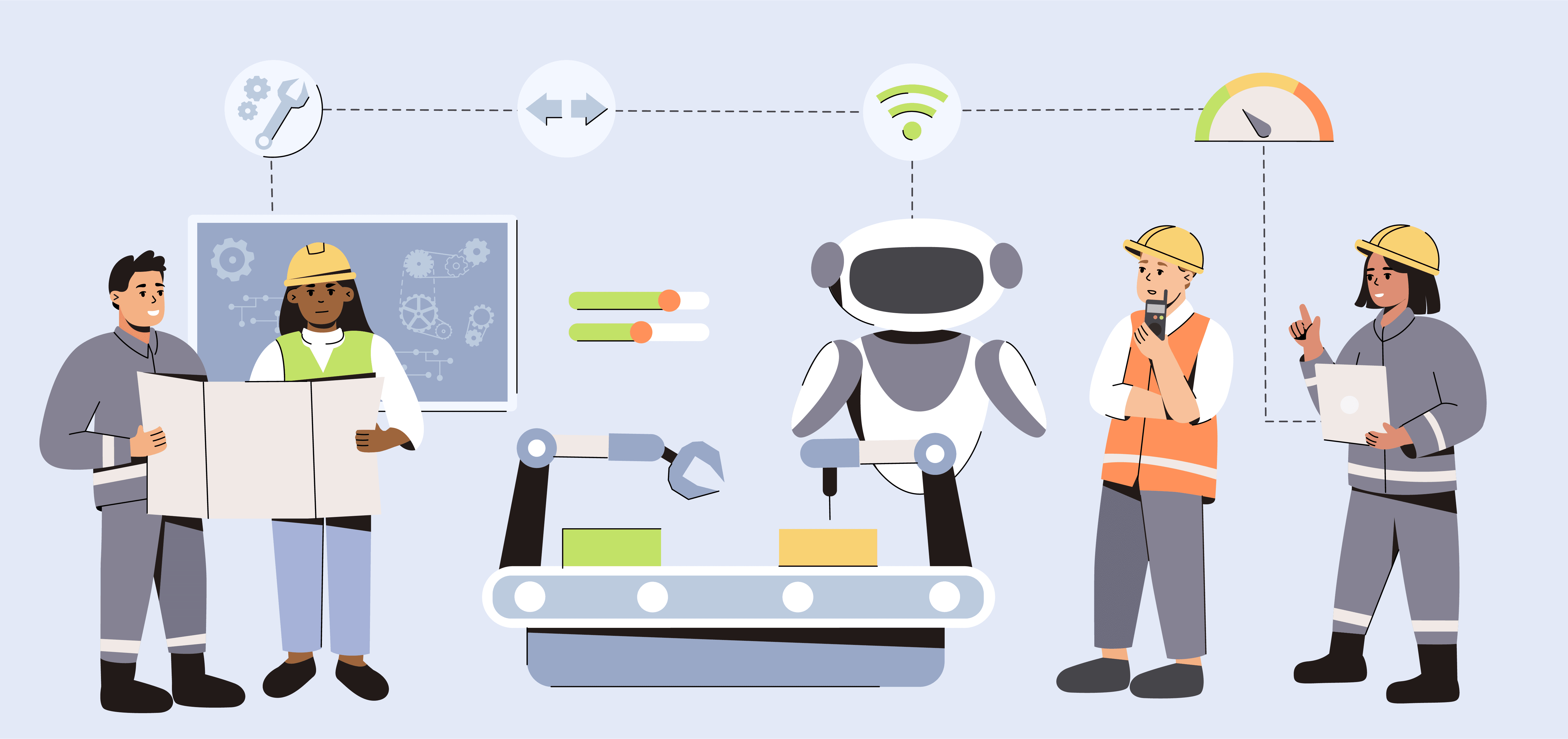
Construction technology is expanding beyond traditional scheduling and document-management software. Deloitte's 2026 engineering and construction outlook reports that firms are experimenting with AI-driven analytics and scheduling, computer vision safety tools, connected job sites, robotics, and autonomous equipment. However, some of these technologies remain in pilot or early-stage deployment rather than being standard on every jobsite.
Supplementary reading: Leadership in the Age of AI: Reprogramming the Human Element
Closing that gap also requires clear rules for human oversight. Construction firms should define which AI-generated recommendations can support routine decisions and which require review by an experienced manager, particularly when safety, quality, cost, or schedule risk is involved. Effective AI leadership turns those principles into practical governance by establishing accountability, escalation paths, and documented decision processes. Field teams should also be able to flag inaccurate recommendations and feed that information back into the system, creating a continuous improvement loop between technology, management, and jobsite experience.
As those tools become more common, managers will increasingly need to connect digital information with actual site conditions. AI-generated forecasts and dashboards can inform decisions, but field leaders still need to evaluate whether the underlying data are accurate and whether the recommendations make sense for the project at hand. Deloitte also identifies data quality and governance as important limitations on the reliability of AI and analytics systems.
That makes judgment especially important. Construction managers routinely deal with delays, emergencies, changing conditions, coordination problems, and competing project requirements. Technology can support those decisions, but it does not remove the manager's responsibility to interpret conditions and communicate with the people doing the work.
Expert tips for optimising field operations leadership
- Balance field experience with data. Encourage managers to compare dashboard information with current jobsite conditions rather than treating either source as automatically correct. If schedule, labour, or cost data conflict with what teams are seeing in the field, investigate the discrepancy before acting.
- Maintain an appropriate jobsite presence after being promoted. Regular field walks can help managers stay connected to site conditions and communicate with crews, although the frequency should reflect the manager's responsibilities and project needs rather than an arbitrary daily requirement.
- Support psychological safety during technology rollouts. Explain why a new system is being introduced, how its data will be used, and what employees should do when they encounter problems. Encourage workers to ask questions, raise concerns, and report mistakes without fear of embarrassment or retaliation. That approach reflects the established meaning of psychological safety rather than treating it simply as a way to persuade employees to accept new technology.
Building sustainable operational leadership
Internal advancement remains a viable route into construction supervision and management, particularly for workers who bring substantial field experience. But moving "off the tools" changes the scope of the job. Practical construction knowledge remains valuable; it simply needs to be complemented by the administrative, financial, communication, and digital skills required by the new position.
For contractors, the most defensible approach is to make that transition deliberate. Define the responsibilities of the new role, provide mentoring and practical onboarding, train employees on the systems they will actually use, and evaluate whether the development process is producing the results your company needs.
When field expertise and structured management development work together, experienced tradespeople have a clearer path for applying what they already know while building the additional capabilities required to lead projects.

Leadership
Tags: Alignment & Clarity, Leadership & Development (L & D), Emerging Leadership, Executing Leadership, Building Functional Competencies, Business Management, Consultant Corner

Tatev Panosyan is an Off-Site SEO Specialist and Partnership Manager specializing in link building, digital PR, and strategic partnerships. She works with SaaS and technology companies to build relevant, high-quality partnerships that support their SEO growth.