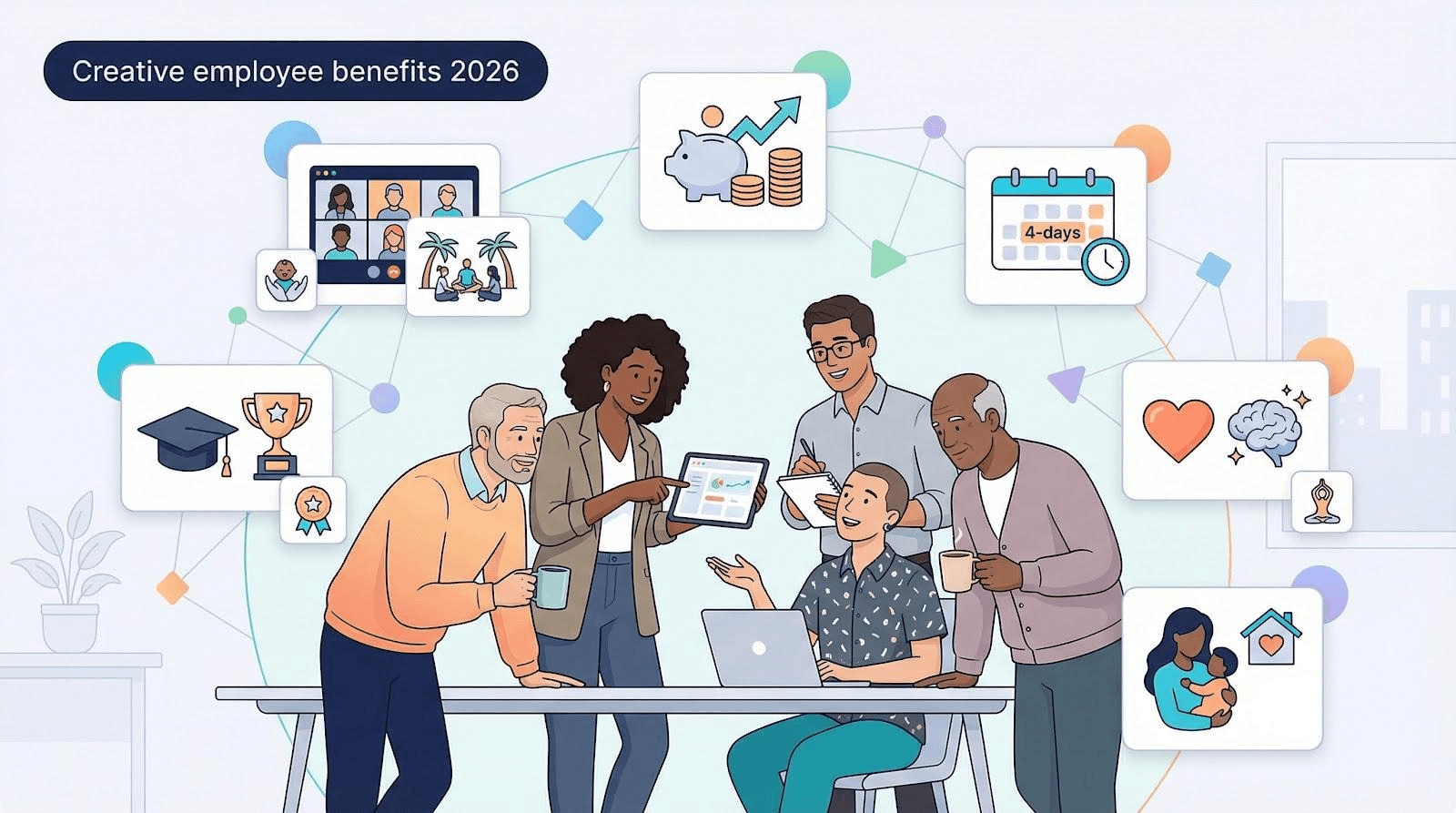
25 Creative Employee Benefits Ideas 2026: Unique Perks Companies Are Testing
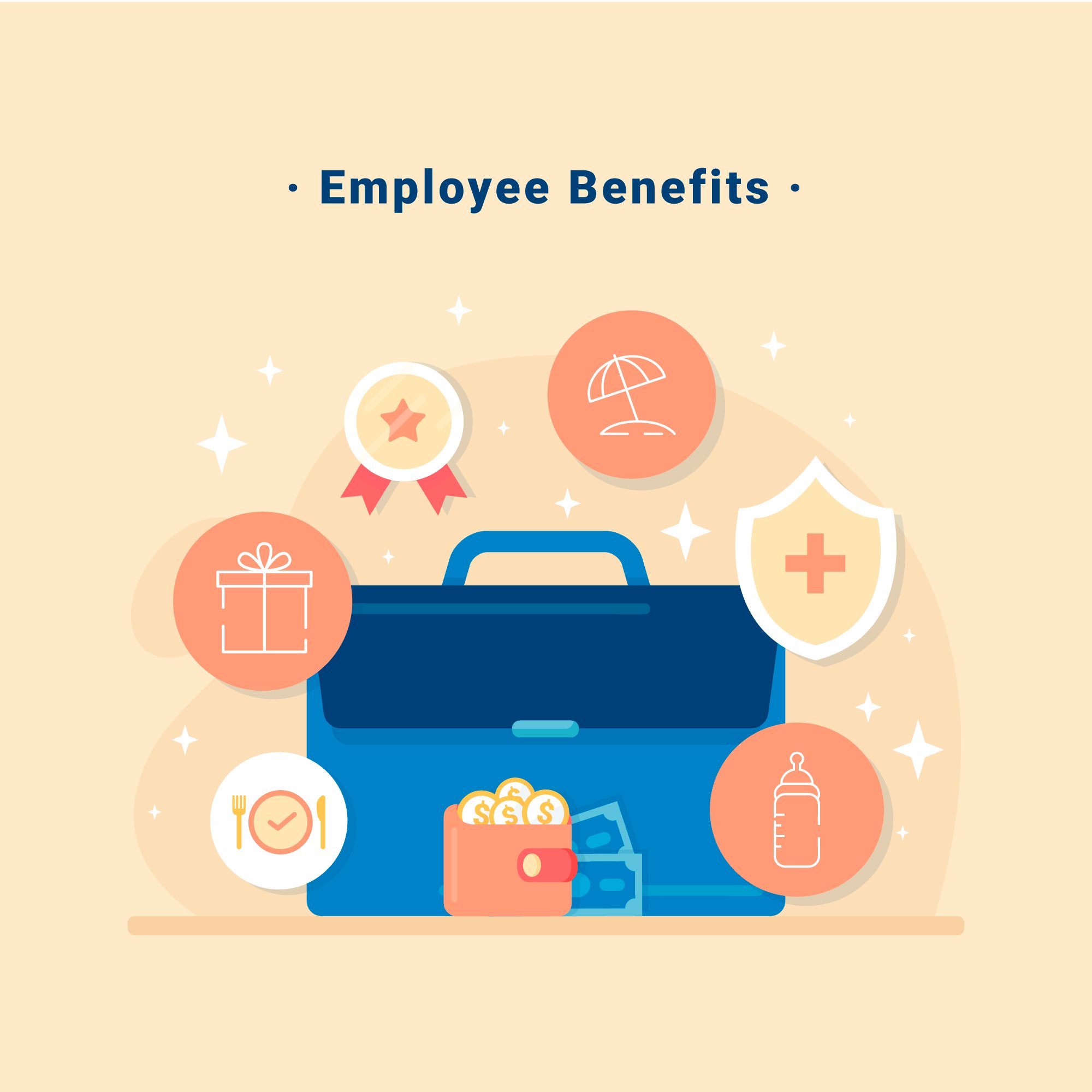
Photo by freepik @ freepik
Employees aren’t wowed by a bare-bones health plan and 401(k) match anymore. In just two years, the typical benefits menu jumped from 175 to 216 options—a 23 per cent surge that shows how fiercely companies compete for talent. When workplaces solve real pain points—student debt, burnout, caregiving, even climate anxiety—engagement and loyalty follow.
This guide curates 25 forward-looking perks that have already been piloted by real employers. We group them into six categories—financial security, time and flexibility, health and well-being, family and care, development and recognition, and culture infrastructure—so you can jump straight to the challenge you need to solve. Ready to rethink what “good” looks like? Let’s dive in.
How we built the list
Before we added a single perk to the page, we mapped the terrain.
First, we scraped every credible HR survey, vendor report, and case study published in the last 18 months. That sweep surfaced more than forty candidate benefits. We cross-checked each one against real employer pilots to confirm it was more than a press-release promise.
Next, we scored every idea on four hard metrics: novelty, impact, feasibility, and strategic fit. Each metric carried a set weight, so high-flash but low-impact perks didn’t sneak through the back door. Any concept averaging below 3.5 on our five-point scale was cut.
We also imposed three non-negotiables. A perk had to show documented results at two or more employers, had to be realistic for a 250- to 5,000-person U.S. firm, and couldn’t rely on country-specific legislation that U.S. companies can’t replicate. If it missed even one checkpoint, it was out.
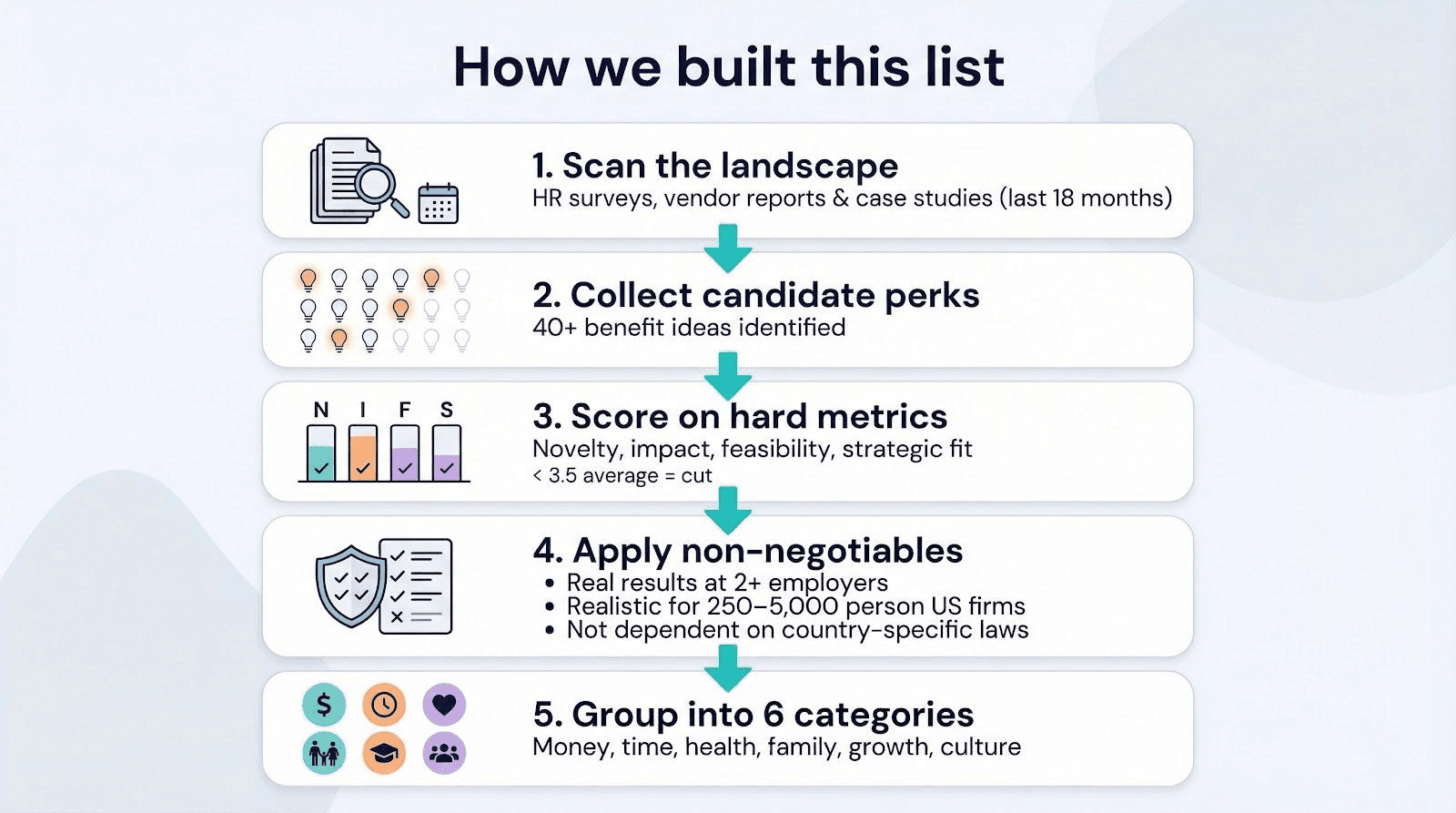
Finally, we sorted the survivors into six clear categories: money, time, health, family, growth, and culture. That structure mirrors how HR budgets get approved, so you can jump straight to the pressure point you need to solve.
The result is a list that blends ambition with practicality, backed by data, and free of filler. It’s built for action, not hype.
Financial security & wealth-building
1. 529 college-savings contributions
Ask any mid-career parent what keeps them up at night, and tuition lands near the top. The average four-year public degree now clears six figures, and even high earners worry they’ll still be paying it off during retirement.
Offer a modest match—say, fifty dollars a month—into employees’ 529 plans and you turn a distant dream into a scheduled reality. Costs are predictable, payroll handling is simple, and several states give you a tax credit for doing the right thing. Because every dollar goes to a named account, finance teams like the control, and parents rarely leave free future money on the table.
Rollout is straightforward: pick a 529 provider. Bright Start 529 College Savings Plan’s workplace program costs employers nothing, offers automatic payroll direct deposit, and runs free HR webinars to answer parent questions. It also highlights triple tax advantages: tax-deferred growth, tax-free withdrawals for qualified expenses, and an Illinois state tax deduction up to $20,000, so your finance team can showcase immediate savings alongside future gains. Add the payroll line, then host a half-hour education session.
By lunch, your people will be calculating how fast that quiet fifty grows when the company chips in.
2. Student-loan repayment assistance
Millennial and Gen Z employees arrive with diplomas in one hand and about thirty thousand dollars in student debt in the other. Only seven per cent of U.S. workers currently get employer help, so stepping up makes your offer shine.
Choose a monthly or annual cap—many firms fund one hundred dollars a month or up to five thousand dollars a year—and send payments straight to loan servicers. Federal rules let you contribute up to $5,250 per employee per year tax-free through at least 2025. Early adopters see higher offer-acceptance rates and lower early-career turnover.
Implementation takes one payroll line and a fintech partner such as Goodly or Gradifi. Show candidates the lifetime impact in dollars and months saved and watch gratitude turn into loyalty.
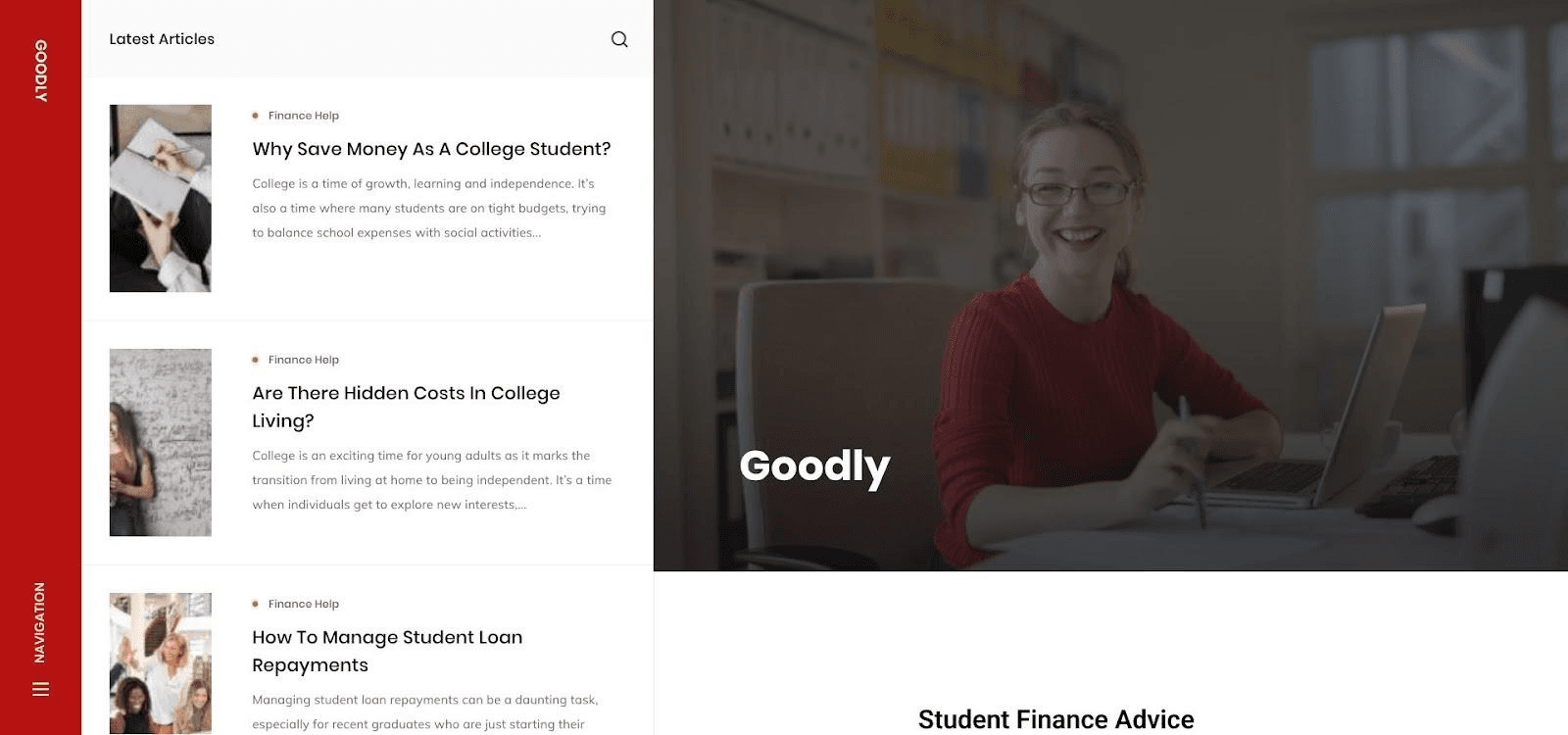
Employer student-loan repayment platform (Goodly) screenshot
3. Emergency savings and financial wellness programs
Money stress wrecks focus faster than any software bug. Auto-enrol workers in a high-yield savings pot—ten or twenty dollars a paycheck—then match the first fifty. A few hundred dollars on hand keeps payday loans at bay.
Wrap the account in on-demand coaching from vendors like Origin or Financial Finesse. Private, jargon-free chats after hours turn panic into a plan. Add a capped hardship fund for true crises; the cost is often lower than turnover from one burned-out teammate.
Payroll already splits deposits, so add a savings line, approve a modest hardship reserve, and position the trio as a cohesive safety net.
4. Earned wage access (pay on demand)
Waiting two weeks for payday feels archaic in an age of instant everything. Earned wage access lets employees tap up to half of accrued pay whenever life throws a curveball. No interest, no credit check, just their own money a little sooner.
A fintech partner fronts the cash and reconciles on payday. Cover the two-dollar fee yourself, and the perk becomes a genuine lifeline. Recruiters see faster hiring, and inside the company, you’ll notice fewer attendance hiccups.
5. Homeownership and housing assistance
Nothing roots an employee like a set of house keys, yet down payments feel out of reach in many metros. Offer a forgivable loan, cash grant, or preferred-lender rate and turn an abstract dream into a signed deed.
Cap support—ten thousand dollars is common, or scale help with tenure. If budgets are tight, start with zero-interest relocation or rental-deposit loans that recycle as they’re repaid. Every closing celebrated in Slack fuels culture and retention.
6. Lifestyle spending accounts (LSAs)
Perks fail when they assume everyone wants the same thing. An LSA fixes that by giving each employee a flexible wallet—five hundred to one thousand dollars a year—to spend on broad categories you define. Think fitness classes, language lessons, museum passes, or pet-sitting.
Cost is capped upfront, unused funds roll back each January, and HR stops managing micro-programs. Vendors such as Compt or Fringe issue virtual cards or handle quick reimbursements, so all you do is set the allowance and publish eligible categories.
7. Vacation stipends and paid-to-disconnect bonuses
Unlimited PTO sounds generous until workload guilt keeps passports unused. Tie real money to real time off. Offer a yearly travel credit—one thousand dollars hits the sweet spot—or a cash bonus that triggers only after five consecutive days away from work.
Usage of vacation days climbs, burnout drops, and teams cross-train to cover longer absences. Require proof of a true disconnect—no sneaky inbox checks—and watch the #vacay-wins channel fill with refreshed colleagues.
Time and flexibility
8. Four-day workweek trials
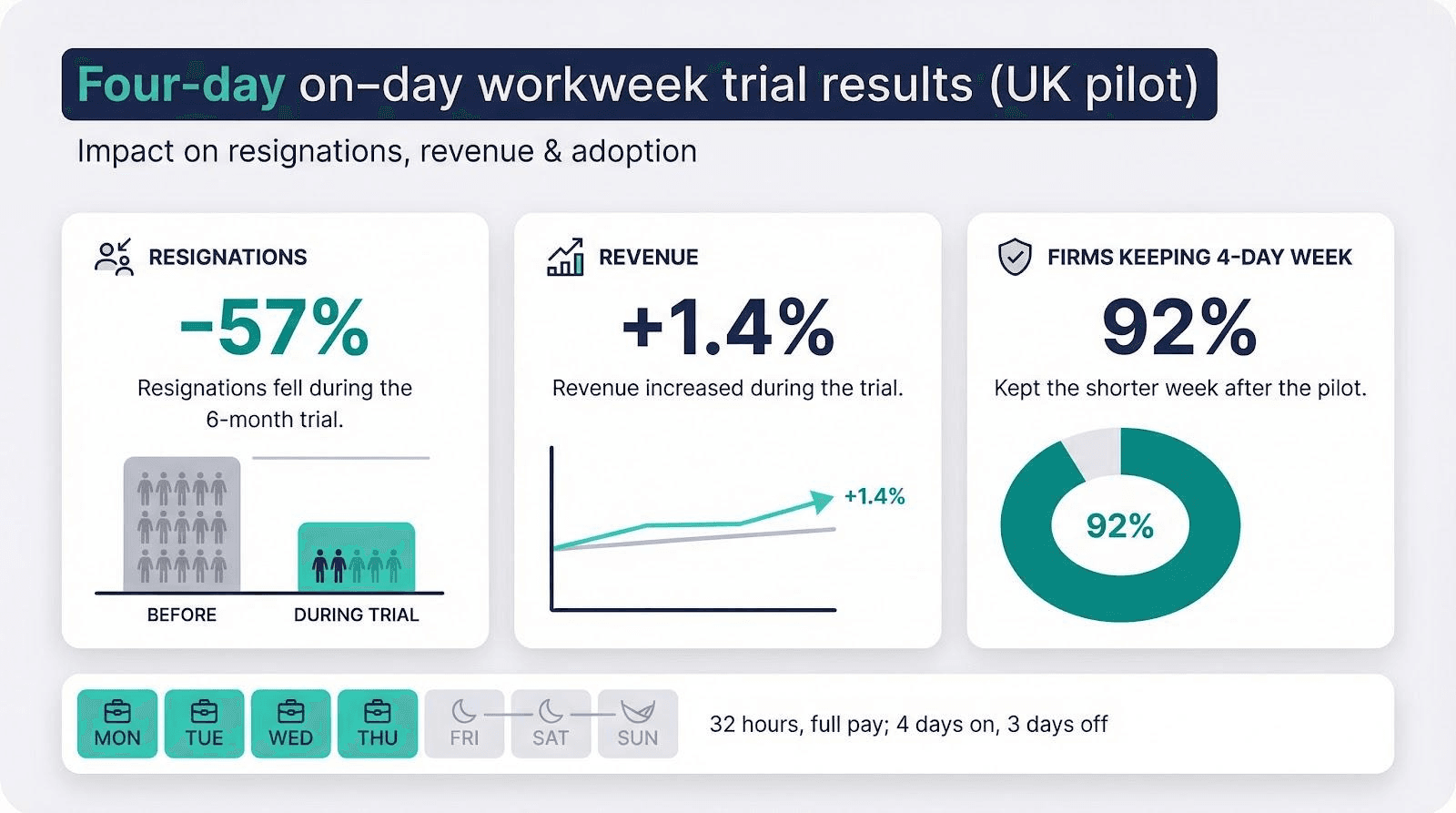
Nothing signals trust like giving back a whole day of the week. A 32-hour schedule delivers full pay and one less workday, forcing teams to cut calendar bloat and busywork.
The results speak for themselves. In the landmark United Kingdom pilot, resignations fell 57 per cent while revenue ticked up 1.4 per cent during the six-month test. Ninety-two per cent of firms kept the shorter week after the trial.
Read more: Understanding Financial Wellness in Corporate Benefits
Start with a small pilot. Pick one department, set clear metrics, and ask teams to delete low-value meetings before the first free Friday. Many companies rotate rest days or split teams to keep customers covered without extra headcount. After 90 days, compare output, client feedback, and engagement scores. Odds are you won’t look back.
9. No-meeting days and meeting-light culture
Meetings expand to fill every white space unless you draw a line. Blocking one day each week—often Wednesday—for deep work lets designers focus on prototypes, engineers tackle tricky code, and marketers finally write that long-form copy.
Throughput rises, and morale improves. Surveys show higher scores for “I have time to do meaningful work” once calendars are clear.
Leadership must set the tone. Publish the rule, audit recurring invites, and hold managers accountable for exceptions. Client groups can stagger their no-meeting days to keep service levels steady. Pair the practice with training on crisp agendas and ten-minute stand-ups, and even the meetings that remain get leaner.
10. Paid sabbaticals for loyalty and renewal
Five years of service once earned a crystal plaque. Today, it should unlock a fully paid month away from work. Adobe offers four weeks after five years, and Intel grants eight weeks after seven. Return rates soar because employees come back refreshed instead of burned out.
The retention math is simple. Replacing a mid-level engineer can cost six months of salary, while funding a paid break costs a fraction and cements loyalty at the five-year cliff when many people start to look elsewhere.
Create a clear policy: eligibility at year five, four consecutive weeks off, one block, and a six-month notice so teams can cross-train. Encourage true disconnection—no email checks allowed. When sabbatical-takers return, host a short “what I learned” session. You gain new ideas, stronger bench depth, and employees who feel genuinely valued.
Health and well-being
11. Comprehensive mental-health support
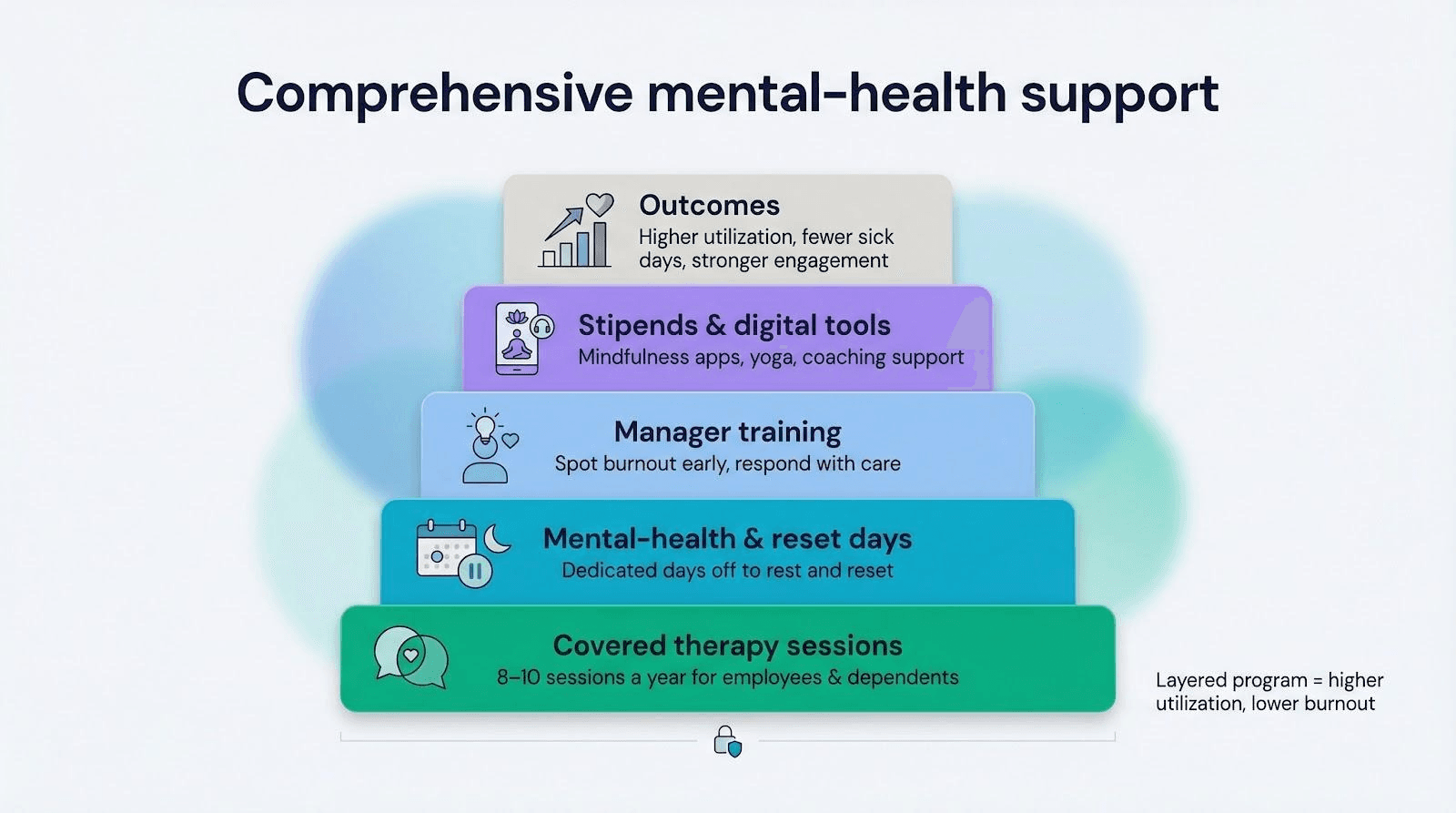
Stress ranks among the top drivers of turnover, and employees say mental health benefits most influence loyalty. A token EAP brochure won’t cut it. Cover real therapy sessions, add mental-health days to PTO, and equip managers to spot burnout early.
Gold-standard programs layer on-demand counselling (eight to ten sessions a year for employees and dependents) with quarterly company-wide reset days and flexible stipends for mindfulness apps or yoga. Utilisation climbs from under five per cent with an EAP alone to more than twenty per cent with full coverage, while sick days fall and engagement rises.
12. Fertility and family-building benefits
Starting a family can cost more than a new sedan. Cover fertility treatments, adoption fees, and surrogacy support to show every path to parenthood matters. Offer a universal family-building fund—up to fifteen thousand dollars over a career—and paid time for appointments.
The inclusion dividend is huge. LGBTQ+ staff feel seen, women avoid choosing between biology and career timing, and would-be dads engage fully when costs drop. Employers that added fertility coverage see some of the sharpest spikes in employee NPS.
13. Expanded parental and caregiver leave
Twelve weeks unpaid under federal law forces survival mode. Modern firms provide at least 16 weeks fully paid for birthing, adopting, or fostering parents and mirror that time for partners. Ten paid caregiver days a year cover eldercare, miscarriage, or other family crises.
Companies shifting from limited leave to inclusive caregiver policies often keep female retention after childbirth above 90 per cent and lift overall engagement.
14. Menstrual and menopause support
Half the workforce menstruates, and every woman who stays long enough will experience menopause. Recognize both. Stock free supplies in restrooms and allow up to two paid period-wellness days per cycle for severe symptoms. For menopause, offer desk fans, flexible temperatures, and optional remote days during hot flashes, plus coverage for hormone consultations.
These gestures keep senior talent on board and tell younger staff that your culture grows with them.
15. Pet-friendly perks and pawternity leave
Pets are family for many workers. Group-rate pet insurance paired with one or two days of paid pawternity leave when someone adopts a new pet creates outsized goodwill. Include a bereavement day for pet loss and, where feasible, trial pet-friendly days in the office with clear etiquette rules.
16. Climate and sustainability perks
Nearly half of workers would accept lower pay to join an environmentally responsible employer. Offer transit passes, bike-to-work rewards, or a two-thousand-dollar subsidy for electric bikes and cars. Add on-site EV chargers and a $500 sustainability stipend for home upgrades such as smart thermostats or LED swaps.
Track and offset the carbon footprint of business travel, then share personalised summaries: “We neutralised your 2025 travel emissions.” Mission-minded talent notices.
17. Volunteer time off and donation matching
Purpose fuels engagement. Provide one or two paid volunteer days each year and match employee donations dollar for dollar up to one thousand dollars. Platforms like Benevity vet charities and track hours, making administration easy. Highlight total volunteer hours in all-hands meetings to build pride and community impact.
Development and recognition
18. Life-event perks for milestone moments
Work anniversaries are fine, but the real memories happen off the clock. Give an extra week off and a $500 honeymoon credit for a wedding, a one-time $1,000 closing-cost bonus for first-time homebuyers, or a “baby bounty” savings bond when a child arrives.
These gestures land because they’re unexpected and personal. They tell employees, “We see your whole life, not just your KPIs.” Automate eligibility in your HRIS so the perk triggers when an employee updates a life-status field and celebrate the milestone in Slack.
19. Peer recognition and micro-bonuses
Praise from a manager feels good; praise with a few dollars from a teammate feels even better. Peer-to-peer platforms let each employee distribute a small monthly pool of points worth real money. Recognition arrives in the moment, and recipients can swap points for gift cards, cash, or charity donations.
Even a thirty-dollar credit per person per month fuels a year of goodwill for less than a single team dinner. Data dashboards spotlight hidden heroes and surface cross-functional collaboration.
20. Continuous learning stipends and AI upskilling
Skills expire faster than yoghurt. Load each employee with an annual learning wallet—one to five thousand dollars—to spend on any career-advancing course or certification. No pre-approval below a set cap; just upload the receipt and go learn.
Reserve a slice of the stipend for AI literacy, data-analysis bootcamps, or prompt-engineering labs. Publish quarterly learning days when workloads pause so people actually use the perk, then spotlight success stories in all-hands meetings.
Culture infrastructure
21. Childcare and dependent-care support
Few alerts derail focus faster than “the nanny is sick.” Subsidise regular daycare or after-school programs, then buy a block of emergency-care days through partners like Bright Horizons. Employees book a vetted sitter when plans collapse, and you pick up the bill. Extend similar help to eldercare with referral services and a few paid caregiver days each year. Patagonia’s on-site childcare keeps new-mom return rates near 100 per cent; even a smaller subsidy brings the same peace of mind.
22. Concierge and personal errand services
Time, not money, is the rarest resource for high performers. A corporate concierge handles dry cleaning, car servicing, gift shopping, and even waiting at home for the plumber. Employees request help through an app; the concierge does the legwork. Cap each person at three errands a month, or roll out first to teams with chronic overtime. Stress drops, calendars breathe, and productivity rises.
23. Remote-work stipends and team retreats
Supplementary reading: Benefit Strategies To Attract And Retain Talent
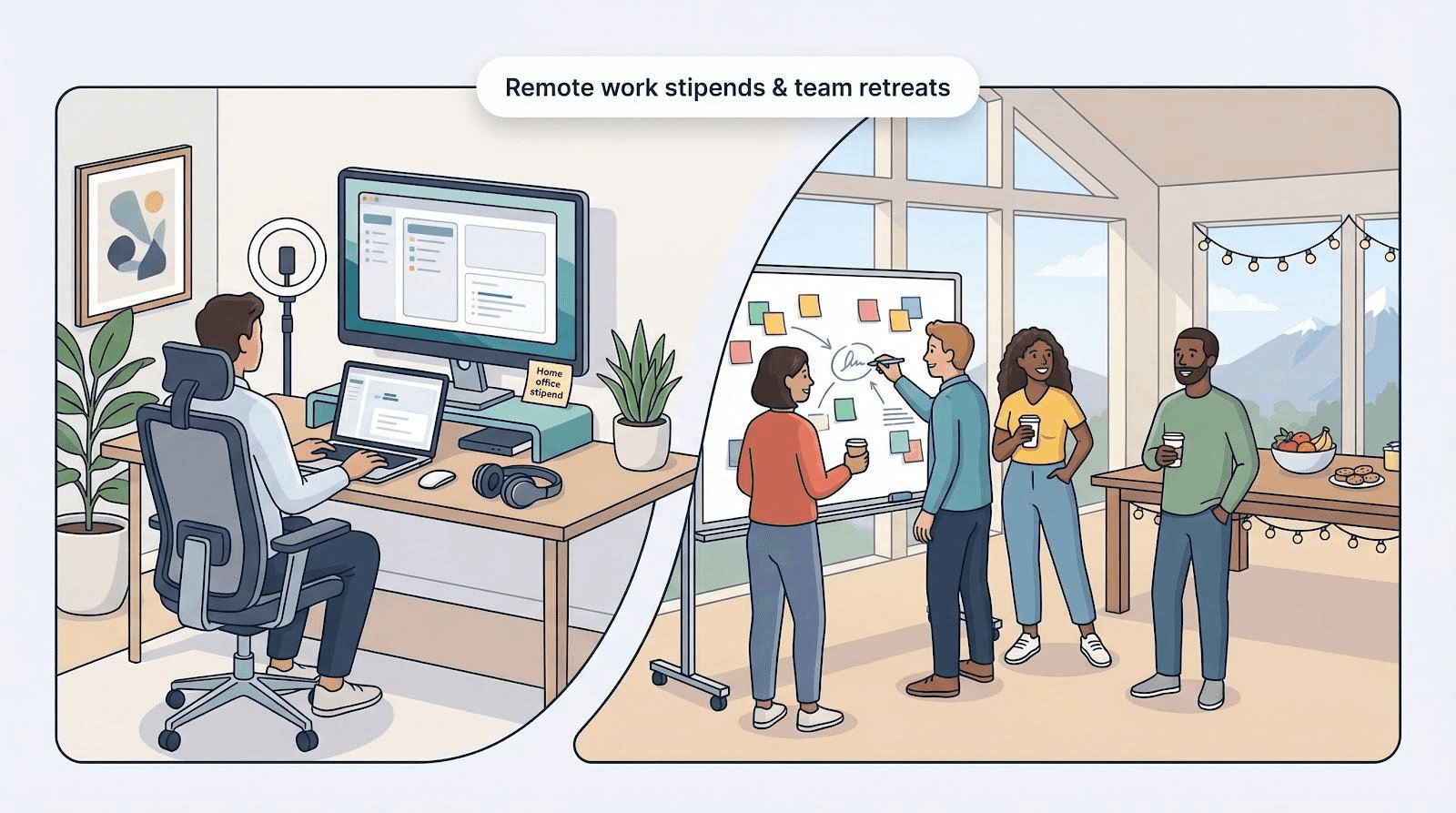
If spare bedrooms are the new office, give them the polish once reserved for the corner suite. A one-time home-office stipend—five hundred to one thousand dollars—covers an ergonomic chair, second monitor, or ring light. Add a monthly allowance for faster internet or a coworking pass. Balance the solitude with twice-a-year team retreats: fly everyone to one location for planning by day and shared meals by night. Remote-first firms like Buffer treat retreats as a core operating cost because they anchor relationships for the other fifty weeks online.
24. Side-hustle support and internal incubators
Banning moonlighting pushes entrepreneurial employees out the door. Embrace it instead. Publish a clear policy that outside gigs are fine unless they compete with the core business. Allocate one afternoon a month as founder time, echoing Google’s 20-per-cent rule. For bigger bets, launch an internal incubator where employees pitch ideas, win seed funding, and get three months to build. You keep talent and intellectual property under one roof.
25. “Dream come true” passion grants
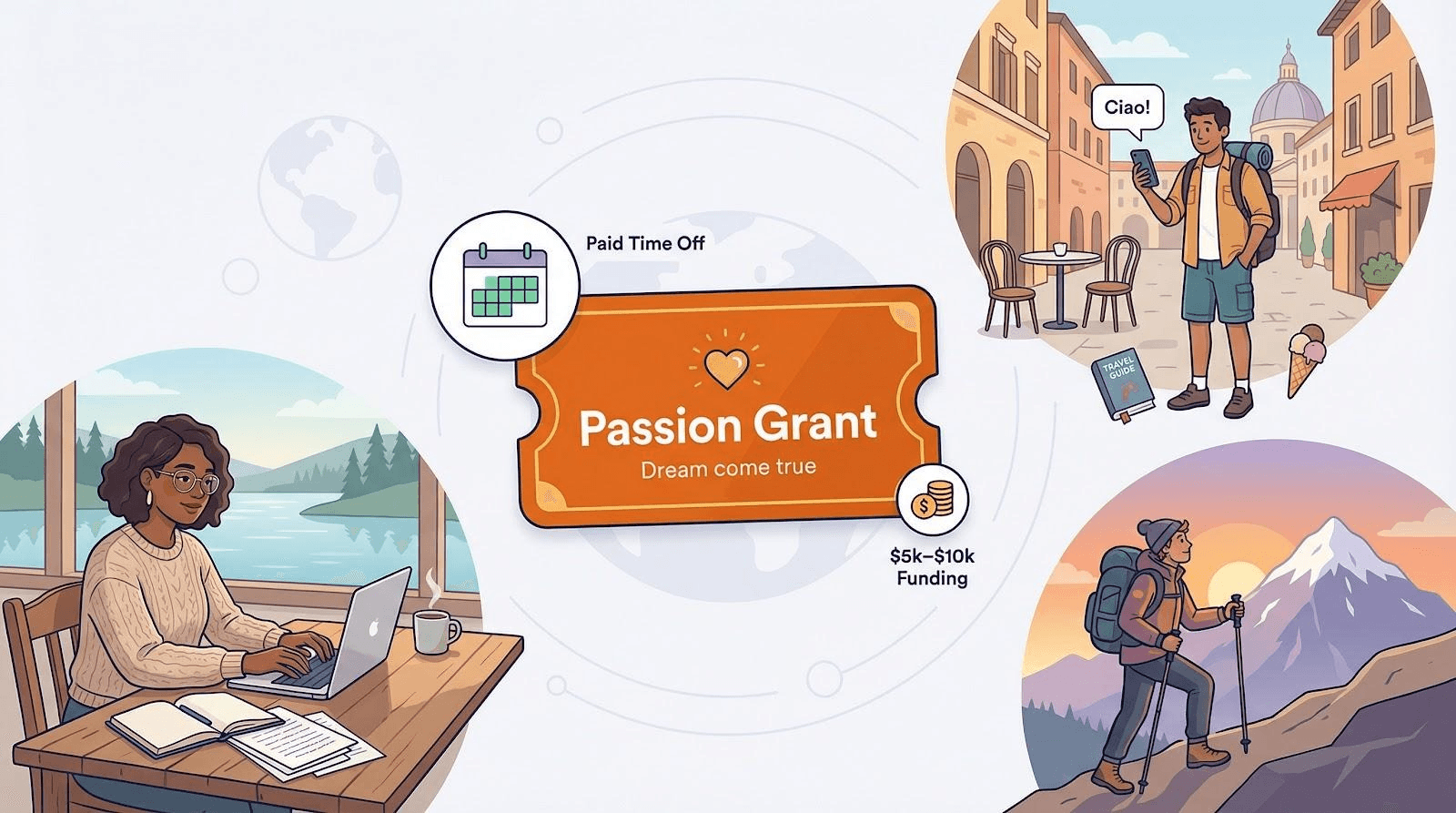
Everyone has a bucket-list goal gathering dust—write a novel, learn Italian in Rome, hike Kilimanjaro. Once a year, invite staff to pitch a personal dream in a short video or essay. A committee selects three to five winners who receive funding (five to ten thousand dollars) and paid time off to pursue the experience. A thirty-thousand-dollar annual pool can transform multiple lives yet costs less than replacing one mid-level hire. Film a recap of each fulfilled wish and play it at all-hands; the cultural lift is immediate.


Functional
Tags: Abundance Mindset, Alignment & Clarity, Be A Leader, Building Functional Competencies, Business Management, Consultant Corner, Executing Leadership, Foundational Leadership, Growth, Growth Mindset

Ahmad Shahmir is the Founder & CEO of Backylinks and a strategic content specialist who writes SEO-driven guest posts for leading SaaS and tech sites.