Learn Rebalancing Strategy in Business Development, Sales, and Marketing
Photo by macrovector @ freepik
Organisations face a paradox, while capability often grows faster than judgment in today’s high-velocity business landscape. What this means in practice is that systems, tools, and technologies evolve to deliver measurable performance improvements, faster campaign reach, more efficient lead scoring, AI-driven insights, and automated customer journeys. However, the human decision frameworks required to steward these advances effectively frequently lag. This gap isn’t merely technological; it’s organisational, strategic, and deeply cultural.
For business leaders, especially those focused on business development, sales, and marketing, the critical challenge of the next decade will be ensuring that the velocity of growth does not outpace the maturity of judgment that sustains long-term customer trust, sustainable sales performance, and authentic market disruption.
Why Growth Tools Alone Can’t Deliver Success?
Modern businesses are awash with growth tools such as CRM platforms and automation engines, and AI-driven prospecting and predictive analytics. Real-time data dashboards and performance tracking, sophisticated digital advertising, and social media systems are also among those platforms.
All of these deliver efficiency, more leads, faster insights, and rapid segmentation. But without judgment structures built into the organisation, speed becomes superficial. Leaders who chase output alone risk creating misaligned priorities in which metrics rise, but real commercial impact remains elusive.
In the original leadership context, this was described as the difference between capability and judgement. While capabilities scale well, systems innovate and processes improve, but judgment does not scale automatically.
In business development and sales, the corollary is clear. Tools can generate conversation and a pipeline. But they cannot replace strategic thinking, customer situational awareness, contextual insight, or value-led positioning.
Strategic Business Development Is a Judgment-Led Endeavour
Business development is often misunderstood as mere lead generation. At a mature level, it’s an orchestration of market insight, customer understanding, strategic partnerships, value creation, and sales enablement alignment.
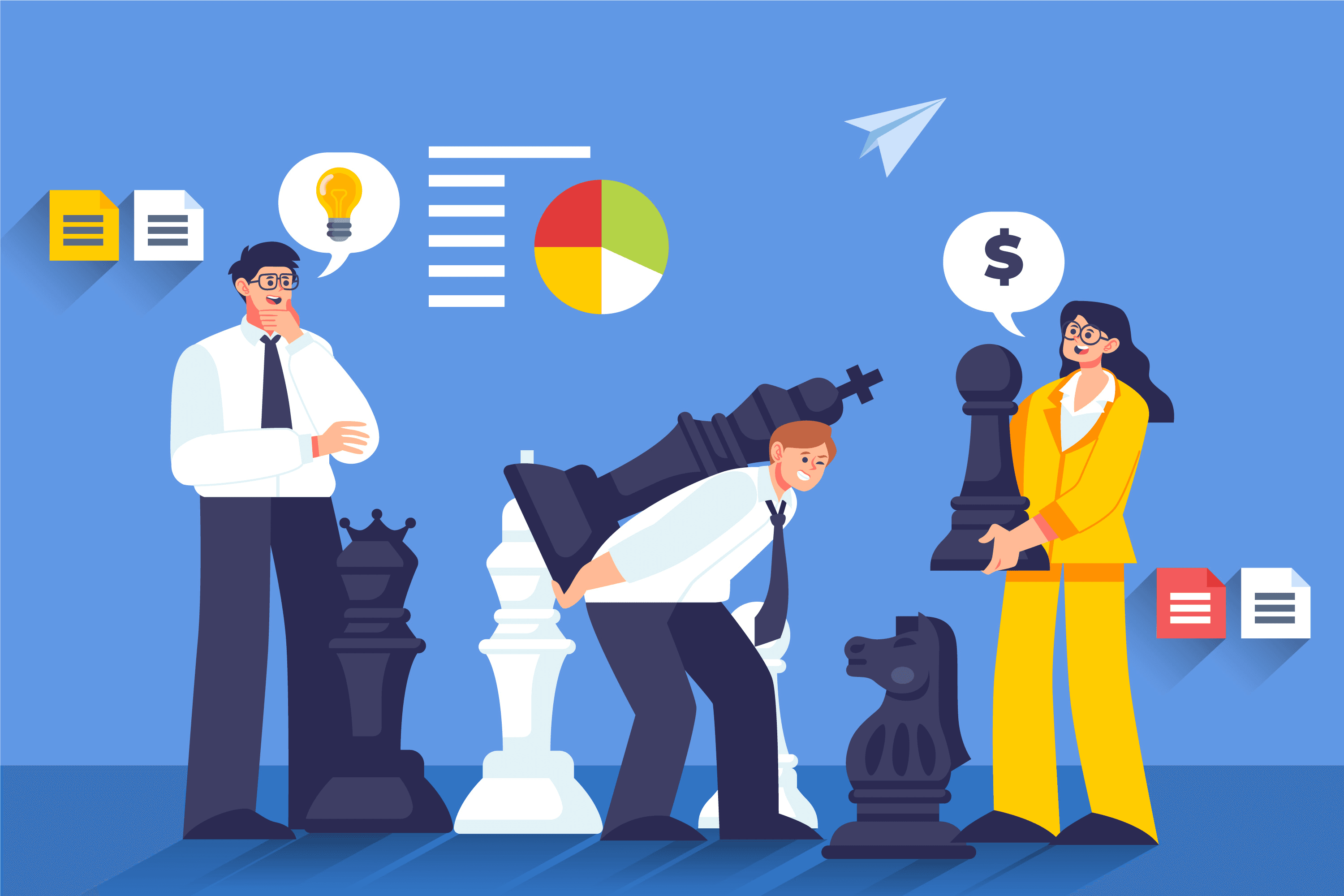
Effective BD teams think beyond short cycles; they align with long-term market trends, partner ecosystems, and customer lifetime value. For example, account-based marketing and sales strategies align tightly with this philosophy by focusing on high-value accounts as distinct markets instead of generic leads. They drive coordinated sales and marketing engagement that resonates at executive decision-maker levels.
Similarly, thought leadership is the practice of sharing insights and solutions rather than pushing product pitches. It positions a business as a trusted advisor, which strengthens credibility, shortens sales cycles, and paves the way for deeper customer relationships.
Sales & Marketing Integration: From Siloed Functions to “Smarketing”
One of the most persistent barriers to growth is the age-old chasm between sales and marketing. Too often, marketers drive broad awareness while sales representatives pursue conversion without a unified language or shared goals. This not only wastes resources but also weakens brand perception and dilutes customer experience.
But not with Smarketing. It is a coordinated, data-aligned collaboration between sales and marketing. In a smarketing model, both teams share aligned terminology and target KPIs, use shared data across the buyer journey, and collaborate on messaging and audience insights. Smarketing also includes close feedback loops on lead quality and conversion patterns.
This isn’t just operational integration; it is cultural alignment, where both functions co-own revenue outcomes.
Read more: Navigating the Future of Sales, Marketing, and Brands
Thought Leadership as a Growth Engine
Modern B2B buyers are self-educated and sceptical of overt sales messaging. Decision-makers invest hours each week consuming insights, benchmarks, narratives, and thought leadership content from trusted voices. When organisations embrace this reality, sales teams benefit in multiple ways:
- They open doors with contextual conversations rather than cold calls
- They elevate client engagement by sharing research and frameworks
- They build credibility that differentiates them from competitors
Thought leadership becomes not just content marketing, it becomes a commercial engine that drives lead generation, meeting acceptances, higher-quality proposals, and stronger conversion metrics.
In practice, business developers use thought leadership to shape dialogue, not just broadcast products, turning insights into a pipeline.
A Case in Point: The OXO Packaging
The OXO Packaging provides a key example of how judgment-led business development delivers commercial impact. Rather than simply launching a product or tactical campaign, I approached the market with the goal of understanding customer pain points at a granular level and tailoring messaging that spoke to these insights.
Instead of broad segmented offers, he pursued hyper-relevant engagement, aligning sales and marketing with a unified narrative:
- Clear articulation of customer challenges
- Thought leadership content addressing industry barriers
- Strategic outreach to high-value accounts
- Aligned internal decision frameworks to adapt messaging in real time
This project demonstrated that when sales and marketing are aligned and when decisions are guided by deep insight rather than surface metrics, organisations can achieve sustainable growth and market resonance even in crowded sectors.
Leadership Lessons from a Marketing Strategist
Being the author of “Your Market Is Ripe to Disrupt”, I discussed how markets are ready for change when leaders stop reacting and start shaping outcomes. My work reinforces the principle that disruption doesn’t begin with tools; it begins with mindsets and judgment frameworks that help organisations interpret signals, allocate resources intelligently, and commit to long-term value creation.
Supplementary reading: Mastering the Art of Digital Marketing: Strategies for Success
My leadership philosophy focuses on Intentional disruption rooted in customer empathy, sales, and BD approaches that prioritise strategic engagement over transactional selling, and market validation through value-led insights rather than competitive mimicry.
In essence, being ready to disrupt a market means cultivating a business development and marketing culture that thinks ahead of technology, not behind it. It is a concept that mirrors the leadership gaps in modern organisational decision-making.
The Road Ahead: Judgment-Led Business Growth
In a world where technology, AI, and data evolve at exponential rates, the organisations that thrive will be those that anchor growth in human judgment while building systems that accelerate without detaching from strategic intent. To do this, leaders must:
- Invest in judgment as a capability, not just technology
- Align sales and marketing with unified goals and shared insights
- Use thought leadership to shape market conversations and build trust
- Adopt account-focused strategies that deliver personalised engagement
- Nurture cultural practices where questioning, reflection, and insight are valued as much as performance metrics.
When business development teams embrace these principles, they transform from reactive growth engines into strategic architects of market opportunity.
In a landscape where speed is a given and judgment is earned, the real competitive advantage will be leaders who can harmonise capability with wisdom, not just faster systems, but wiser decisions.


Business
Tags: Abundance Mindset, Alignment & Clarity, Artificial Intelligence, Be A Leader, Building Functional Competencies, Business Management, Communication, Companies, Consultant Corner, Executing Leadership

Salman Shahid is a strategic marketing leader and the author of "Your Market Is Ripe to Disrupt", specialising in "Smarketing" and judgment-led growth. He advocates for intentional market disruption through thought leadership and value-driven business development to build sustainable, trust-based customer relationships and long-term commercial success. More information is available in the article.