
Lean Six Sigma: The DMAIC Framework
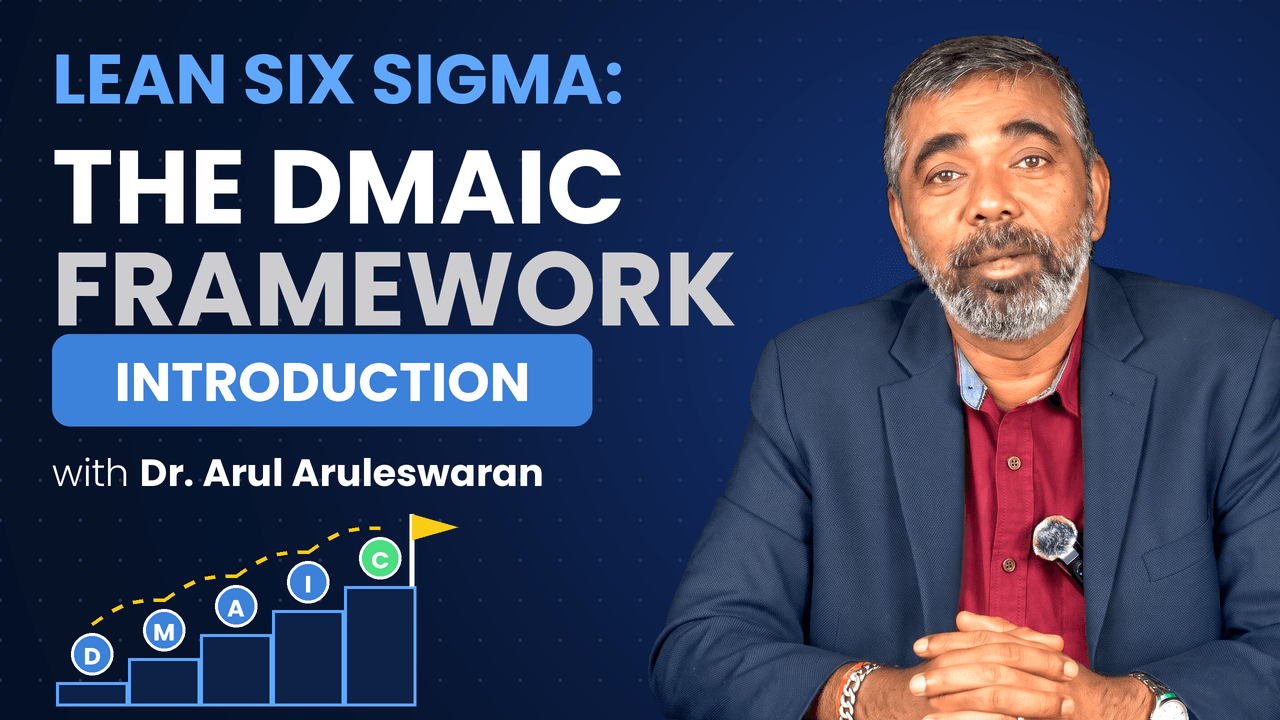
Learning Outcomes
- Define Project Scope and Goals: Formulate a comprehensive project charter, articulate clear business problems, and accurately identify core customer requirements.
- Establish Performance Baselines: Design and execute effective data collection plans to measure current process capabilities and establish accurate performance baselines.
- Conduct Root Cause Analysis: Apply statistical tools and analytical techniques to identify and validate the primary drivers of process variation and defects.
- Develop and Implement Solutions: Brainstorm, evaluate, and execute targeted, data-driven improvements to address identified root causes and optimize process flow.
- Sustain Process Improvements: Design and implement robust control plans, standardize new procedures, and establish ongoing monitoring systems to prevent performance regression.
- Apply the DMAIC Framework: Synthesize the Define, Measure, Analyze, Improve, and Control phases to lead continuous improvement initiatives and solve complex operational challenges in real-world scenarios.
Prerequisites: Basic understanding of project management or business operations.
Course Content
Instructor

Arul Aruleswaran is a transformation architect, researcher, and author whose work explores leadership, human development, organisational transformation, and emerging technologies. Drawing on more than two decades of experience across supply chains, government services, and business transformation, he combines practitioner insight with interdisciplinary research to examine how individuals and organisations navigate complexity, uncertainty, and change. His current work focuses on discernment, stewardship, and Human-AI interaction through Emergence Mirror Labs (EML), where he is developing frameworks for leadership, organisational development, and responsible AI. Arul writes regularly on leadership, transformation, decision-making, and the human dimensions of technological change.