Meditation Superhero: How Could We Save Someone When We’re The One Who Needs Saving?
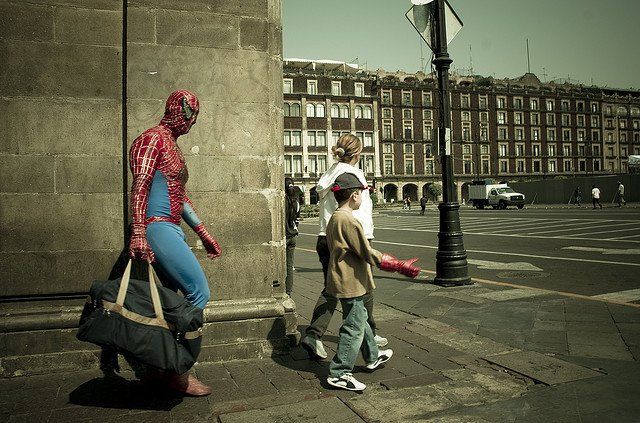
Photo credit (above): Eneas De Troya | Flickr
[First posted on Leaderonomics.com on 2 February 2013]
[Updated: 21 October 2014]
Quite recently, I found myself in a tough place. A certain disappointing event had carried me to a state where I was gradually losing my sense of self-belief and self-worth.
While struggling to sort this out, I was having friends coming to me for advice and consolation over events that were taking place in their lives. While I do not often find it difficult to know what to do, this time around I couldn’t help but to feel: “How could I ‘save’ someone when I’m the one who needs ‘saving’?”
Many of us have felt that way at some point in our lives, where our burden makes us question whether we are capable of helping others carry theirs. And having just recently sat through Marvel’s The Avengers, Batman, Spiderman, the Hulk, Natasha Romanoff (a.k.a. The Black Widow)… Superheroes came to mind.
Characters who, albeit fictional, represent burden that people carry through their lives; grief, guilt, anger, debt. Burden that needs lifting, lightening, yet whose weight instead often seems to be added by the constant responsibility of helping others lift theirs.
But then when we see how Batman channels his grief over the tragic loss of his parents into making sure that no other person goes through what he went through as a child, how Spiderman becomes driven to fight evil by his guilt of failing to save his uncle from a criminal’s crime, how the Hulk uses the angry ‘demon’ inside of him to do an angel’s work, and how Natasha Romanoff finds motivation to play for the good guys’ team in seeing to erase the “red on her ledger”, we see how these Superheroes choose to treat their pain as a drive or even a tool to help others, and their duty to ‘save the world’ as something that frees them from, rather than adds to, their burden.
What I’d like to highlight here is not that our burden is less important than our friend’s or that helping others solve their problem would automatically solve ours; but that sometimes, one of the ways we help ourselves is by helping the people around us.
What I found when I stepped out of my grief to reach out to my friends who were in need was how sharing my past experience helped me assess my current situation and how offering my words of hope for them also gave me hope.
We obviously don’t need to wait for a misfortune to hit to start reaching out; but when the world does weigh on us, instead of indulging in self-pity and waiting for someone to come to our rescue, perhaps we could do ourselves a favour by coming to another’s rescue instead.
Connect with that organisation we’ve always wanted to volunteer at, help out with a friend’s goodwill project, or just spend more time lending a hand to our families at home.
We would realise just how much our own powers are still needed in this world, and how much we have helped ourselves save us.
See Part II: Meditation Superhero II: Why They Fight Not For Glory
Drop us a line or two in the comment box below or email us at editor@leaderonomics.com. For more Thought of the Week articles, click here.


Personal