Empathetic Excellence: The New Formula for Building High-Performing Organisations

Drazen Zigic from Magnific
In my latest book, The 8 Laws of Employee Experience (based on over 100 CHRO interviews), I introduce a framework called the Empathetic Excellence Map. It came from a problem I kept seeing inside organisations. Leaders want high performance, but they also want people to feel supported and treated well. Too often, those things are discussed as if one has to come at the expense of the other.
Defining Empathetic Excellence
To understand what empathetic excellence means, we need to break the term down into its three core pillars: competence, merit, and empathy. Together they form a solid foundation where each one supports the others and none is able to stand alone without tipping the balance.
Your A–Z guide to navigating the everyday challenges of work →
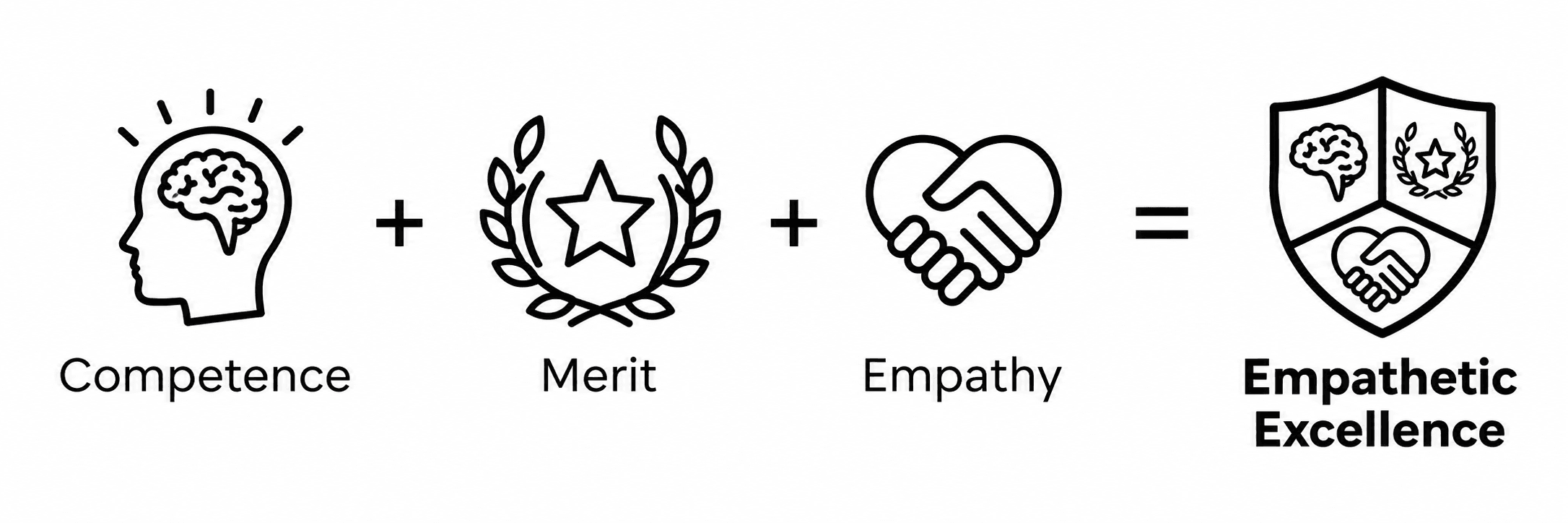
Competence is a combination of skills, knowledge, behaviors, and abilities that allow someone to deliver superior job performance. The combination can include technical skills related to a specific job, such as coding; cognitive abilities, such as critical thinking or problem solving; interpersonal skills like communication, collaboration, and emotional intelligence; and behavioral traits, such as resilience and reliability. As AI continues to automate more routine tasks, the competencies that will define merit will increasingly shift toward being more human. Competence will include creativity, critical thinking, emotional intelligence, adaptability, and human judgment.
Merit is about the recognition or value that a company assigns to an employee’s contributions or achievements. In other words, employees are promoted, paid, or rewarded based on outcomes or demonstrated results. If competence is the ability to deliver, then merit is the reward for the delivery. It ensures that effort and impact aren’t overlooked, and it’s the signal that says “Your work matters and we see it.” As the use of AI becomes more prevalent, leaders must make sure that merit doesn’t just get reduced to algorithmic outputs.
Then there is empathy, which is what binds everything together. It means seeing the full person, including their challenges, their aspirations, and their growth potential. This is not about coddling or avoiding accountability but understanding what someone needs in order to succeed and then creating those conditions if possible. Empathy also plays a crucial role in how we actually assess competence and merit.
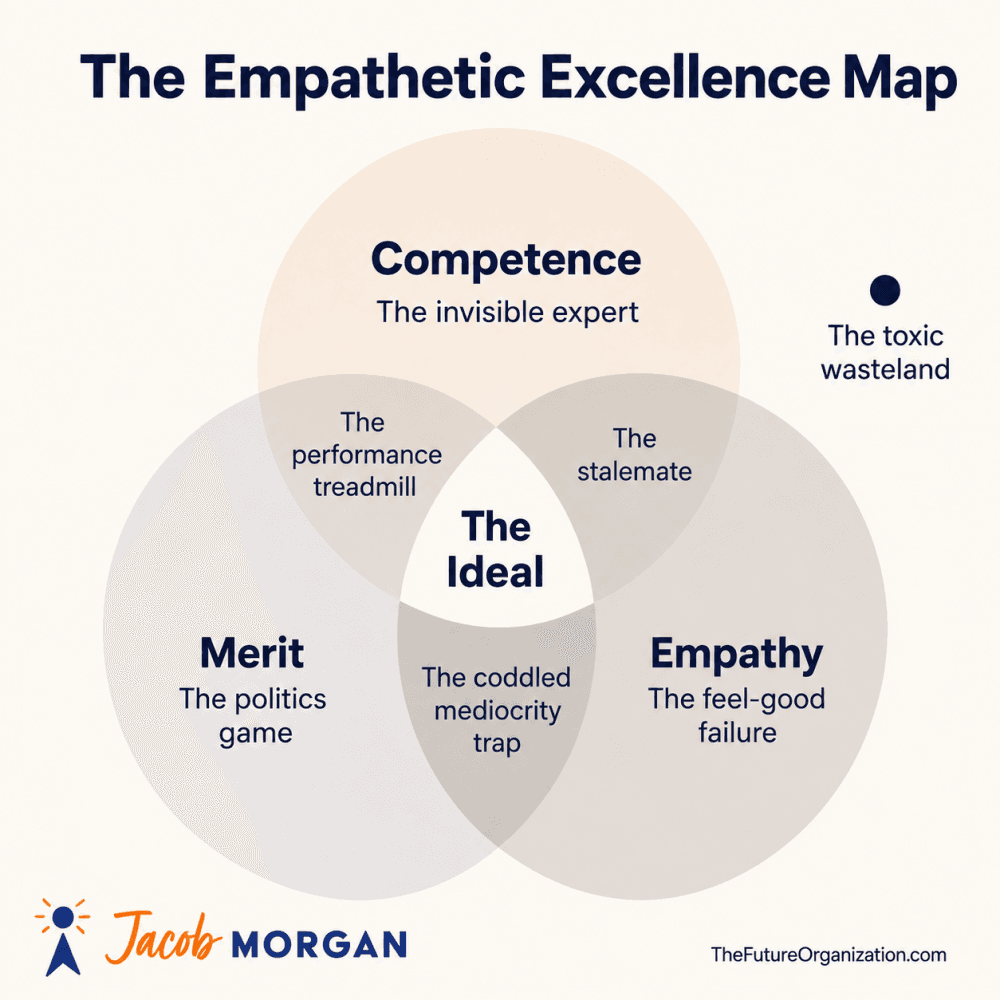
Let’s take a look at how competence, merit, and empathy work together to create empathetic excellence. Whether you’re aware of it or not, your organisation is operating inside one of these eight realities today, and only one of them leads to empathetic excellence. The next Venn diagram illustrates how merit, competence, and empathy intersect to shape different types of organisations, depending on the combination.
Once you put these three ideas together, the Empathetic Excellence Map creates eight different realities.
From 8 Laws of Employee Experience
1. Competence + Merit + Empathy = The Ideal
These three things, when combined, create a high-performing and future ready organisation. People are skilled, recognized, and supported. This is the gold standard for future-ready organisations
2. Competence + Merit, but No Empathy = The Performance Treadmill
Employees are skilled and rewarded, but the human side is ignored. People are resources, not individuals, and leaders drive output without understanding the limits of human beings. This approach can lead to overwork, disengagement, and turnover.
3. Competence + Empathy, but No Merit = The Stalemate
People are supported and skilled, but their efforts are not recognized or rewarded. High performers will eventually leave because effort isn’t tied to progress.
4. Merit + Empathy, but No Competence = The Coddled Mediocrity Trap
People are rewarded and supported, but for the wrong reasons. Without the necessary skills, knowledge, or results to justify recognition and promotion, overall standards decline and team effectiveness suffers. Resentment grows, especially among high-performing talent. Unfortunately, I believe many organisations have drifted to this part of the empathetic excellence map
5. Competence Only = The Invisible Expert
In this scenario, skilled employees deliver but are neither recognized nor supported. Talent is truly wasted, and the risk of disengagement and quitting is very high. This situation typically is found in very rigid and output-only cultures.
6. Merit Only = The Politics Game
People get ahead (or so they think), but not necessarily based on skill or substance. Promotions may be based on favoritism, optics, or just gaming the system.
7. Empathy Only = The Feel-Good Failure
In this caring culture, nobody is held accountable. People are nice, but the outcomes are bad. This scenario often arises in early-stage companies or on family-like teams that try to avoid hard decisions.
8. No Competence, No Merit, No Empathy = The Toxic Wasteland
Nobody is skilled, nobody is supported, and nobody is rewarded. As a company that doesn’t do any of these things likely doesn’t exist, it’s the perception of your employees that matters, not what you believe you’re doing as a leader.
Where Does Your Organisation Sit?
Most leaders aren’t trying to create dysfunctional workplaces. Culture develops through hundreds of smaller decisions about who gets promoted, what gets rewarded, what poor performance is tolerated, how people are developed, and how leaders respond when someone is struggling. That’s why looking at empathy alone doesn’t tell you very much. The same is true for merit or competence. The better question is whether people have what they need to perform, whether their contribution matters, and whether they are treated like human beings while doing the work.
When those three things come together, you get performance with humanity and results with recognition, that’s Empathetic Excellence.
This article was originally published on Jacob Morgan's LinkedIn.



Leadership
Tags: Team Leadership, Be A Leader

Jacob Morgan is one of the world’s leading authorities on leadership, the future of work, and employee experience. He’s the best-selling author of 5 books including his most recent one, Leading with Vulnerability: Unlock Your Greatest Superpower to Transform Yourself, Your Team, and Your Organization which is based on over 100 CEO interviews and a survey of 14,000 employees. He is also a keynote speaker, and futurist who advises business leaders and organisations around the world. For more information, please visit thefutureorganization.com